How To Understand Frontline, Diplomacy and Society in Iran
The war’s unifying element within the country must be reinforced through the narrative of “resistance and the republic”.
April 13, 2026
T
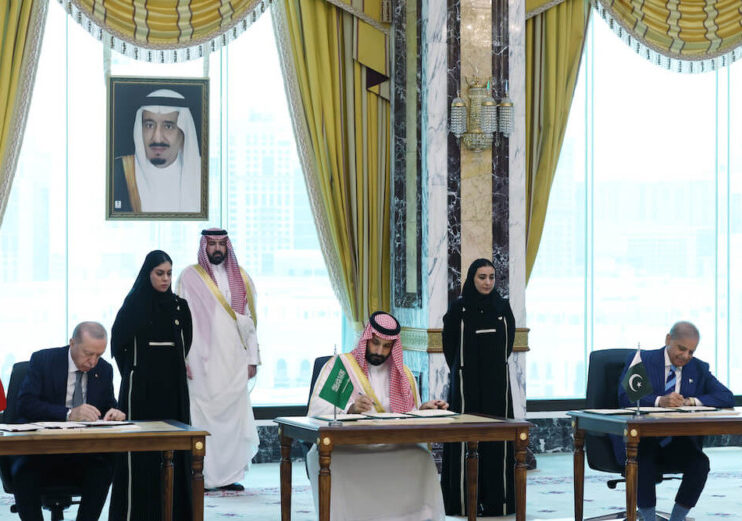
he ongoing conflict between the US-Israel and Iran is progressing not only on the military front but also simultaneously through diplomatic channels. With the involvement of regional countries, there appears to be an increase in efforts to bring the conflict under control. In particular, it appears that Turkey and Pakistan, Iran’s two key neighbors, are making efforts to prevent the conflict from spreading to a wider geographical area and to establish common ground between the parties. This situation also demonstrates that diplomacy is no longer an alternative to war, but has become a process running parallel to it.
Whilst the Washington administration announced that a 15-point proposal had been conveyed to Iran via Pakistan, Tehran dismissed the proposal as “excessive” and maintained a cautious distance. Whilst the Iranian side accepted the exchange of messages via mediators, it denied claims of direct or indirect talks. This situation indicates that a concrete proposal exists and that Tehran has responded. Whether this exchange of messages and back-channel diplomacy will be sufficient to end the war remains to be seen.
Developments on the ground are not independent of these diplomatic efforts. Iran’s retaliatory strike on Israel’s Dimona region on 22 March signalled a new phase in the conflict. The Tehran administration is seeking to establish a new balance on the ground by, on the one hand, reminding the world of its control over the Strait of Hormuz, and on the other, deploying its ballistic missile capabilities. The retaliatory strikes against the Dimona and Haifa refineries in response to Israel’s attack on the South Pars natural gas field emerged as part of a strategy underscoring the principle of ‘reciprocity’.
By conveying the message, ‘Whatever is done to us, we will respond in kind’, Iran demonstrated that its retaliations were not random but a controlled military escalation. In this sense, whilst the military theatre fuels diplomacy, diplomacy also offers Iran the opportunity to construct a powerful narrative. The emerging picture has shown that the struggle for psychological superiority is at least as decisive as military developments. Within this framework, it would not be surprising to witness new phases of the war in the coming period. War and diplomacy depend on the will and determination of the parties involved.
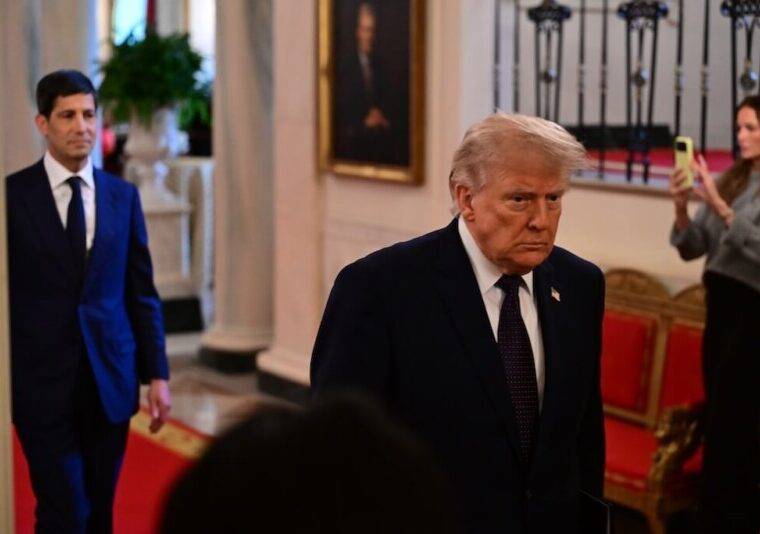
The Tehran administration remains distant and cautious regarding the diplomatic process that US President Donald Trump is attempting to initiate. Of course, this is not a choice for Iran but a necessity. For memories are fresh, and whilst negotiations were ongoing, war was imposed upon Iran. Whilst Tehran emphasizes that there are no direct talks with the US, statements from military and political circles suggest that Washington is ‘negotiating with itself’. This rhetoric gives the impression that Iran is maintaining its distance from any potential negotiations in the public eye, whilst managing the process in a controlled manner on the ground and through diplomatic channels.
Another noteworthy aspect at this juncture is how the process is being debated within Iran’s domestic public sphere. For the military balance established on the ground and the diplomatic efforts entail not only intense debate regarding foreign policy but also regarding Iran’s domestic political future. Whilst the Tehran administration argues that it can bring the war to an end and safeguard its gains through “strategic hawkishness” and “principled radicalism and toughness”, discussions on “resistance and the republic” are taking place domestically.
In an assessment written to mark Nowruz, the Iranian reformist politician Abbas Ahundi describes the current situation as “resistance that could be declared a victory”, whilst also arguing that there must be a swift shift towards a political solution following the war. More importantly, he emphasises that Iran must declare its openness to peace from a position of strength. Ahundi states: “Iran can declare victory. For Iran, the measure of victory is being able to halt the world’s greatest military and nuclear power and its Zionist ally, and prevent them from achieving their objectives. Iran must declare to the United Nations Security Council that it is prepared to accept a lasting peace. There is no need to continue the war after victory. This does not mean a unilateral ceasefire; rather, it is a declaration of readiness for peace from a position of strength.”
However, what makes Ahundi’s analysis significant is not so much his proposals on foreign policy as his inward-looking critiques. Today, public opinion in Iran is not a one-dimensional phenomenon. Whilst on the one hand the rhetoric of ‘resistance’ and ‘national unity’ brought about by the war takes centre stage, on the other hand, particularly amongst the urban middle classes and reformist circles, there are assessments that this process has made the country’s internal structural problems more visible.
The war’s unifying element within the country must be reinforced through the narrative of “resistance and the republic”. Within this framework, a question increasingly voiced in Iran is: if there is a “success” on the battlefield, how will this success translate into political and social transformation at home? Views are increasingly being expressed that lasting security is possible not only through military capability but also through internal legitimacy and social cohesion. Consequently, the debate in Iran today centers not only on how the war will end but also on what kind of Iran will emerge after the war. This leads us directly to the public agenda, economic conditions and the mood of society.
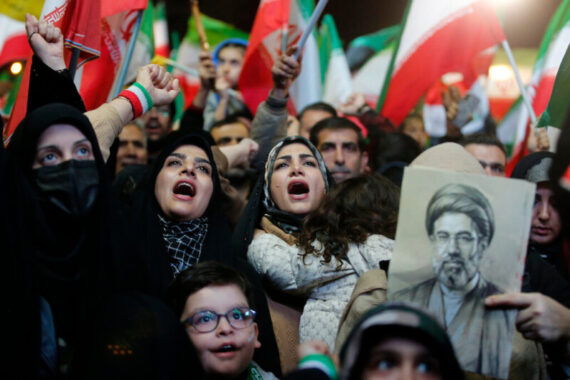
Following the attacks launched by the US on 28 February targeting Iran’s leader, Ayatollah Ali Khamenei, it was predicted that Iran would rapidly collapse from within and experience either ‘surrender’ or a ‘social explosion’. However, contrary to these predictions, the squares and streets of Iran were filled with anti-US and anti-Israeli crowds under the banner of “national defense”. Indeed, during the first 10 days of the war and in the absence of Khamenei, who held the position of supreme commander, the country was effectively governed by the squares. The crowds who took to the squares in a great outpouring of grief and mourning following Khamenei’s death gradually became politicised, and stances and demands regarding the ongoing war were brought to the fore. The influence of these expectations and demands that emerged in the squares cannot be overlooked in the selection of Mojtaba Khamenei as Iran’s new leader.
In Tehran, however, life under the shadow of war continues in a strange way. The streets, squares and public spaces have become a stage where visible and invisible reactions converge. War is not an element that brings life to a standstill; rather, it has become a reality interwoven into the fabric of daily life. For instance, whilst people are doing their Eid shopping in one street, a few streets away thousands of people are able to take part in a march despite the risk of being shot. Although this may appear contradictory from the outside, it is not a new situation for Iranian society. In the same city, on the same day, and even within the same hour, conflicting emotions can coexist side by side. The Jerusalem Day marches provided one of the most striking examples of this state of mind. The fact that thousands of people continued marching towards Revolution Avenue despite Israel’s announcement that it would target the march route demonstrated this society’s reflex in times of crisis. Rather than the crowd dispersing following the sound of an explosion and rising smoke, they instead rallied even more tightly around their slogans, revealing how the perception of an external threat can spur mobilization.
This scene brings to life the concept of ‘people’s leadership’ frequently cited in Iran. In times of crisis, particularly in the face of external threats, certain segments of society can organize rapidly and fill the squares. This crowd represents a structure that could be described as the “core base” of the Islamic Republic of Iran: ideologically strong and possessing a high capacity for mobilization. However, Iranian society is not limited to this. Alongside these visible crowds, there remains a broad “silent majority”. This segment is neither fully pro-regime nor actively opposed to it.
In times of crisis, such as war, they mostly prefer to stay at home and observe developments from a distance. Consequently, whilst one day the squares in Iran may be overflowing with people, the very next day a distinct silence may prevail in the same city. We could say that this fluctuation actually reflects the fragmented yet flexible nature of Iranian society. War does not eliminate these different social currents; on the contrary, it makes them more visible. On the one hand, there is a core group that is ideologically organized and takes to the streets; on the other, a broad segment of society striving to maintain its daily life and acting cautiously in the face of uncertainty.
Recommended
However, it would be wrong to suggest that there is a sharp and absolute divide between these two groups. The ‘silent majority’ in Iran is not, in most cases, a passive bystander. Urban and university-educated groups, in particular, are taking a stand against the war in their own ways, even if they do not take to the streets directly. There is an unseen interaction between the “core group” taking to the streets and this broader segment that remains at home or expresses its reaction through different channels. Within the same war, there is a social cohesion comprising people speaking different languages but sharing similar concerns.
For this reason, interpreting social mobilization in Iran solely through the crowds gathering in the squares is incomplete. What matters is being able to perceive the multi-layered structure formed by the visible and the invisible, the loud and the silent reactions. Despite the pressure brought by the war and uncertainty, these two strands of society are not entirely alien to one another; on the contrary, they complement each other. Whilst the core group is visible on the ground, the silent majority is building a form of resistance in the background through cultural, productive and everyday life practices.
There are small acts of solidarity in neighborhoods and homes. Even quiet discussions in a café can emerge as an element that nourishes this invisible network. ‘Maintaining normal life’ can itself become a form of resistance. This invisible network strengthens the psychological and cultural resilience of society, filling the voids created by war and crises.
In this context, we see calls from Iranian academics and intellectuals such as Peyam Fazıl Nejad within Iran for “a new dialectic to be established between resistance and the republic”. Fazıl Nejad uses the following words on this subject: “This is not merely a reaction to external aggression, but also the practical realisation of the idea of the republic: that is, the genuine participation of everyone in the country’s destiny. In this context, national and religious resistance is not the antithesis of the republic, but its complement; nor is the republic an element that weakens resistance, but one that strengthens it.”
According to Fazıl Nejad, the social unity and cohesion emerging within the country in response to the war must be supported by the idea of the republic, and this social capital must be preserved. In other words, if the current resistance is used to weaken the republic, social capital erodes and the country becomes vulnerable to new threats. However, if the resistance is structured in a way that broadens public participation; that is, if power is built from the bottom up rather than from the top down, this new balance could become a genuine protective mechanism for Iran. Ultimately, what will be decisive for Iran is the extent to which it can integrate the various segments of society into the system.
(Originally published in Turkish by Kriter)
Ali Çabuk is a journalist and researcher working on Iran and the Middle East. He graduated from the Psychology Department of Allameh Tabataba'i University in Iran in 2018. Beginning his studies in Iran specifically in the field of Social Psychology, Ali Çabuk completed his university education with a thesis on "Superstitions and False Beliefs in Iran and Türkiye." Writing articles on social life, politics, and foreign policy in Iran, Ali Çabuk works as an NTV Tehran correspondent in Iran.
You can see how this popup was set up in our step-by-step guide: https://wppopupmaker.com/guides/auto-opening-announcement-popups/

Stay informed by subscribing to
our weekly newsletter.
You can see how this popup was set up in our step-by-step guide: https://wppopupmaker.com/guides/auto-opening-announcement-popups/
You can see how this popup was set up in our step-by-step guide: https://wppopupmaker.com/guides/auto-opening-announcement-popups/
You can see how this popup was set up in our step-by-step guide: https://wppopupmaker.com/guides/auto-opening-announcement-popups/
You can see how this popup was set up in our step-by-step guide: https://wppopupmaker.com/guides/auto-opening-announcement-popups/