NATO and the Turkish Defense Industry: The Ankara Summit
Turkey’s production of systems that are fully compliant with NATO standards (STANAG) and have proven themselves on the battlefield supports strategic interoperability within the Alliance.
July 29, 2026
T
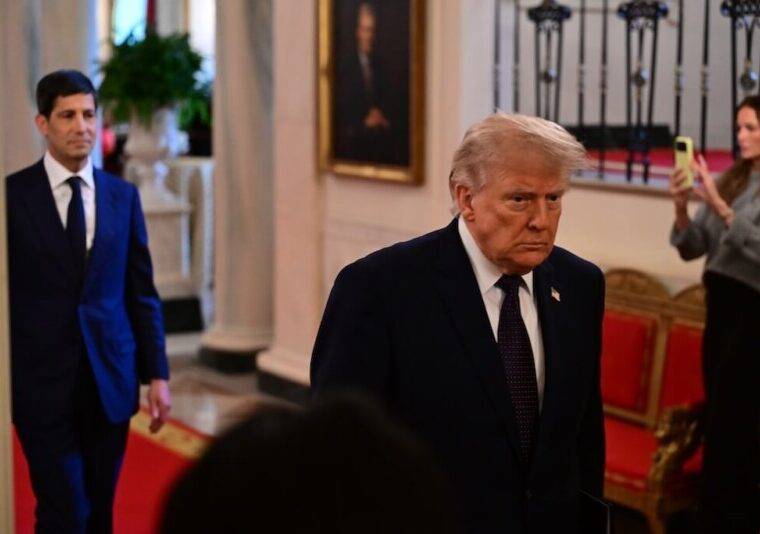
he Republic of Turkey hosted a NATO Summit once again after a gap of twenty-two years. Whilst the Ukraine–Russia War has triggered a shift in the perception of threats in Europe, the emergence of new security risks stemming from a potential US/Israel–Iran conflict has further heightened the importance of the Summit. Statements made by heads of state and government prior to the Summit indicated that it would be the most significant gathering in recent years in terms of ‘outcomes and decisions taken’.
In this context, the fact that NATO’s future vision was shaped in Ankara, given that NATO is itself a security organization, holds particular significance. Turkey’s central position within NATO, as well as its capabilities in the defense and aerospace sectors, are drawing attention in the context of the Alliance’s future. When the final communiqué is considered, it is evident that NATO is transitioning to a new security architecture referred to as the ‘3.0 era’.
Whilst Ankara hosted the 36th NATO Summit of Heads of State and Government, defense spending and the defense industry were at the heart of the strategic decisions taken by the Alliance in Ankara. Ensuring that Alliance partners adhere to the stated commitment regarding the targeted defense spending limits was a priority. In parallel, the development of defense and security cooperation and relations came to the fore. Discussions held throughout the Summit centered on the role of the capabilities achieved by the Turkish defense industry in the Alliance’s future, and how and to what extent these capabilities could be utilized.
In addition to the statements made, the Defence Industry Forum held as part of the Summit addressed potential areas for Alliance partners to work together and build a sustainable ecosystem. Hosted by the President of the Turkish Defence Industry, Prof. Dr Haluk Görgün, and organized at TUSAŞ as part of the NATO Summit Defence Industry Forum (NSDIF), a reception was held where the capabilities of the Turkish defense industry were demonstrated to participating delegations through both flight displays and an exhibition in the static display area.
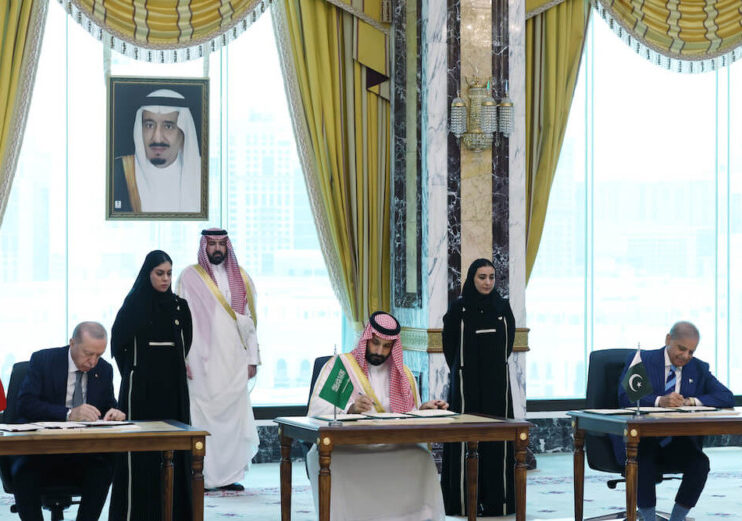
As part of the Summit, the defense industry forum (NSDIF) – which marked a number of firsts – was held at the ATO Congresium. As announced by NATO, bilateral and multilateral military, security and cooperation agreements were signed for the first time under the NSDIF’26 framework. The agreements, estimated to have a total value exceeding 50 billion dollars, were primarily structured around the following key areas: defense investments and the Alliance partners’ ‘5 per cent’ commitment, capacity enhancement through multinational cooperation, the development of defense industry partnerships, and the improvement of processes from serial production to sustainment. Within the framework of NSDIF’26, emphasis was placed on the importance of developing high-tech and innovation-focused solutions tailored to the evolving battlefield.
NATO’s long-standing target of 2 per cent defense spending was accepted by Alliance partners as a radical increase to “5 per cent” in response to the growing and evolving threat perception. Recently, assessments have been carried out regarding the independent and collective activities undertaken to achieve this objective. Whilst the aim is to significantly increase burden-sharing within the Alliance, the objective is to enter a new era in which allies outside the US (Europe and Canada) directly assume their own security responsibilities. Whilst the concept of “strategic autonomy” is being defined within the Alliance, the initial objective is to establish the financial infrastructure.
The aim is for Alliance partners to increase their defense spending to 5 per cent of their gross domestic product (GDP), which represents a significant economic volume, whilst also developing production capabilities beyond mere procurement. However, the fact that multinational projects implemented, particularly in Europe, have failed to deliver the desired results, due both to their lengthy timelines and their structural nature, has opened the door to alternative approaches: the “Trusted Partner”. Although Turkey has been a NATO member for a quarter of a century, the fact that its capabilities in the defense industry have not been ‘effectively’ utilized within the Alliance has been a subject of debate, particularly over the last 10 years. Turkey, an Alliance member that has also been subject to both covert and overt embargoes, is now being highlighted as a central actor in NATO’s new era.
The Ukraine–Russia War has highlighted the inadequacy of stockpiles and inventories amongst the world’s armed forces in the face of protracted conflict. Furthermore, a similar scenario has manifested itself in various forms within the US-Israel-Iran triangle. In the face of the reality of the ‘war of attrition’, which has been redefined in the present day, it is imperative that allies ensure their stocks of ammunition and military equipment are sustainable. The signing of supply agreements at the summit, totalling over 50 billion dollars, aims to transform the defence industry from a purely commercial sector into a direct deterrent. In this context, particular attention was drawn to items with high consumption rates, such as artillery ammunition, aircraft bombs and air defence missiles. In this regard, the allies’ efforts – for example, Canada’s increase in artillery ammunition production capacity and Turkey’s allocation of additional funding for the ‘Iron Dome’ air defence systems – were the first examples to be highlighted.
Attention was drawn to the negative effects of projects implemented in a multinational framework in European countries, both on the execution of the projects and on production capacity and capabilities. In assessments aimed at improving this situation, ‘project management’ and ‘autonomous/centralised’ approaches emerged as key priorities. The aim is for key actors in projects to be carried out on a multinational basis, as well as allied nations acting as subcontractors, to implement more effective process management. In this way, both the production capabilities and key areas such as sustainment and logistics of projects carried out on a multinational basis are being improved. Furthermore, Turkey’s long-standing vision of “lifting covert and overt embargoes between allies” aligns directly with this topic addressed at the Summit.
NATO is demonstrating increasing sensitivity regarding the management of interoperability amongst allies. Multinational collaborations are being implemented whilst taking into account the operational needs of the allies. The decision taken at the Ankara Summit to strengthen the transport aircraft fleet, in addition to the NATO-led tanker aircraft fleet, underscored this commitment. The fleet to be established with A400M transport aircraft will be operated to meet the operational needs of the allies. In addition to the transport fleet, in which the Turkish defence industry also holds a share, Turkey will take a leading role in establishing a space-based communications and early warning system through the IMECE project.
The allocation of an additional $24 billion budget for the Iron Dome is significant not only for Turkey but also for the Alliance’s air and missile defence capabilities. Roketsan’s demonstration of its missile systems in the field of precision-guided systems also attracted attention. Turkey’s capabilities in mass production and high technology are being utilised more actively than ever before to meet diverse requirements. In particular, Turkey has gained increasing importance in recent times with solutions such as cyber security and encrypted communications. As emphasised at the Summit, NATO aims to structure its capabilities not only around assets such as ships and aircraft, but also through integrative elements such as cyberspace, communications and intelligence.
Recommended
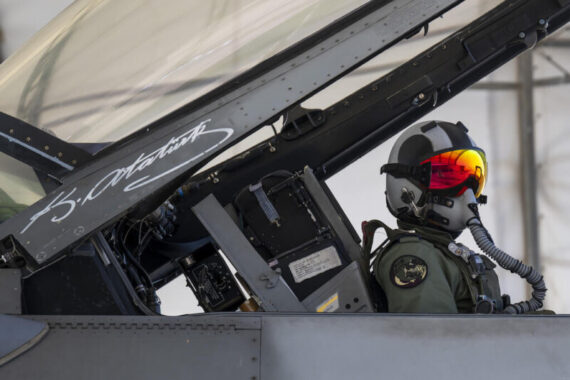
As part of the NATO Defence Industry Forum, the capabilities of the Turkish defense industry were demonstrated to participating delegations at a reception held at TUSAŞ, through both flight displays and an exhibition in the static display area. The delegations were greeted by the modern instruments of the battlefield on display: the Altay tank, ARMA armored vehicles, MKE’s TOLGA air defense solution, ROKETSAN’s ballistic missiles, and Baykar and TUSAŞ’s manned and unmanned aerial platforms. In addition to all this, demonstrations were held to showcase the current state of the aviation sector: the GÖKBEY general-purpose helicopter, the T129 ATAK attack helicopter, the HÜRKUŞ basic trainer aircraft, the HÜRJET advanced jet trainer, the ANKA III strategic bomber, the ANKA-S, the Bayraktar AKINCI UAV and the Bayraktar TB3 unmanned aerial vehicle, all of which demonstrated their capabilities through flight displays.
The capabilities of the Turkish defense industry were demonstrated to delegates not merely through a ‘catalogue’, but directly at the production facilities and via live flight demonstrations. The presence of both executives and project engineers from the relevant companies on site enabled the evaluation of both the products and potential partnerships. In short, the reception provided a unique platform for increasing defense and aerospace exports and establishing new partnerships.
Turkey’s production of systems that are fully compliant with NATO standards (STANAG) and have proven themselves on the battlefield supports strategic interoperability within the Alliance. This, in turn, enables Turkey to export significant quantities of defense systems to its Alliance partners. According to 2025 figures, 56 per cent of Turkey’s exports, totaling 10.56 billion dollars, were made directly to the European Union, NATO member states and the United States. These figures are, in themselves, a testament to the quality and reliability of Turkish defence industry products, which meet Western standards. Furthermore, there is a growing interest in products that have proven themselves on the battlefield.
This reinforces the desire to implement ‘joint projects’, as seen during Belgium’s recent high-level visit to Turkey. The Belgian firm developing the turret proposed to Turkish land vehicle manufacturers: “Let’s integrate our turret into your armoured vehicle and sell them together.” In every discussion regarding Turkey, the door to cooperation is being opened with the message: “You have high-quality products, and we want to benefit from working with you.” Meanwhile, Spain’s supply of the HÜRJET fighter aircraft, Portugal’s warships, Italy’s unmanned aerial vehicles (UAVs) and Poland’s electronic warfare systems are strengthening Turkey’s central position within the Alliance in this field.
In short, the Ankara Summit is more than just a platform for delivering political messages; it represents a critical turning point where the obstacles to defense industry cooperation among allies will be discussed. It was clearly emphasized at this summit that any form of export restriction or covert embargo imposed by allies against one another under the NATO umbrella ultimately weakens the Alliance’s own collective deterrence. It is abundantly clear that Turkey’s high-tech production capacity is not a competitive factor to be excluded or restricted amongst allies. Turkey’s position should be viewed as that of a ‘regional production hub’ which will optimize the Alliance’s overall capabilities whilst also reducing logistical costs.
(Originally published in Turkish by Kriter)

Researcher and follower of defense technologies, strategies and policies, specifically TDI.
You can see how this popup was set up in our step-by-step guide: https://wppopupmaker.com/guides/auto-opening-announcement-popups/

Stay informed by subscribing to
our weekly newsletter.
You can see how this popup was set up in our step-by-step guide: https://wppopupmaker.com/guides/auto-opening-announcement-popups/
You can see how this popup was set up in our step-by-step guide: https://wppopupmaker.com/guides/auto-opening-announcement-popups/
You can see how this popup was set up in our step-by-step guide: https://wppopupmaker.com/guides/auto-opening-announcement-popups/
You can see how this popup was set up in our step-by-step guide: https://wppopupmaker.com/guides/auto-opening-announcement-popups/