Netanyahu Loses His Majority but Israel’s Opposition Has No Clear Path to Power
Israel entered the election deeply divided, both socially and politically.
November 13, 2026
I
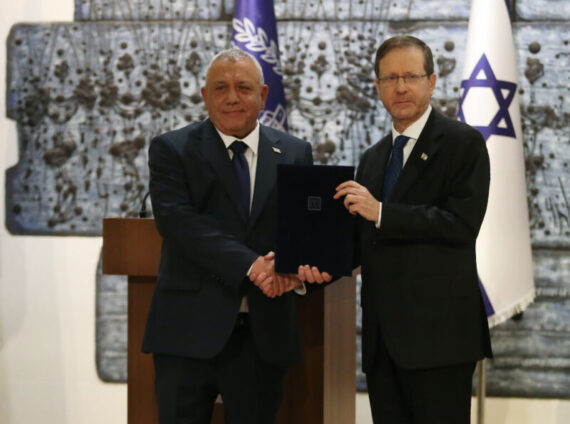
srael went to the polls to elect the 26th Knesset in its first general election since October 7, 2023. The vote took place amid deepening social divisions and the wars that followed the operation Hamas and other Palestinian resistance groups called “Al-Aqsa Flood.” The result left the country’s political future uncertain. The governing bloc lost its majority, and the opposition fell short of the seats it needed to govern on its own.
The final results put Prime Minister Benjamin Netanyahu’s Likud first with 27 seats and Gadi Eisenkot’s Yashar second with 21. Naftali Bennett’s B’Yachad (Together) won 12 seats and Yousef Jabareen’s Joint List took 11. Yair Golan’s Democrats and Mansour Abbas’s Ra’am each won eight. Itamar Ben Gvir’s far-right Otzma Yehudit, United Torah Judaism and Avigdor Liberman’s Yisrael Beytenu won seven seats each. Bezalel Smotrich’s Religious Zionism and the ultra-Orthodox Shas party took six apiece.
Netanyahu and his allies secured 53 seats, while the Zionist opposition bloc led by Eisenkot won 48. Both blocs fell short of the 61 seats needed for a majority in the 120-member Knesset, giving the Joint List and Ra’am, with 19 seats between them, considerable influence. Whether the two Arab lists can play a decisive role in forming a government depends on the opposition’s ability to overcome the political obstacles to working with them.
Israel entered the election deeply divided, both socially and politically. Since October 7, the emphasis on security in Israeli politics had reinforced language that cast Palestinians as enemies and encouraged challenges to the legitimacy of Netanyahu’s opponents. The legal challenge to the candidacy of Balad leader Sami Abu Shehadeh illustrates the pressure on Arab political representatives. He withdrew after the Supreme Court indicated that a majority of its justices favored disqualifying him and advised him to step aside.
Netanyahu’s own bloc was also divided over the conduct of the war and whether ultra-Orthodox yeshiva students should be exempt from military service.
On election day, Netanyahu tried to rally his base by portraying Palestinian citizens of Israel turning out to vote as a threat, echoing his rhetoric in 2015. High turnout among Arab voters reflected a growing determination to secure political representation in the face of such rhetoric. In Umm al-Fahm, turnout rose from 38.3 percent in 2022 to 79.8 percent in 2026.
Netanyahu’s rhetoric alone cannot explain the increase, though his warnings may have spurred some Arab voters to turn out.
The campaign also exposed a tension over Israeli identity. Some Israelis emphasized the citizenship Jews and Arabs share, while Jewish nationalists put the state’s Jewish identity first. Some in the Zionist opposition explored partnerships with Arab politicians open to cooperation. The far right portrayed Arab participation in politics as a threat to the state’s Jewish character. Yet resistance to working with Arab parties extended into the opposition itself, blurring the line between the two camps. As political rivals traded accusations of betrayal over responsibility for October 7, they increasingly called each other’s legitimacy into question.
Turnout reached nearly 78 percent, the highest since 1999. The rise may reflect the polarization that followed October 7 and a political climate in which opponents were increasingly cast as enemies. It also showed how effectively the Arab parties could mobilize voters and influence the balance of power.
The polls had anticipated the deadlock. Neither Netanyahu’s bloc nor the Zionist parties opposed to him had been expected to win a majority on their own. Pollsters came close to predicting the Zionist opposition’s combined seat total and foresaw losses for the Haredi, or ultra-Orthodox, parties. Given the tensions between Netanyahu and his Haredi partners over military exemptions, their weaker showing as a group came as little surprise.
The biggest surprise for pollsters was the Arab parties’ performance. They won 19 seats against a pre-election estimate of around 15, shifting the political balance. Likud also defied expectations. Some polls had put it below 20 seats, but it won 27, a reminder of Netanyahu’s enduring political strength.
Ofer Winter’s Amcha Yisrael and Yoaz Hendel’s HaMiluimnikim (Reservists), both seen as having a chance of clearing the electoral threshold, fell short.
The Joint List and Ra’am appealed to voters with different priorities. The Joint List called for unity around a shared identity and demands for rights, while Ra’am campaigned on tackling crime and violence in Arab communities. Ra’am underscored that pledge by including Yoav Segalovitz, a former deputy public security minister who identifies as a Zionist, on its candidate list.
Those 19 seats made the political weight of Israel’s Arab citizens more visible. The strength of the two lists in parliament reflected a broader “sociological reality” among the voters they represented.
Likud remained the largest party, but its stronger-than-expected showing could not offset the governing bloc’s losses. Likud fell from 32 seats in 2022 to 27, and Shas from 11 to six. Together, those losses cost the bloc its majority. United Torah Judaism retained its seven seats.
Disputes over military service exemptions strained relations among the coalition partners. Netanyahu also failed to prevent the right-wing vote from splintering. He could not persuade Amcha Yisrael to withdraw, and the votes it received yielded no seats when it fell below the threshold. Netanyahu emerged from the election as the strongest leader on the right, but his existing partners could no longer give him a majority.
The opposition succeeded in keeping parties with very different views united against Netanyahu through election day. The harder test comes in coalition talks, where the parties will have to settle disagreements they could put off during the campaign.
The five elections Israel held between 2019 and 2022 showed how difficult it is to build a lasting coalition on opposition to Netanyahu alone. The Zionist opposition and the Arab parties now hold 67 seats between them, enough on paper for a change of government. The question is whether they have the political will to act together.
Recommended
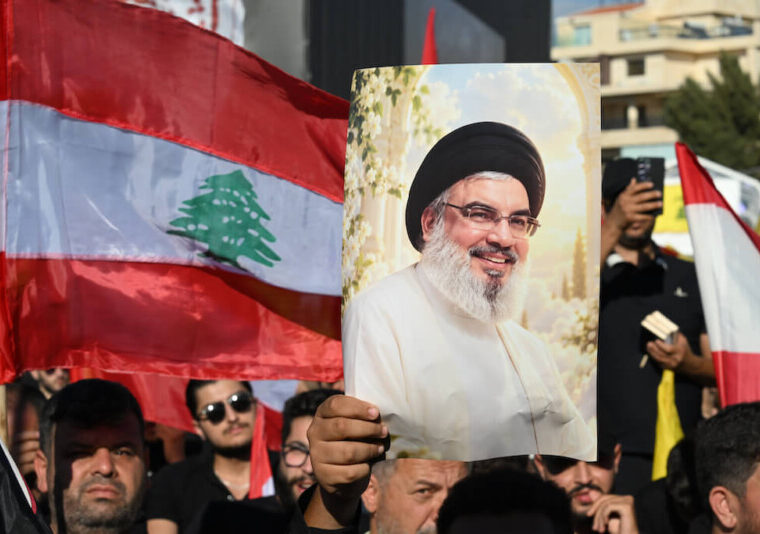
President Isaac Herzog received the official election results on November 4 and began consultations with party representatives that same day. The challenge for party leaders will be to build a coalition from the support they won at the polls.
Leaving aside the prospect of a minority government, which would be unlikely to last, four possibilities stand out. Eisenkot could lead an alternative government, Netanyahu could find new allies to stay in power, the two largest parties could form a broad unity government, or Israel could hold another election.
Given the opposition parties’ combined strength, some Israeli media reports suggest that Herzog may give Eisenkot the first opportunity to form a government, even though his party finished second. If he holds his 48-seat bloc together, Eisenkot has two routes to an outright majority.
His most obvious option is to turn to the Arab parties. Neither the Joint List nor Ra’am alone could bring his bloc to an outright majority of 61 seats. Seeking support from both could come at a high political cost if allies such as Liberman or Bennett break ranks.
Eisenkot’s other option is to approach the Haredi parties. A deal would hinge on the terms of military service for ultra-Orthodox men. Media reports suggest the Haredi parties have left that possibility open.
The second scenario would see Netanyahu rebuild his majority by drawing defectors from the opposition. His bloc has 53 seats, eight short of a majority. He could offer policy concessions and government posts to members of the opposition’s right wing. Yamina lawmakers Idit Silman and Amichai Chikli broke ranks before the 2022 election, illustrating how loyalties can shift.
Closing an eight-seat gap, however, would take more than a handful of individual defections. Netanyahu would have to split the opposition while keeping his own partners together.
The third possibility is a broad unity government built around Likud and Yashar. Some figures close to US President Donald Trump reportedly favor such an arrangement if it excludes Ben Gvir and Smotrich. A new security crisis in the region could bring the parties closer together. They would still have to negotiate who would serve as prime minister first, how a rotation would work and which other parties would join the government.
The government Netanyahu formed with Benny Gantz in 2020 collapsed before Gantz could take his turn as prime minister. That precedent makes it harder for the parties to trust a similar deal.
The final possibility is another election. If the legal process for forming a government runs its course without an agreement, a new vote must be held within 90 days of the Knesset’s dissolution. A fresh election offers the opposition no guarantee of a better result. Eisenkot’s leadership could come under scrutiny, rivalry among the opposition parties could intensify, and Arab voters might not turn out in the same numbers.
Netanyahu, meanwhile, would remain in office until a new government is formed. Protracted negotiations and the prospect of another election could therefore extend his time in office even after his bloc has lost its majority.
(Originally published in Turkish by Kriter)

Fatih Şemsettin Işık is a Senior News Producer at TRT World. He holds a bachelor's degree in Political Science from Bilkent University and completed his graduate studies in International Relations at Istanbul Şehir University and Central European University. He is currently pursuing a PhD in Political Science and International Relations at Ibn Haldun University. Since 2014, he has conducted research on Middle Eastern affairs and diaspora communities, with a particular focus on Israel, working with various media organizations and think tanks.
You can see how this popup was set up in our step-by-step guide: https://wppopupmaker.com/guides/auto-opening-announcement-popups/

Stay informed by subscribing to
our weekly newsletter.
You can see how this popup was set up in our step-by-step guide: https://wppopupmaker.com/guides/auto-opening-announcement-popups/
You can see how this popup was set up in our step-by-step guide: https://wppopupmaker.com/guides/auto-opening-announcement-popups/
You can see how this popup was set up in our step-by-step guide: https://wppopupmaker.com/guides/auto-opening-announcement-popups/
You can see how this popup was set up in our step-by-step guide: https://wppopupmaker.com/guides/auto-opening-announcement-popups/