Israel’s Critical Election: Netanyahu or Eisenkot?
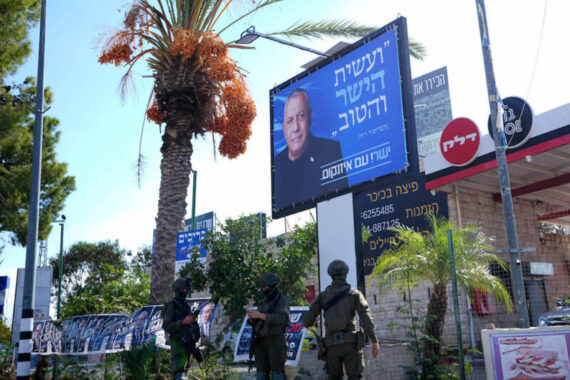
Eisenkot’s Yashar Party is projected to win between 23 and 25 seats and finish ahead of Likud as the largest party.
October 13, 2026
I
srael will hold one of its most significant elections in recent years on October 27, 2026. What makes this election different from previous ones, and potentially historic, is that it will take place amid a war environment that emerged following the October 7, 2023, Al-Aqsa Flood attack and Israel’s subsequent military campaign in Gaza, launched with the stated aim of eliminating Hamas. The conflict subsequently spread to other countries in the region and at times involved five or six fronts simultaneously. This has been compounded by the war against Iran that began on February 28.
Although Israel has held elections in wartime before, it has never fought on so many fronts at once, maintained a state of war for such a long period, and perhaps has never been so severely strained militarily, economically, and politically. Add to all this the fact that Israel faces trials in international courts for the crimes of genocide it has committed in Gaza, has lost the support of Western public opinion—particularly in the U.S.—and that Western countries are, one by one, recognizing Palestine while adopting resolutions to impose sanctions on Israel, it would not be wrong to say that the elections Israel is holding under these conditions will amount to a referendum rather than merely an election.
For this reason, as we head into such a crucial election, one that may lead to a change in Israel’s current policies or the continuation of its policies of genocide and occupation, it would be helpful to address questions regarding the general mood of public opinion, developments within the ruling and opposition parties, the promises made by the parties and their leaders, and the predictions regarding the election outcome.
Netanyahu’s current government, formed at the end of 2022 with the support of far-right parties, has become increasingly weakened after four years in office. Its difficulties stem not only from foreign-policy failures, including international isolation, boycotts and sanctions over its policies in Gaza, but also from domestic problems such as protests over the so-called judicial reform, Netanyahu’s corruption trials, military-service exemptions for Haredi Jews, restrictions targeting civil society and the media, and economic and social problems caused by the wars.
The fact that residents have still not been able to return to areas evacuated after October 7 for security reasons, including communities around Gaza and along the Lebanese border, has further compounded these problems. Despite Israel’s attacks on Lebanon and Syria following the Gaza war and its subsequent war with Iran, moves that critics have linked to Netanyahu’s desire to remain in power by keeping the country in a permanent state of conflict, the failure to eliminate Hamas as claimed and achieve a decisive victory in Gaza, the resurgence of Hezbollah despite claims that it had been neutralized, Israel’s failure in Syria, and the inability to bring about regime change in Iran despite U.S. involvement in the war have all been interpreted by Netanyahu’s opponents as failures of his government. They have also undermined the notion of Israel as a secure country.
These security developments have naturally eroded Israelis’ confidence in their government and military and prompted some members of the largely immigrant population to return to their countries of origin.
Israeli voters are therefore heading to the polls under the shadow of security, economic and social problems in a way they have never experienced before. They will be deciding not merely which party or prime minister should govern the country, but what direction Israel itself should take.
The parties forming the governing coalition centered on Netanyahu’s Likud appear likely to enter the election with largely the same personnel and political messaging. Following Likud’s internal primaries, the candidate list shaped by Netanyahu was submitted to the election authorities. The coalition’s ultra-Orthodox parties, Shas and United Torah Judaism (UTJ), are also expected to contest the election with their existing leadership and parliamentary teams. The only significant change within the coalition is that Otzma Yehudit (Jewish Power) and the Religious Zionist Party, which ran together on a single list in the previous election, will contest this election separately.
Despite Netanyahu’s insistence that the two parties should once again form an alliance in order to prevent the right-wing vote from being divided, Jewish Power leader Itamar Ben-Gvir rejected the request and announced that his party would run independently. Having lost hope of reaching an agreement with Ben-Gvir, Religious Zionist Party leader Bezalel Smotrich decided to form an alliance with Zehut, the party founded by former Likud lawmaker Moshe Feiglin, after polls indicated that the Religious Zionist Party would fail to cross the electoral threshold if it ran alone.
The main movement ahead of the election, however, has taken place within the opposition camp.
The first major development was the announcement by former minister and prime minister Naftali Bennett that he would return to active politics after previously declaring that he had ended his political career. Bennett first established the Bennett 2026 party and then announced that he would enter the election in alliance with Yair Lapid’s Yesh Atid party under the name Beyahad (Together).
The experience Bennett and Lapid gained from their previous coalition government appears to have given them a significant level of public support, and they quickly reached Netanyahu’s level in opinion polls.
The Bennett momentum, however, began to fade when former military chief of staff and Blue and White lawmaker Gadi Eisenkot resigned from his party and established the Yashar (Straight/Justice) Party. Eisenkot’s background as a former military officer, the absence of corruption allegations against him, and his more centrist political positioning compared with Bennett helped him gain public support, and he soon moved ahead of Netanyahu in opinion polls.
Another important opposition figure is Yisrael Beiteinu, led by Avigdor Lieberman and traditionally supported largely by Jews who immigrated from Russia. Lieberman previously formed alliances with Netanyahu but positioned his party against him from 2018 onward. In the most recent elections, Yisrael Beiteinu joined the anti-Netanyahu bloc and supported the change government. The party, which will also contest this election independently, has announced that it will support Eisenkot for prime minister.
On the left side of the opposition is the Democrats Party led by Yair Golan, formed through the merger of the Labor Party and Meretz. Seeking to prevent further erosion of Israel’s left-wing vote, Golan has positioned his party against Netanyahu and announced that it would support a potential Eisenkot government.
The most controversial group within the opposition camp has been the Arab parties. The Ra’am, Hadash, Ta’al and Balad parties previously ran together under the Joint List and won 13 seats. It had been estimated that if they united again in this election, they could win at least 15 seats. In this context, Hadash and Ta’al reached an agreement and sought to persuade Ra’am to join their alliance.
Meanwhile, Ra’am, led by Mansour Abbas, recruited Yoaz Segalovitz, a lawmaker from Yesh Atid, signaling that it intended to appeal not only to Arab voters but also to Jewish voters.
However, the Central Elections Committee’s announcement on September 24 that the Joint List and Ra’am, as well as Balad leader Sami Abu Shehadeh and Hadash lawmaker Ofer Cassif, had been barred from participating in the election changed the entire electoral dynamic.
At a time when neither the Netanyahu bloc nor the Eisenkot-led opposition bloc was expected to reach the 61 seats required to form a government in the 120-seat Knesset, Arab parties were widely expected to determine the outcome. The Central Elections Committee’s decision therefore required the various calculations surrounding government formation to be reconsidered from scratch.
Nevertheless, Arab parties are expected to appeal the committee’s disqualification decisions to the Supreme Court, while the court is also expected to overturn some of the bans, with possible exceptions involving certain individuals.
Even so, it is argued that such restrictive decisions targeting Arab parties could benefit Netanyahu. If Arab voters stay away from the polls in protest, Netanyahu could gain an advantage. In previous elections, there have also been instances in which measures were allegedly taken to discourage Arab voters from participating or prevent them from freely exercising their right to vote, with Netanyahu benefiting from the resulting circumstances.
Security issues have traditionally dominated Israeli elections. Parties and political leaders generally explain how they intend to make the country safer. In this election, however, neither the governing coalition nor the opposition appears to have much left to promise on security. The country has been living under wartime conditions for three years, and it remains unclear how much longer this situation will continue.
The governing camp argues that it will finish what it started and eliminate Hamas and empty Gaza of its population, but it has not presented a concrete plan explaining how this would be achieved. Netanyahu argues that not only attacks on Gaza but also military operations targeting the West Bank, Lebanon, Syria and Iran are necessary for national security, and he seeks to promote the promise of achieving success on all fronts.
With the exception of the Arab parties, the opposition has also failed to articulate a clear position on either the war in Gaza or the continuing conflict with Iran. Its main argument has been that, had it been in power, it would have resolved these problems by now.
The issue of Iran, in particular, has long been regarded in Israel as a national-security concern, meaning that the war against Iran is not subject to the same level of criticism. Instead, opposition figures emphasize that the objective of regime change in Iran is unrealistic.
Some opposition parties support a two-state solution, but under current circumstances none appears willing to state this position openly, preferring to leave such declarations until after the election.
Consequently, it appears unlikely that voters will hear a fundamentally different position on Gaza from either the government or the opposition. In other words, it cannot be assumed that if Netanyahu loses and Eisenkot becomes prime minister, the genocide in Gaza would necessarily end, the annexation of the West Bank would be halted, actions aimed at changing the status quo at the Al-Aqsa Mosque would cease, the occupations in Lebanon and Syria would end, or the war with Iran would be brought to a close.
The principal differences between the government and opposition concern Netanyahu’s corruption trials, military-service exemptions for Haredi Jews, and the judicial reform.
The governing camp regards the corruption cases against Netanyahu as a conspiracy, while the opposition calls for the trials to proceed as quickly as possible and for Netanyahu to receive what it considers an appropriate sentence and be barred from political activity.
The government and opposition are also diametrically opposed over military-service exemptions for Haredi Jews and judicial reform. The government seeks to institutionalize exemptions for the Haredi community and regards judicial reform as necessary to reduce what it describes as judicial overreach. The opposition, by contrast, considers Haredi military exemptions contrary to the law and the principle of equality and rejects them.
The opposition also views the judicial reform as part of what it describes as Netanyahu’s plan to take control of the state and is asking voters to support it in order to prevent this.
However, neither side appears to be discussing how to repair the economy, address the economic damage caused by the wars, or overcome Israel’s international isolation and sanctions. Nor are there significant campaign promises on these issues.
Recommended
According to the latest polls cited in the article, Eisenkot’s Yashar Party is projected to win between 23 and 25 seats and finish ahead of Likud as the largest party. At the same time, the anti-Netanyahu bloc is not expected to reach the 61 seats required to form a government.
Under these circumstances, the Eisenkot bloc is projected to remain at around 53–55 seats and would therefore be unable to form a government without support from Arab parties. Similarly, the Netanyahu bloc is expected to remain in the range of 50–53 seats.
If the Central Elections Committee’s disqualification decisions against the Arab parties are not overturned by the Supreme Court and the election proceeds under those conditions, it is expected that Arab voters may either stay away from the polls or distribute their votes among different parties. In that scenario, an alliance between Yoaz Hendel’s Reservists Party and Yaron Zelekha’s Economic Party could potentially cross the electoral threshold and become a key party in efforts to form a government.
Regardless of the outcome, however, if Arab parties are prevented from participating in the election, it is argued that the result would be determined largely by ultra-Orthodox and far-right voters, which could place Netanyahu’s bloc in a more advantageous position.
Against this backdrop, the leaders of the five parties forming the anti-Netanyahu bloc -Eisenkot, Bennett, Lapid, Golan and Lieberman- met on September 26 and agreed to establish a kind of electoral alliance, signing a preliminary agreement. This generated renewed enthusiasm within the anti-Netanyahu camp.
In conclusion, the Israeli voters will go to the polls on October 27 to decide who will govern them for the next four years. They will either vote for Netanyahu and his allies, thereby endorsing the current policies of genocide and occupation, or vote for the parties in the bloc led by Eisenkot, thereby signaling that they now want change.
Israel has become increasingly isolated both regionally and internationally because of Netanyahu’s current policies concerning occupation and territorial expansion, and the trajectory is viewed by the article as deeply troubling.
It is unacceptable that a country that describes itself as the so-called “only democracy in the Middle East” continues to commit the crime of genocide in Gaza in this century, right before the eyes of the entire world. Therefore, the most rational course of action would be to use democratic elections to remove Netanyahu from power and to bring him to trial—both for corruption charges and for the war crimes he has committed in Gaza—so that he receives the punishment he deserves.
It is well known that Eisenkot is no “dove of peace,” and that if elected, his first act would not be to steer Israel away from the path Netanyahu has set it on. However, despite all this, when considering the political representation within the anti-Netanyahu bloc—and if Arab parties can also be represented in this bloc in some way—it is believed that a potential Eisenkot administration could be more beneficial for Israel, the region, and the world.
(Originally published in Turkish by Kriter)

After serving 25 years in the Turkish Navy, he retired in 2014. Afterwards, he started his doctoral education on Middle East Studies at Sakarya University Middle East Institute and worked as a researcher at the Israel Studies desk of the institute. Between 2019-2021, he served as a Levant Specialist at Center for Middle Eastern Studies (ORSAM) and led the Palestine and Israel studies during this period. Currently, as an independent researcher, he conducts research on Palestine, Israel, the Middle East and Turkish Foreign Policy, writes analyses for various platforms and is a commentator on TV.
You can see how this popup was set up in our step-by-step guide: https://wppopupmaker.com/guides/auto-opening-announcement-popups/

Stay informed by subscribing to
our weekly newsletter.
You can see how this popup was set up in our step-by-step guide: https://wppopupmaker.com/guides/auto-opening-announcement-popups/
You can see how this popup was set up in our step-by-step guide: https://wppopupmaker.com/guides/auto-opening-announcement-popups/
You can see how this popup was set up in our step-by-step guide: https://wppopupmaker.com/guides/auto-opening-announcement-popups/
You can see how this popup was set up in our step-by-step guide: https://wppopupmaker.com/guides/auto-opening-announcement-popups/