Netanyahu Faces Political Reckoning as Israelis Vote in Closely Contested Election
Approximately 13% of Israeli voters remained undecided, according to research by the Israel Democracy Institute.
October 27, 2026
I
sraelis began voting Tuesday in a closely contested national election that could determine Prime Minister Benjamin Netanyahu’s political future, three years after the October 7 attacks and amid growing public divisions over his leadership, successive wars and Israel’s increasing international isolation.
Polling stations opened at 7 a.m. local time and will close at 10 p.m., with approximately 7.3 million Israelis eligible to cast ballots, including 330,000 first-time voters.
The election is widely viewed as a referendum on Netanyahu, Israel’s longest-serving prime minister, who has spent 19 years in office and faces one of the most consequential political challenges of his career.
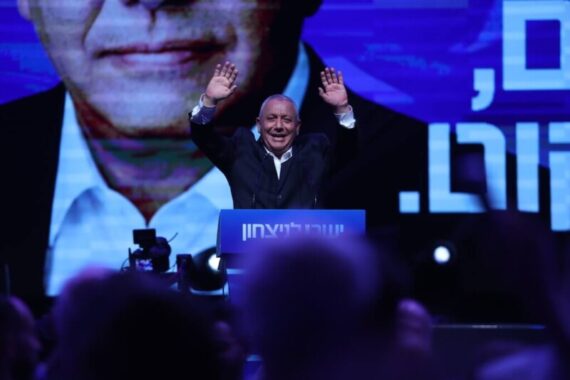
Opinion polls indicate a tight contest between Netanyahu’s Likud party and its right-wing allies and an opposition alliance led by Gadi Eisenkot, a former military chief who has positioned himself as an alternative to the incumbent’s leadership.
Neither bloc currently appears assured of securing the 61 seats required to form a majority in Israel’s 120-member parliament, raising the possibility of prolonged coalition negotiations or another election next year.
Netanyahu has centered his campaign on his wartime record and close relationship with US President Donald Trump, who has publicly endorsed his reelection bid.
The prime minister has portrayed his leadership as essential to confronting Iran, suggesting Sunday that Trump would be prepared to take further military action against Tehran if Netanyahu remained in power.
Eisenkot rejected that argument, accusing Netanyahu of relying on fear and political threats to retain office.
The former military chief said he was confident Washington would cooperate with any Israeli leader chosen through democratic elections.
For many opposition supporters, the vote represents an opportunity to demand accountability for the security failures surrounding the October 7, 2023, Hamas-led attacks, which killed approximately 1,200 people and resulted in 251 hostages being taken, according to Israeli figures.
Israel’s subsequent military offensive devastated much of Gaza and killed approximately 74,000 Palestinians, according to Gaza health authorities.
Eisenkot, who joined Netanyahu’s wartime cabinet following the attacks, resigned eight months later after criticizing the prime minister’s leadership.
Opposition groups have pledged to establish a national inquiry into the failures surrounding October 7.
Nilli Mor, a volunteer campaigning for the Democrats party led by former general Yair Golan, said she hoped the election would bring a new beginning for Israel.
Meanwhile, Netanyahu’s political future could once again depend on far-right coalition partners Itamar Ben-Gvir and Bezalel Smotrich.
Ben-Gvir, whose Jewish Power party has gained support in recent polls, expressed confidence Tuesday that Netanyahu would return to office.
Recommended
With neither major bloc holding a decisive advantage, voter turnout and last-minute decisions could prove critical.
Approximately 13% of Israeli voters remained undecided, according to research by the Israel Democracy Institute.
Participation among Israel’s Arab minority could also influence the election’s outcome, potentially improving Eisenkot’s chances of forming an alternative government.
Although Eisenkot has ruled out formally joining forces with Arab parties, analysts suggest they could support a minority government to prevent Netanyahu from returning to power.
The election also comes amid growing dissatisfaction among some traditional Likud supporters, including voters concerned about Netanyahu’s ongoing corruption trial, in which he denies wrongdoing.
Political analyst Amotz Asa-El of the Shalom Hartman Institute predicted a narrow result rather than a decisive victory for either side.
Beyond domestic politics, the election carries significant implications for Israel’s regional strategy following military confrontations with Hezbollah in Lebanon and Iran.
Eisenkot has pledged to prevent Iran from acquiring military nuclear capabilities, either through force or a diplomatic arrangement backed by Washington.
While he opposes the establishment of a Palestinian state, he has criticized rising settler violence against Palestinians in the occupied West Bank and rejected Netanyahu’s far-right coalition partners.
If neither Netanyahu nor Eisenkot succeeds in assembling a governing majority, Netanyahu could remain caretaker prime minister until another election is held.
For Israeli voters, Tuesday’s ballot represents a choice not only between competing political leaders but also over the country’s direction after three years of devastating conflict, deepening polarization and mounting diplomatic challenges.
(Source: Reuters)

Politics Today is dedicated to publishing insightful analyses in order to understand the changing nature of contemporary politics. It aims to contribute to the sound and constructive discussion of international affairs.
You can see how this popup was set up in our step-by-step guide: https://wppopupmaker.com/guides/auto-opening-announcement-popups/

Stay informed by subscribing to
our weekly newsletter.
You can see how this popup was set up in our step-by-step guide: https://wppopupmaker.com/guides/auto-opening-announcement-popups/
You can see how this popup was set up in our step-by-step guide: https://wppopupmaker.com/guides/auto-opening-announcement-popups/
You can see how this popup was set up in our step-by-step guide: https://wppopupmaker.com/guides/auto-opening-announcement-popups/
You can see how this popup was set up in our step-by-step guide: https://wppopupmaker.com/guides/auto-opening-announcement-popups/