Nuclear Testing Returns After 33 Years as Trump Orders U.S. Resumption

October 30, 2025

Today, there are roughly 12,000 nuclear warheads, most belonging to Russia and the United States. China is estimated to have 600 nuclear warheads, followed by France with 290, the United Kingdom 225, India 180, Pakistan 170, Israel 90, and North Korea 50.
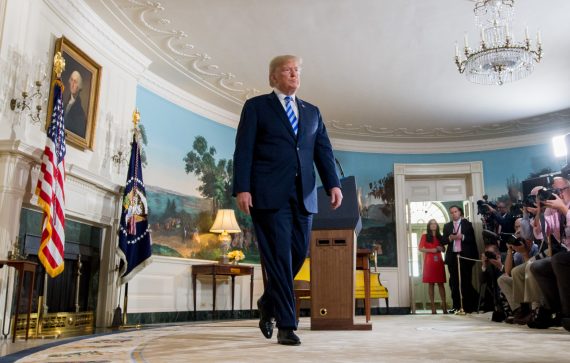
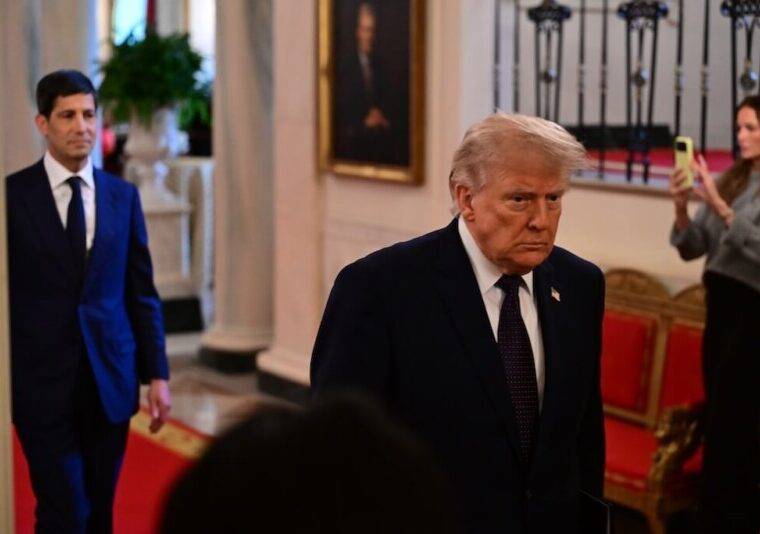
U.S. President Donald Trump leaves after announcing his decision about the nuclear deal with Iran during a speech from the Diplomatic Reception Room at the White House in Washington, DC, May 8, 2018. Getty Images

A

merican President Donald Trump has ordered the U.S. military to immediately resume testing nuclear weapons, ending a three-decade moratorium and sparking fears of a renewed global arms race. The surprise directive came on Thursday, just minutes before Trump began a long-anticipated meeting with Chinese President Xi Jinping, according to senior administration officials.

The decision marks the first time since 1992 that the United States will conduct a live nuclear test, reversing years of bipartisan policy restraint and potentially undermining global non-proliferation efforts built around the Comprehensive Nuclear Test-Ban Treaty (CTBT). It also sets the stage for escalating tensions with Russia and China, both of which have been expanding their nuclear modernization programs.

The nuclear age began in July 1945 when the United States detonated the world’s first atomic bomb at Alamogordo, New Mexico. The test, known as “Trinity,” unleashed an explosion equivalent to 20 kilotons of TNT. Just weeks later, the U.S. dropped atomic bombs on the Japanese cities of Hiroshima and Nagasaki, killing more than 200,000 people and forcing Japan’s surrender in World War Two. Four years later, in August 1949, the Soviet Union conducted its first nuclear test, ending Washington’s monopoly on atomic power and triggering the Cold War arms race.

2,000 nuclear tests conducted worldwide

In the five decades between 1945 and the adoption of the CTBT in 1996, more than 2,000 nuclear tests were conducted worldwide, according to United Nations data. The United States carried out 1,032 of those tests, while the Soviet Union conducted 715. France conducted 210, the United Kingdom 45, and China 45. Nuclear explosions were carried out in deserts, under mountains, and even underwater, scattering radioactive fallout across vast regions.

Since the test-ban treaty was signed, only ten nuclear tests have occurred — two by India and two by Pakistan in 1998, and six by North Korea between 2006 and 2017. The United States last tested in 1992, China and France in 1996, and the Soviet Union in 1990. Russia, which inherited most of the Soviet nuclear arsenal, has never conducted a nuclear warhead test.

The cessation of testing was driven largely by health and environmental concerns. Decades of atmospheric and underground testing left parts of the Pacific Islands, Kazakhstan, and the Arctic contaminated with radiation, causing cancers, birth defects, and widespread ecological damage. Activists and scientists warned that continued testing would make large parts of the planet uninhabitable. The movement for a test ban gained global momentum, leading to the CTBT’s adoption by the United Nations General Assembly in 1996.

Ban by everyone, everywhere?

The CTBT bans all nuclear explosions “by everyone, everywhere.” Russia signed the treaty in 1996 and ratified it in 2000. The United States also signed in 1996 but has never ratified it, leaving Washington technically free from its legal obligations. In 2023, Russian President Vladimir Putin withdrew Moscow’s ratification, bringing Russia in line with the United States and signaling the erosion of a cornerstone of arms control.

Analysts say the motivations behind renewed testing are both technical and political. From a military perspective, testing provides data about the reliability of existing warheads and the capabilities of new weapons designs. From a strategic standpoint, it sends a clear message of deterrence to rivals. “A nuclear test is as much about science as it is about signaling,” said one Western defense official. “It tells the world that a country is willing and able to use its most powerful weapons if necessary.”

In 2020, reports surfaced that Trump’s administration had debated conducting a nuclear test as a show of strength to Russia and China. Putin has since warned that Moscow would respond in kind if Washington resumes testing. “If the United States breaks the moratorium, Russia will do the same,” Putin said earlier this year, accusing the U.S. of destabilizing the global security balance.

The world’s two dominant nuclear powers

The United States and Russia remain the world’s two dominant nuclear powers. According to the Federation of American Scientists, Russia holds approximately 5,459 nuclear warheads, while the United States has around 5,177. The Washington-based Arms Control Association estimates the figures slightly higher, with 5,580 for Russia and 5,225 for the U.S. Together, they possess over 90 percent of the world’s nuclear weapons.

Global stockpiles have fallen dramatically since the Cold War peak of more than 70,000 warheads in 1986. Today, there are roughly 12,000 in existence, most belonging to Russia and the United States. China is estimated to have 600 nuclear warheads, followed by France with 290, the United Kingdom 225, India 180, Pakistan 170, Israel 90, and North Korea 50.

The resumption of testing threatens to reverse decades of progress in arms control and heightens the risk of miscalculation between nuclear-armed states. Experts warn that it could embolden other nations to resume testing or develop new nuclear capabilities. “We are entering an era of renewed nuclear competition,” said one European diplomat. “The guardrails that have kept the world safe for decades are being dismantled piece by piece.”

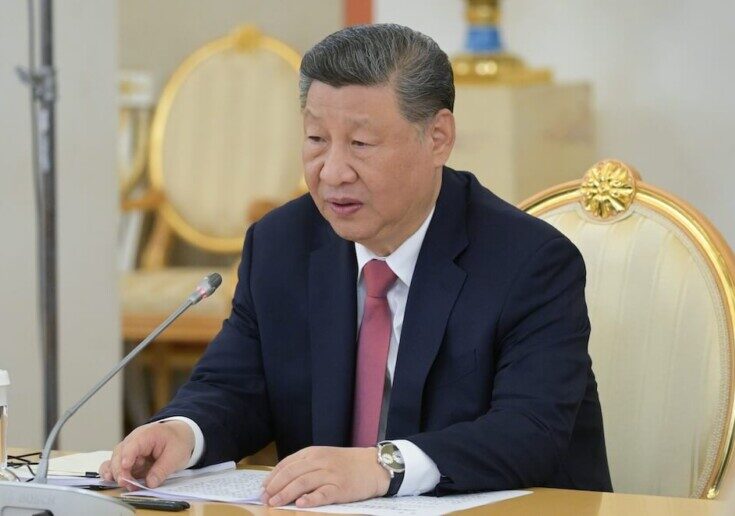
As Washington prepares for its first nuclear test in over three decades, global leaders are calling for restraint. China’s President Xi Jinping said the world “must not return to the path of confrontation,” while United Nations Secretary-General António Guterres urged all nuclear powers to uphold the spirit of the test-ban treaty. “The world cannot afford another arms race,” Guterres said in a statement. “History has shown that once nuclear testing begins, it becomes very difficult to stop.”

(Source: Reuters)

Politics Today is dedicated to publishing insightful analyses in order to understand the changing nature of contemporary politics. It aims to contribute to the sound and constructive discussion of international affairs.