Progressive Bulgaria Heads for Decisive Victory in Latest Snap Election
With 87.2% of ballots counted as of 9:50 a.m. local time (0650 GMT), Progressive Bulgaria had secured 44.6% of the vote, maintaining a substantial lead over its rivals.
April 20, 2026
B
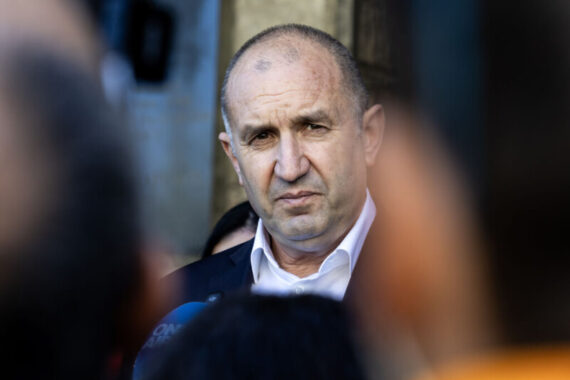
ulgaria’s Progressive Bulgaria coalition, led by former president Rumen Radev, was on course for a commanding victory in Sunday’s early parliamentary elections, according to near-final results released by the Central Election Commission (CEC) on Monday, raising the prospect of a single-party government in a country plagued by years of political instability.
With 87.2% of ballots counted as of 9:50 a.m. local time (0650 GMT), Progressive Bulgaria had secured 44.6% of the vote, maintaining a substantial lead over its rivals. The reformist We Continue the Change–Democratic Bulgaria coalition trailed in second place with 13.5%, narrowly ahead of the center-right GERB–SDS alliance, anchored by Citizens for European Development of Bulgaria, which stood at 13.3%.
The Movement for Rights and Freedoms (MRF), traditionally representing minority communities, garnered around 6.1%, while the nationalist Revival (Vazrazhdane) hovered just above the parliamentary threshold with approximately 4.4%.
Earlier preliminary results, based on a smaller share of counted votes, had already indicated a strong lead for Progressive Bulgaria, with support above 43%. Parallel vote counts conducted by polling agencies and reported by the state news agency BTA projected an even higher share nearing 45%, reinforcing expectations of a decisive outcome.
Seat projections based on partial results suggest Progressive Bulgaria could win around 134 seats in the 240-member National Assembly, comfortably surpassing the 121-seat threshold required to form a majority government. GERB–SDS and We Continue the Change–Democratic Bulgaria are projected to secure roughly 38 and 37 seats respectively, while MRF and Revival are expected to hold smaller blocs.
If confirmed, the result would mark a dramatic shift in Bulgaria’s political landscape, potentially ending a prolonged period of fragmentation that has seen the Balkan country hold eight parliamentary elections since 2021. Successive votes have failed to produce stable governing coalitions, leading to a cycle of short-lived administrations and caretaker governments appointed by the presidency.
Sunday’s election once again drew a crowded field, with 14 political parties and 10 alliances competing for seats. However, voter engagement remained subdued. The CEC reported turnout at just 34.63% as of 4:00 p.m. local time (1300 GMT) on election day, reflecting persistent public disillusionment with the political process.
Recommended
Analysts say Progressive Bulgaria’s surge reflects growing frustration with entrenched political elites and repeated governance failures. The coalition, which campaigned on promises of institutional reform, economic stability and a break from years of political deadlock, appears to have consolidated support across a broad segment of the electorate.
“The scale of this lead suggests voters are seeking a clear mandate and an end to the cycle of inconclusive elections,” said a Sofia-based political analyst. “Whether that translates into effective governance will depend on how the coalition manages internal cohesion and opposition pressure.”
Despite the strong showing, challenges remain. Bulgaria continues to grapple with economic disparities, corruption concerns and geopolitical pressures as a member of both the European Union and NATO. A decisive parliamentary majority could provide the political stability needed to pursue reforms, but expectations are likely to be high.
The CEC is required under Bulgarian law to announce final vote totals and the official seat distribution within four days of the election. The names of elected members of parliament must be published within seven days.
Until then, attention will remain focused on whether Progressive Bulgaria’s projected majority holds as the remaining ballots are counted. If it does, the result could mark the beginning of a new political chapter for Bulgaria after years of uncertainty and repeated trips to the polls.
(Source: Anadolu Agency)

Politics Today is dedicated to publishing insightful analyses in order to understand the changing nature of contemporary politics. It aims to contribute to the sound and constructive discussion of international affairs.
You can see how this popup was set up in our step-by-step guide: https://wppopupmaker.com/guides/auto-opening-announcement-popups/

Stay informed by subscribing to
our weekly newsletter.
You can see how this popup was set up in our step-by-step guide: https://wppopupmaker.com/guides/auto-opening-announcement-popups/
You can see how this popup was set up in our step-by-step guide: https://wppopupmaker.com/guides/auto-opening-announcement-popups/
You can see how this popup was set up in our step-by-step guide: https://wppopupmaker.com/guides/auto-opening-announcement-popups/
You can see how this popup was set up in our step-by-step guide: https://wppopupmaker.com/guides/auto-opening-announcement-popups/