Report: 2025 Marked by Extreme Heat, Record Temperatures
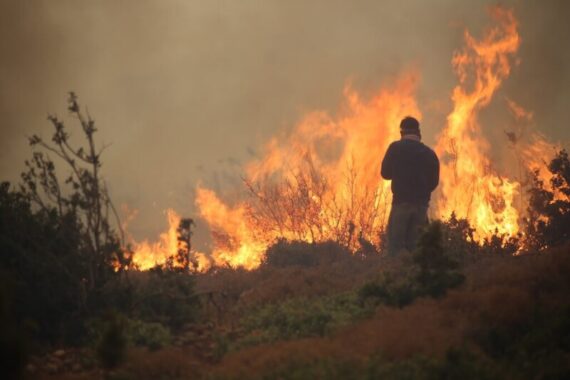
Extreme heat intensified drought conditions in many regions by accelerating evaporation rates.
December 23, 2025
T
he year 2025 ranked among the warmest on record globally, despite a shift toward neutral or weak La Niña conditions that typically moderate global temperatures, according to the World Meteorological Organization (WMO) and the EU’s Copernicus Climate Change Service.
Global temperatures in 2025 were recorded as the second- or third-warmest ever, following the record-setting heat of 2024. Scientists said the trend underscores the growing dominance of human-caused climate change driven by greenhouse gas emissions, with natural cooling cycles no longer sufficient to offset rising baseline temperatures.
The WMO warned that temperatures over the next five years are likely to remain at or near record levels. Its latest outlook shows an 80% chance that at least one year will surpass the current warmest year on record and a 70% chance that the five-year average will temporarily exceed 1.5 degrees Celsius above pre-industrial levels.
Extreme heat during the summer of 2025 caused widespread health impacts across multiple regions, with July ranking as the third-warmest month on record globally.
Europe experienced its fourth-warmest summer, with particularly intense heat in western and southern regions. Land surface temperature anomalies reached up to 6°C above average in parts of northeastern Spain, southwestern France, the Balkans and Fennoscandia.
The UK recorded its hottest June on record in England and the second-warmest nationwide since records began in 1884, while the Netherlands experienced its second-hottest June since 1901. Spain endured its most intense heatwave on record in August, according to national meteorological authorities.
Scandinavian countries including Finland, Denmark, Sweden and Norway also saw prolonged heatwaves in July.
A study by Imperial College London and the London School of Hygiene & Tropical Medicine estimated approximately 24,400 heat-related deaths across 854 European cities between June and August. About 68% of those deaths were attributed to climate change, with older populations particularly vulnerable.
Large parts of Asia were affected by extreme heat in 2025. Japan recorded one of its hottest Junes since 1898, while South Korea reported record daily temperature averages in late June.
India issued red heat alerts in New Delhi amid extended heat conditions, while temperatures in parts of Pakistan’s Punjab province reached around 50°C. Iran temporarily closed public institutions in 18 provinces to manage soaring energy demand driven by widespread cooling use.
In North America, the US experienced severe heatwaves, including a major June heat dome that exposed more than 255 million people to extreme temperatures. Readings frequently exceeded 38°C across large portions of the country.
The US Centers for Disease Control and Prevention said extreme heat remained the leading weather-related cause of death, with preliminary 2025 data confirming at least 150 heat-related fatalities nationwide.
Recommended
Extreme heat also intensified drought conditions in many regions by accelerating evaporation rates. Iran faced one of its most severe water crises on record, with Lake Urmia shrinking dramatically and dam levels in major cities falling to critically low levels.
Drought conditions also affected Syria, parts of Africa and South Korea, where the city of Gangneung was declared a disaster zone following record-low rainfall.
The WMO warned that global water cycles are becoming increasingly erratic, marked by sharp swings between floods and droughts. UN Water estimates that 3.6 billion people currently face water shortages for at least one month each year, a figure projected to exceed 5 billion by 2050.
Events in 2025 highlighted the accelerating risks posed by climate change, as heatwaves, droughts and related crises grow more frequent, more severe and more disruptive worldwide.
(Source: Anadolu Agency)

Politics Today is dedicated to publishing insightful analyses in order to understand the changing nature of contemporary politics. It aims to contribute to the sound and constructive discussion of international affairs.
You can see how this popup was set up in our step-by-step guide: https://wppopupmaker.com/guides/auto-opening-announcement-popups/

Stay informed by subscribing to
our weekly newsletter.
You can see how this popup was set up in our step-by-step guide: https://wppopupmaker.com/guides/auto-opening-announcement-popups/
You can see how this popup was set up in our step-by-step guide: https://wppopupmaker.com/guides/auto-opening-announcement-popups/
You can see how this popup was set up in our step-by-step guide: https://wppopupmaker.com/guides/auto-opening-announcement-popups/
You can see how this popup was set up in our step-by-step guide: https://wppopupmaker.com/guides/auto-opening-announcement-popups/