Russia Deepens Ties with Sahel Countries in Military Talks
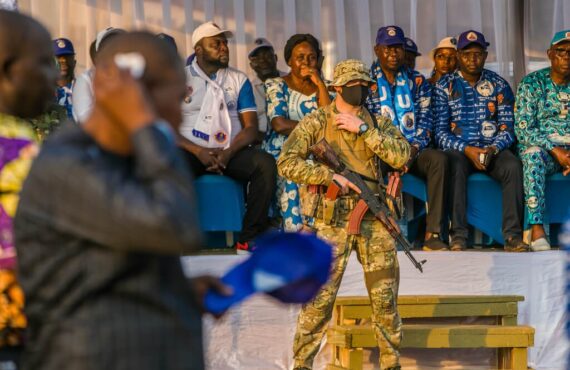
Russia’s military footprint in Africa has grown significantly in recent years, often through the deployment of private security contractors, including the Wagner Group.
August 15, 2025
R
ussia has held its first official military consultations with the juntas ruling Burkina Faso, Mali, and Niger, sealing a defense cooperation memorandum as Moscow accelerates efforts to expand its strategic influence in Africa’s volatile Sahel region.
The meeting, announced Thursday by Russia’s Defense Ministry, brought together Russian Defense Minister Andrei Belousov and his counterparts from the three West African states, all of which have pivoted sharply away from France and other Western partners since taking power in a series of military coups.
“Today we are holding the first consultations between the heads of the defense ministries of the Russian Federation and the countries participating in the Sahel States Confederation,” Belousov said, using the name for the recently formed alliance between the three nations. The bloc — formally known as the Alliance of Sahel States (AES) — was created earlier this year as a counterweight to the Western-leaning Economic Community of West African States (ECOWAS).
Burkina Faso, Mali, and Niger have in recent years ejected French troops, shuttered Western military cooperation programs, and embraced closer security ties with Russia. In each country, the military seized power citing frustration over the inability of civilian governments and their Western allies to contain a worsening jihadist insurgency.
The AES members accuse ECOWAS of acting under France’s influence, especially after the bloc imposed sanctions in response to the coups. In January, all three formally withdrew from ECOWAS, marking a major break with the region’s dominant diplomatic and economic framework.
Mali’s defense minister, Colonel Sadio Camara — considered a leading pro-Russian voice within the junta — said military cooperation is already the “largest area” of engagement with Moscow. “This meeting represents a strengthening of the partnership needed to guarantee the security and sovereignty of our states,” he said.
According to the Russian Defense Ministry, the talks concluded with the signing of a memorandum of understanding on defense cooperation, though no specifics were made public. Belousov said Moscow was prepared to provide “comprehensive assistance” to help stabilize the region, where militant violence linked to Al-Qaeda and the Islamic State has killed thousands and displaced millions over the past decade.
Russia’s military footprint in Africa has grown significantly in recent years, often through the deployment of private security contractors, including the Wagner Group. Although Wagner’s formal operations in Mali have reportedly scaled back following the death of its founder Yevgeny Prigozhin, Russian mercenaries remain active under new structures integrated more closely with the Russian state.
Analysts say Moscow’s security exports — training, equipment, and combat support — appeal to Sahel juntas facing persistent insurgent threats, especially as Western governments condition aid on democratic governance and human rights standards.
The Sahel region, a semi-arid belt stretching across Africa south of the Sahara, has become one of the world’s fastest-growing arenas of geopolitical competition. Its strategic importance stems from its natural resources — including gold, uranium, and other minerals — and its role as a transit hub for migration toward North Africa and Europe.
By deepening military ties with AES members, Russia is positioning itself as the primary security guarantor for regimes that reject Western partnership models. The move is also seen as part of Moscow’s broader strategy to offset diplomatic isolation following its full-scale invasion of Ukraine in 2022.
“Russia is offering unconditional military aid and political backing, which is very attractive to juntas that are under Western sanctions,” said an African security analyst in Dakar. “For the Kremlin, the Sahel is a place where it can project power cheaply and undermine France, the EU, and the U.S.”
Recommended
The creation of the AES in September 2023 marked a formal alignment of the three Sahel states’ security policies. Its charter emphasizes mutual defense, joint military operations, and resistance to foreign “interference” — language widely understood as targeting ECOWAS and Western governments.
Belousov praised the formation of the AES as “the result of a free choice by the Sahelian peoples and their commitment to sustainable peaceful development.” He framed Russia’s role as supporting “sovereign decisions” by African partners, in contrast to what he described as Western pressure.
While the defense pact signals deepening ties, the practical scale of Russian support remains unclear. Moscow’s capacity to expand military commitments abroad is constrained by its ongoing war in Ukraine, but it has leveraged relatively low-cost interventions in Africa — such as deploying a few hundred advisors and contractors — to secure strategic footholds.
For the juntas, the challenge will be whether Russian assistance can produce tangible security gains where years of French and UN-backed efforts have failed. So far, militant attacks have spread into new areas, raising fears that instability could spill into coastal West African states like Ghana, Togo, and Benin.
Still, the optics of the Moscow meeting were powerful: three uniformed African defense ministers, standing alongside Belousov, declaring a shared vision for regional security outside the Western sphere of influence.
As one diplomat in Bamako put it: “This is as much about sending a message to Paris and Washington as it is about fighting the jihadists.”
(Source: The Moscow Times)

Politics Today is dedicated to publishing insightful analyses in order to understand the changing nature of contemporary politics. It aims to contribute to the sound and constructive discussion of international affairs.
You can see how this popup was set up in our step-by-step guide: https://wppopupmaker.com/guides/auto-opening-announcement-popups/

Stay informed by subscribing to
our weekly newsletter.
You can see how this popup was set up in our step-by-step guide: https://wppopupmaker.com/guides/auto-opening-announcement-popups/
You can see how this popup was set up in our step-by-step guide: https://wppopupmaker.com/guides/auto-opening-announcement-popups/
You can see how this popup was set up in our step-by-step guide: https://wppopupmaker.com/guides/auto-opening-announcement-popups/
You can see how this popup was set up in our step-by-step guide: https://wppopupmaker.com/guides/auto-opening-announcement-popups/