Sovereignty, Interests and Alliance: Germany’s NATO Journey
With its NATO membership, Germany began to re-establish a regular army and rearm.
August 4, 2026
G
ermany’s accession to the North Atlantic Treaty Organization (NATO) marked a turning point both in the shaping of the post-Second World War European security architecture and in Germany’s reintegration into the international system. Following its defeat in 1945 and the subsequent division between East and West Germany, the Federal Republic of Germany (West Germany) found itself on the front line of the Cold War.
Within this geopolitical reality, under the leadership of its first Chancellor, Konrad Adenauer, Germany saw ‘integration with the West’ (Westbindung) as the sole means of regaining the country’s sovereignty, securing its safety and forging lasting ties with the Western world. Germany’s membership of NATO, which took shape in line with Adenauer’s strategic vision and was formalized on 6 May 1955, represented not merely participation in a military alliance, but also a historic paradigm shift that reinforced Germany’s democratic identity and redefined the balance of power in continental Europe.
With its NATO membership, Germany began to re-establish a regular army and rearm. The fact that Germany was on the ‘hot front’ of the Cold War—a situation in which it could become the direct centre of hostilities in a potential conflict—is best understood through Chancellor Adenauer’s statement: ‘The sole aim of Germany’s rearmament is to contribute to the preservation of peace.’
With the collapse of the Soviet Union and the Cold War giving way to regional hot conflicts, the late 1990s and early 2000s saw Germany playing an active role within NATO. In addition to its participation in the Kosovo Peacekeeping Force (KFOR) in the Balkans, Germany’s deployment of troops to the US-led operations in Afghanistan in 2001, at NATO’s request, is particularly noteworthy. Germany’s participation in the International Security Assistance Force (ISAF) – established by a United Nations resolution and subsequently placed under NATO command – with a force that at times exceeded 5,000 troops, is regarded as the largest overseas military mission in modern German history.
In an interview given during a visit to German troops in Afghanistan in 2010, the then German President Horst Köhler stated that Germany’s overseas military mission should be viewed in a different light, remarking: “As a country of our size, as a country focused on foreign trade and therefore dependent on it, we must recognise that military intervention may also be necessary to protect our interests when required or in emergencies – for example, to secure free trade routes or to prevent regional instability – as such instability would undoubtedly have a negative impact on our opportunities in terms of trade, employment and income. ‘All of this must be discussed, and in my view, our situation is not all that bad…’ he had stated.
Horst Köhler’s remarks, made at a time when there had also been military casualties, raised questions about the constitutionality of Germany’s role in ISAF whilst also sparking intense domestic political debate; Horst Köhler subsequently resigned from the office of President.
Similar remarks were made by the then Federal Minister of Defence, Peter Struck, in December 2002, when the decision was taken to continue sending troops to Afghanistan. In a speech to the Federal Parliament, Struck said: “To clarify the matter, I had mentioned that our security is also defended in the Hindu Kush. ‘When we combat international terrorism alongside our allies and partners—using military means where necessary—in the very places where it originates, Germany becomes a safer place. Our security is further enhanced when the Bundeswehr successfully participates in the reconstruction process in the Balkans and Afghanistan, in accordance with democratic principles, thereby helping to establish the secure environment urgently required in these regions.”
These remarks, which are still the subject of debate today, signalled the dawn of a new era in German foreign policy at the time they were made. They marked the beginning of a new phase in which German foreign policy was no longer confined to defending its own borders, but also encompassed international preventive efforts. National interests were aligned with international interests, thereby justifying a military presence beyond Germany’s borders.
Despite all the past debates, although the number of troops is smaller, Germany still maintains a military presence at 17 locations with 2,000 troops as part of various NATO missions.
Another initiative coinciding with this turning point in Germany’s foreign policy from a military perspective was the Common Security and Defence Policy (CSDP – Gemeinsame Sicherheits- und Verteidigungspolitik), which was proposed at the European Union summit in Cologne in 1999 under Germany’s presidency and officially incorporated into the Treaty of Lisbon in 2009. The CSDP, which was officially implemented in 2009, also led to the establishment of the European Union’s High Representative for Foreign Affairs through the provisions added to the Treaty of Lisbon. Just as in the NATO Treaty, the provision for a call for assistance and support, to be activated at the request of a member state, was also incorporated into the Treaty of Lisbon, thereby giving the CSDP practical effect. The first to invoke this provision, by requesting assistance and support, was French President Hollande following the terrorist attacks in Paris in 2015.
With 23 member states within NATO, the EU began setting strategic objectives through the CSDP to enable the EU to meet the expectations placed upon it as a security actor operating on a global scale. In 2020, under Germany’s Presidency, the ‘Strategic Compass’ was launched as the key document of the Common Security and Defence Policy (CSDP), setting out a clear direction and defining both the policy’s objectives and the necessary resources to achieve them. The first joint threat analysis by EU Member States was drawn up. The Strategic Compass also aims to foster even better cooperation in the field of security and defence and to enable the EU to respond more swiftly and effectively to crises through forward planning.
The EU Global Strategy, developed in 2016, stands out as a new and shared commitment regarding the security policies of Member States, whilst steps were also taken that same year to establish the EU Common Defence Fund under the CSDP.
Although the CSDP may at first glance appear to be an alternative to NATO, it is a structure without a standing army or an existing military chain of command. Since 2020, whilst the EU has undertaken various global missions under the CSDP, joint operations with NATO have also taken place.
Within the EU, a group of countries led by France argue that Europe must become an independent military and strategic actor, separate from the other side of the Atlantic. However, the former Warsaw Pact members that joined the Union through eastern enlargement—Poland, Romania, Hungary and the Baltic states—view NATO as an irreplaceable security umbrella for Eastern Europe. These states, which view Russia as a direct existential threat, currently regard the CSDP’s military deterrence as inadequate and position NATO—which hosts US nuclear and conventional capabilities—as the absolute preference for their own national defence. These countries advocate that the transatlantic bond must not be severed.
Furthermore, the rule within the EU requiring unanimous decision-making on CSDP matters hinders the EU’s ability to respond swiftly and effectively to crises. This situation impedes the CSDP’s operational capabilities.
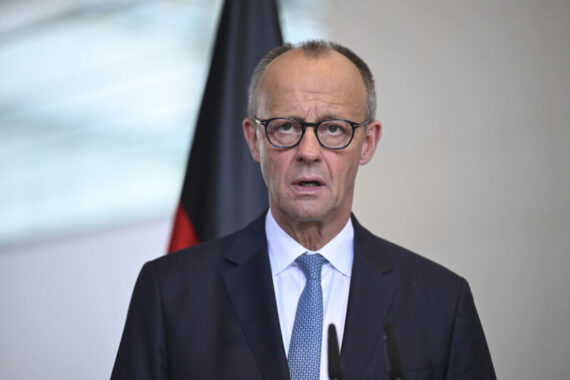
Germany, meanwhile, is endeavouring to strengthen the CSDP whilst simultaneously seeking to bolster its role within NATO by increasing its defence budget. Ahead of the NATO summit, Germany – which had been criticised by the US President for not increasing its defence budget sufficiently and for failing to provide adequate support within NATO – has already countered Trump’s criticisms through Chancellor Merz, stating that defence spending has now reached 4 per cent of annual gross domestic product.
The debate over the relationship between NATO and the EU’s CSDP was also raised during Chancellor Merz’s meeting with President Recep Tayyip Erdoğan during his visit to Ankara. President Erdoğan emphasised to Chancellor Merz that preserving the ‘Transatlantic Bond’ was crucial for strengthening NATO’s European pillar, and stressed that Turkey could support the European Union’s defence initiatives provided they complemented NATO. This situation demonstrates, on the one hand, that the CSDP is being closely monitored in Ankara and, on the other, that it has once again been emphasised that, from Turkey’s perspective, a common defence strategy against global threats must be defined within the framework of NATO. However, Merz’s statement that ‘a new European NATO is being established’ has failed to provide any indication as to what role the CSDP will play within NATO.
Recommended
Relations between Turkey and Germany, which form NATO’s south-eastern flank, have followed a contentious course due to geopolitical shifts, diverging strategic priorities, Germany’s approach to Turkey’s cross-border operations, and the ‘clash of national interests’ between the two countries within the alliance. The fundamental strategic disagreement between Turkey and Germany stems from the asymmetrical nature of their threat perceptions. As a border state directly affected by instability in its immediate region (Syria, Iraq and the Mediterranean), Turkey prioritizes issues such as ‘counter-terrorism’ and ‘safeguarding territorial integrity’—not only its own but also that of its neighbors—whilst Germany has adopted a stance that disregards Turkey’s determination in the fight against terrorism.
During the Syrian civil war, following an increase in the ballistic missile threat against Turkey, Turkey requested an air defense system from NATO. In response to this request, Germany deployed the Patriot missile defense system to Kahramanmaraş; however, in 2015, despite the threat persisting, Germany withdrew the Patriot missile defence systems prematurely, citing Turkey’s counter-terrorism policies as justification. This situation, which led to a serious loss of trust in Germany and called into question NATO’s deterrent capability, persisted until recently.
Despite the friendly and warm remarks made by Merz in Ankara, Germany; its embrace of the PKK and FETÖ, the fact that these organizations still find a foothold in Germany, and the German state’s belief that by providing a platform for these terrorist organizations it could politically weaken Turkey, indicate that relations will not improve in the short term and that the alliance between the two countries within NATO will continue to be turbulent for some time to come.
Among the key issues included in the latest coalition agreement—that is, the government program—regarding Germany’s role within NATO are improvements to the federal armed forces’ contingents deployed as part of NATO’s defense efforts and an increase in military equipment. It has been stated that, due to its geographical location in Europe, Germany will be further strengthened as a central hub of NATO. Similarly, the government program views NATO as one of the cornerstones of the transatlantic partnership and emphasizes its indispensability for European security.
Among the objectives is the commitment to work towards establishing a European Defence Union with the aim of strengthening NATO’s European pillar. This objective is also in line with the argument that Germany must become more Europeanized in order for NATO to remain ‘Transatlantic’. In doing so, it also intends to pursue a trilateral cooperation protocol with France and the United Kingdom.
Whilst Germany is moving towards becoming a logistics hub within NATO, it will, at the same time, seek to bring together its EU member allies under a common budget and logistics framework by utilizing the CSDP mechanisms within the EU to strengthen NATO. In the long term, it will seek to secure its economic and political leadership on the European continent through its strength in the defense industry and its military power.
(Originally published in Turkish by Kriter)
Dr. Muhterem DİLBİRLİĞİ is a Turkish academic who serves as the Education Attaché, Turkish Consulate General in Cologne.
You can see how this popup was set up in our step-by-step guide: https://wppopupmaker.com/guides/auto-opening-announcement-popups/

Stay informed by subscribing to
our weekly newsletter.
You can see how this popup was set up in our step-by-step guide: https://wppopupmaker.com/guides/auto-opening-announcement-popups/
You can see how this popup was set up in our step-by-step guide: https://wppopupmaker.com/guides/auto-opening-announcement-popups/
You can see how this popup was set up in our step-by-step guide: https://wppopupmaker.com/guides/auto-opening-announcement-popups/
You can see how this popup was set up in our step-by-step guide: https://wppopupmaker.com/guides/auto-opening-announcement-popups/