‘Strategic Complementarity’ Linking Ankara and Tokyo
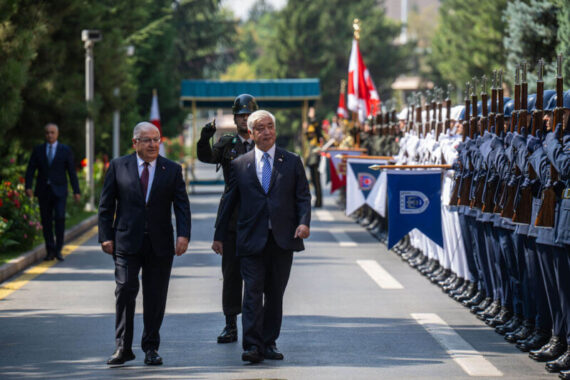
Japanese Defense Minister Gen Nakatani's visit to Ankara in August 2025 and his tour of Baykar facilities were concrete demonstrations of the importance of the Ankara-Tokyo cooperation.
October 30, 2025
T
he world became accustomed to a unipolar order after the Cold War. However, it has been confronted with a new geopolitical reality in recent years. In this new era of intensifying competition between major powers, medium-sized powers are attempting to forge their own path instead of remaining confined within traditional alliance structures. One of the most striking examples of this trend is the defense industry partnership emerging between Türkiye and Japan, two countries located at opposite ends of Asia.
Centuries-old bonds of friendship could bring the two countries together, combining their complementary technological strengths to strengthen their strategic autonomy and become more effective global actors. As President Erdoğan pointed out in his August 29 article in Japan’s Nikkei newspaper, this partnership is evolving beyond technical and military cooperation. It also represents middle powers’ search for new types of strategic engagement in the global security architecture. At the heart of this potential cooperation are two key technologies: unmanned aerial vehicles and semiconductors.
The relationship between Türkiye and Japan is based not only on current geopolitical calculations, but also on a history of mutual sympathy and respect. One of the most well-known symbols of this friendship occurred when the Japanese people showed great assistance and sacrifice to the crew of the Ottoman frigate Ertuğrul after it sank off the coast of Japan in 1890. This historic event forged an indelible bond between the two nations. In the modern era, these ties have been further strengthened through humanitarian gestures, such as Turkish Airlines’ rescue of Japanese citizens stranded in Tehran during the Iran-Iraq War in 1985.
These historic moments have fostered a strong climate of trust between the two countries. In 2013, upgrading relations to a “strategic partnership” and frequent high-level visits between leaders demonstrate that current defense industry cooperation is a natural evolution of a deep-rooted relationship, not just a new beginning. This solid foundation makes the potential partnership more resilient and long-term.
Türkiye’s defense industry has undergone a remarkable transformation over the past two decades. Once highly dependent on Western suppliers, Türkiye’s defense industry was forced to pursue self-sufficiency due to embargoes and tensions with allies. The most visible result of these efforts is the Baykar-produced Bayraktar TB2 UAV system. TB2s have gained global renown for changing the course of wars around the world, including in Nagorno-Karabakh, Ukraine, Syria, and Libya.
They have proven to be more economical and operationally effective than their high-cost Western counterparts. This success has elevated Türkiye to one of the world’s leading suppliers of armed UAVs, with exports to many countries. The recently developed Bayraktar TB3 is designed for use on aircraft carriers and has the potential to demonstrate technical compatibility with Japan’s Izumo-class ships thanks to its foldable wing design. This is an important sign of possible future cooperation.
Japan is showing great interest in Türkiye’s UAV revolution. The main reason for this interest is Japan’s search for strategic solutions for its defense industry. Compared to systems such as the MQ-9 Reaper procured from the U.S., Turkish UAVs are more economical and could alleviate pressure on Japan’s defense budget. However, cost is not the only issue. Article 9 of Japan’s 1947 constitution prohibits the declaration of war and the maintenance of military forces. This has led to the country’s heavy reliance on the U.S. for security, which is enshrined in the 1960 Treaty of Mutual Cooperation and Security.
Under Article 5, both parties recognize an attack on Japanese territories as a common danger. Meanwhile, Article 6 grants the U.S. the right to maintain military bases in Japan to preserve peace in the Far East. This alliance provides Japan with a nuclear umbrella and access to advanced defense technologies. However, it also limits Japan’s independent procurement options and creates a structural dependence on the U.S. Foreign Military Sales program. Japan’s defense and security cooperation with the European Union reflects its desire to establish strategic partnerships amid growing mutual concerns about China. This signals Japan’s intention to diversify its defense ties, not only with the U.S., but also with other allies.
Japan’s domestic defense industry has long been fragile. Due to factors such as a limited domestic market and low profitability, many second- and third-tier suppliers have withdrawn from the sector. This internal hollowing-out phenomenon has driven Japan towards international partnerships, providing access to new capabilities and enabling the restructuring of the defense industry through technology transfer, joint production, and the revitalization of domestic demand.
A large portion of Japan’s defense contracts are concentrated among a few firms. Mitsubishi Heavy Industries holds the largest share at 25.5 percent, followed by Kawasaki Heavy Industries at 11.5 percent and Mitsubishi Electric at 5.4 percent. This distribution exacerbates the sector’s structural dependency, making Japan’s quest for strategic autonomy even more urgent.
The Turkish-Japanese defense partnership is fundamentally based on the principle of each country complementing the other’s shortcomings. Türkiye excels in the field of UAVs with operational success and cost-effectiveness, while Japan is a global leader in semiconductor technologies, the backbone of modern warfare platforms. Modern UAVs are more than just aircraft and cameras. They require state-of-the-art semiconductors for high-resolution sensors, autonomous navigation systems, secure communication infrastructures, and artificial intelligence–supported data processing capabilities.
Although Türkiye has made significant progress in the UAV industry, it must collaborate with countries that possess expertise in advanced electronic components, a market worth trillions of dollars. This has transformed Türkiye’s need to develop domestic technological capacity within its defense industry from a strategic goal to a structural necessity. As stated in the Turkish Academy of Sciences (TÜBA) publication Global Transformations and Türkiye (2024), the international system provides a highly suitable ground for middle powers to establish strategic partnerships, particularly in the field of semiconductors.
Japan’s technological prowess is currently of great importance to Türkiye. Japan’s semiconductor industry policy has continuously evolved since the 1970s in order to adapt to global competition. Japanese companies that produce the world’s most advanced semiconductor manufacturing equipment, specialized chemicals, and integrated circuits are critical components of the global electronics supply chain. Alongside industry leaders such as Renesas and Tokyo Electron, new domestic manufacturers like Rapidus are competing with them in cutting-edge production processes, such as 2-nanometer production.
This situation aligns with Türkiye’s search for a secure supply chain to meet its semiconductor needs and Japan’s goal of finding new export opportunities beyond the Chinese and Western markets. Through this partnership, Türkiye can maintain its superiority in UAVs technology while transitioning to more autonomous systems. Meanwhile, Japan can seize the opportunity to establish defense industry cooperation that will deepen and solidify bilateral relations. The emphasis on semiconductors as strategic enablers underscores that this collaboration is not just a technical exchange, but also a means of fostering a strategic alliance.
Recommended
Although there is great potential for Turkish-Japanese defense cooperation, there are some potential obstacles that must be overcome. For example, Japan’s pacifist constitution and public opinion, which reject aggressive militarism, could restrict the scope of such a partnership. Notably, U.S.-origin components in Japanese semiconductors could restrict their re-export to Türkiye under the U.S. International Traffic in Arms Regulations (ITAR). Alliance sensitivities are also a significant factor. Over ninety percent of Japan’s defense imports come from the U.S. This indicates that Washington may be concerned that Turkish-Japanese defense ties could lower Tokyo’s supply priority. Türkiye’s NATO membership and its procurement of S-400 systems from Russia create a complex dynamic. These sensitivities must be diplomatically managed with great care.
Despite these challenges, recent high-level visits from both Tokyo and Ankara demonstrate strong political will. Japanese Defense Minister Gen Nakatani’s visit to Ankara in August 2025 and his tour of Baykar facilities were concrete demonstrations of the importance of this cooperation. Japan’s defense and security cooperation with the European Union, initiated amid growing mutual concerns about China, signals its desire to establish strategic partnerships. This signals that Japan is diversifying its defense ties, not only with the U.S., but also with other allies.
On the other hand, it is important to note the allegations that Japan may purchase drones from Israel instead of Türkiye. If Japan, known for its respect for human rights and values, were to sign such an agreement, it would cause great disappointment in the global public opinion due to Israel’s ongoing genocide and war crimes in Palestinian territories. This is not merely a commercial preference, but also an ethical and political stance.
In terms of Turkish-Japanese cooperation, Japan’s “minilateralism” approach, developed through experience in international projects in various fields, could be instructive. The Global Combat Air Program (GCAP) with the United Kingdom and Italy aims to develop a new generation of stealth fighter jets. The Mogami-class frigate agreement with Australia is one of the most significant exports since World War II. These multilateral collaborations could create a new sphere of influence, increasing the visibility of both countries in the international arena and moving beyond the competition between major powers.
Based on these possible scenarios, the most reasonable approach to cooperation between the two countries appears to be a phased, incremental partnership. In the first stage, Japan could test a limited number of Turkish UAVs to supplement its existing capabilities, and Türkiye could incorporate Japanese semiconductors into certain platforms. More ambitious scenarios could include co-development programs for joint UAVs or electronic systems projects or “minilateralism” frameworks involving third countries, such as the United Kingdom or Australia.
Ultimately, the defense partnership between Türkiye and Japan may exemplify middle powers seeking greater autonomy within existing alliances rather than providing an alternative to alliances in the global security architecture. By combining complementary technologies, diversifying supply chains, and gaining strategic flexibility, these two countries could become more effective actors in a multipolar world. This partnership is a striking example of how technological complementarity meets political pragmatism.
(Originally published in Turkish by Kriter)

Dr. Doğrul is an associate professor at the Joint War College of the Turkish National Defence University, specializing in international relations, security studies, and Asia-Pacific affairs. He has conducted research in Europe and held post-doctoral fellowships in Japan.
You can see how this popup was set up in our step-by-step guide: https://wppopupmaker.com/guides/auto-opening-announcement-popups/

Stay informed by subscribing to
our weekly newsletter.
You can see how this popup was set up in our step-by-step guide: https://wppopupmaker.com/guides/auto-opening-announcement-popups/
You can see how this popup was set up in our step-by-step guide: https://wppopupmaker.com/guides/auto-opening-announcement-popups/
You can see how this popup was set up in our step-by-step guide: https://wppopupmaker.com/guides/auto-opening-announcement-popups/
You can see how this popup was set up in our step-by-step guide: https://wppopupmaker.com/guides/auto-opening-announcement-popups/