T
he United States’ military intervention in Venezuela on 3 January 2026 marked a significant turning point in the international system. The capture and transfer of President Nicolás Maduro and his wife to the United States as part of this operation constitutes a serious violation of international law and is a concrete manifestation of Trump’s ‘America First’ policy. Trump justified the intervention by claiming that Venezuela was a major player in international drug trafficking. However, his real aim was to gain control of the country’s oil resources, which he declared to be under temporary U.S. control.
The overt and covert reactions of European Union (EU) leaders to this operation are contributing to the erosion of international norms. This development reveals an approach that disregards the territorial integrity of sovereign states, raising concerns that similar scenarios could be repeated in other regions. The military operation in Venezuela adds a new dimension to Trump’s long-standing interest in Greenland.
A direct military attack by the US on Greenland is unlikely due to Denmark’s NATO membership. However, the US is likely to pose a real threat to Greenland by employing diplomatic, economic and hybrid pressure tactics. The intervention in Venezuela can be described as a precursor to neo-imperialism focused on oil and other resources, justified on security grounds. Given Greenland’s strategic location and mineral wealth, there is a high risk that this operation could trigger a similar or different one.
EU leaders’ passive stance towards the Venezuela operation, which disregards international law, highlights the possibility of a similar response in the Greenland scenario: diplomatic outcry without sanctions. In Greenland specifically, the NATO dimension is highly likely to cause a deep crisis in the already fragile transatlantic relationship. This study examines Greenland’s status, Trump’s statements and actions, how the European Union might react, and the future of transatlantic relations.
The status and geopolitical position of Greenland
Greenland is an autonomous part of the Kingdom of Denmark and, under the 2009 Selvstyre Act, has extensive administrative autonomy. With a population of around 56,000 people, mostly of Inuit origin, the island has full authority over matters such as education, health, natural resources and internal affairs. However, foreign policy, defense and monetary policy remain the responsibility of Copenhagen. Greenland is recognized as a people with the right to self-determination under the UN Charter, and independence is a legally recognized option.
While the majority of Greenland’s population wants independence from Denmark, they are also opposed to the idea of joining the United States. In a joint statement, Greenlandic Prime Minister Jens-Frederik Nielsen and Danish Prime Minister Mette Frederiksen emphasised that the principle that ‘Greenland belongs to the Greenlanders’ forms the basis of sovereignty. The island possesses extraordinary wealth in rare earth elements, uranium and various other strategic mineral resources, which constitute a significant portion of the world’s reserves. These resources play a critical role in ensuring the continuity and strategic security of global supply chains.
Geopolitically, Greenland is a key strategic point in the Arctic region. The emergence of new sea routes as a result of glacial melting, triggered by climate change, has significantly intensified Russian and Chinese military and commercial activities in the area. The Trump administration perceives this development as an unacceptable threat within the framework of the US 2025 National Security Strategy. Unlike Venezuela, Greenland is protected by NATO and European Union defense mechanisms (Article 5 of the NATO Treaty and Article 42.7 of the EU Treaty) via its association with Denmark. Theoretically, any military operation or annexation attempt would trigger collective defense obligations. However, while this status partially protects Greenland from conventional interventions similar to those in Venezuela, it leaves it vulnerable to hybrid warfare methods.
The Trump administration’s statements and measures regarding Greenland
Located on the island under the 1951 U.S.-Denmark defense agreement, the U.S. Thule Air Base plays a strategic role in Arctic security. Trump’s interest in Greenland dates back to his first term in office, when he proposed buying the island in 2019, and intensified during his second term. This interest was not just rhetorical, but supported by concrete diplomatic initiatives and high-level visits. Notably, in March 2025, Vice President JD Vance visited the air base and accused Denmark of failing to invest adequately in the Greenlandic people and their security. He criticized the Copenhagen administration, stating: ‘Our message to Denmark is very simple: you have not done a good job for the Greenlandic people. You have not invested enough in them, and you have not invested enough in the security infrastructure of this magnificent continent.’
Although he criticized Copenhagen’s administration, he claimed that the US would adopt a respectful approach, emphasizing the Greenlanders’ right to self-determination. Although the visit was short, lasting only a few hours, and largely confined to the military base, it was perceived as provocative in Denmark and Greenland, and not welcomed by the local administration. Vance’s visit is seen as an early manifestation of Trump’s Greenland policy, and similar initiatives accompanied by senior officials such as National Security Advisor Mike Waltz have increased US pressure on the island.
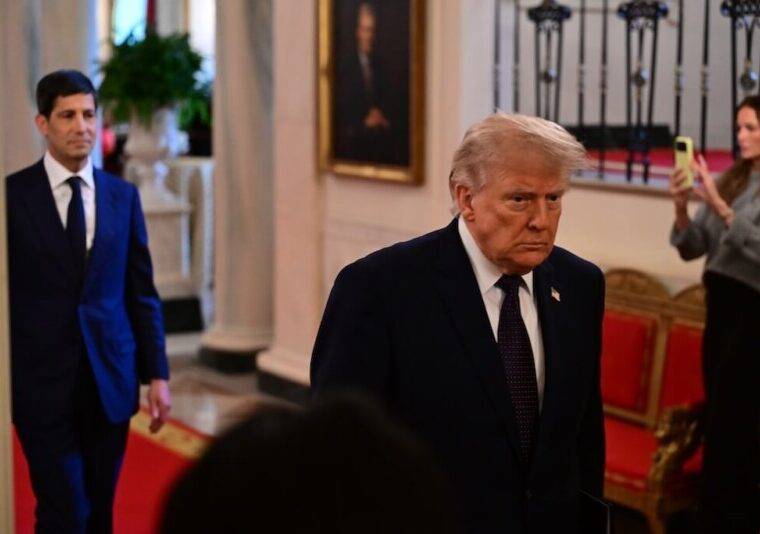
At a press conference in Palm Beach in December 2025, Trump stated, “We need Greenland for national security, not for minerals. We should have it.’ He thus designated Greenland as a national security target and appointed Louisiana Governor Jeff Landry as special envoy to oversee the process of bringing Greenland under US control. Landry explicitly stated the goal of ‘making Greenland part of the US’ on X, drawing significant backlash in Denmark. Although Trump emphasized security over minerals, analysts have noted that mineral resources, particularly rare earth elements, were the primary motivation.
Trump’s characterization of Greenland as a ‘great real estate deal’ and his appointment of a special envoy have increased diplomatic pressure, while Landry’s implication that he will ‘lead the charge’ in negotiations suggests a transactional approach. Danish Foreign Minister Lars Løkke Rasmussen has described this appointment as completely unacceptable and warned the US ambassador in Copenhagen. Following the intervention in Venezuela, speculation about a similar military operation in Greenland has increased. However, due to the NATO factor, this appears unlikely. Instead, economic sanctions, influencing local elites or covert operations are more likely. Indeed, Trump’s personality makes him unpredictable and challenges international norms.

European Union reactions
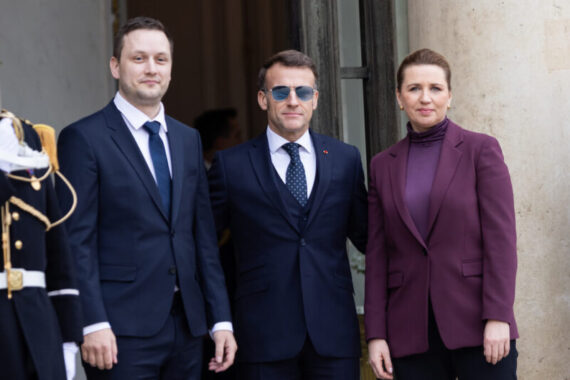
In response to Trump’s statements on Greenland, the European Union (EU) showed diplomatic solidarity with Denmark and Greenland, but avoided taking harsh measures. EU Commission President Ursula von der Leyen emphasized territorial integrity, stating: ‘We stand in full solidarity with the people of Denmark and Greenland,’ while Antonio Costa noted that Arctic security was a ‘priority issue’. French President Emmanuel Macron also expressed support for the sovereignty of Denmark and Greenland. As with the EU’s limited ‘concern’ statements following the intervention in Venezuela, diplomatic warnings rather than explicit condemnation are at the forefront in Greenland.
This stance stems from transatlantic dependence: trade, energy and the NATO partnership prevent the implementation of harsh measures. If the US were to intervene in Greenland, objections and diplomatic isolation via the UN are expected, while military or economic sanctions are unlikely. The EU supports Denmark’s investments in Arctic defense, which amount to billions of dollars, thereby strengthening the Union’s strategic autonomy. However, divisions within the Union, such as the close ties between some EU countries, like Hungary, and Trump, could weaken the response. The submissive stance adopted by EU leaders on the Venezuela issue could also emerge in the Greenland scenario, ultimately plunging transatlantic relations into a deep crisis and eroding international law.
The effects of a ‘perfect storm’
The EU has been unable to show decisive resistance to the Trump administration’s aggressive stance towards Greenland. This is essentially due to the combined effects of internal and external crises — a ‘perfect storm’. These crises are concentrated in three main areas: the EU’s lack of autonomy in security policy; deindustrialisation; and social polarization. These factors prevent the Union from taking a proactive position in transatlantic relations.
Firstly, the EU’s lack of strategic autonomy in security policy limits its ability to respond effectively to Trump’s fixation on Greenland. The EU remains largely dependent on NATO — and therefore the US — in terms of defense and foreign policy. This dependence has resulted in responses limited to diplomatic statements, as evidenced by the Greenland and Venezuela crises. Although European leaders have issued joint statements defending Greenland’s sovereignty, they have avoided tough measures such as military or economic sanctions. This situation stems from insufficient efforts by the EU to strengthen its own defesce capabilities (e.g. European Defense Union initiatives) and from prioritizing the preservation of the transatlantic alliance.
Secondly, the process of deindustrialisation is weakening the EU economy and limiting its scope for manoeuver in foreign policy. High energy prices, expensive production costs and insufficient investment are causing European industry to lose its competitive edge, a trend that has become even more pronounced since 2026. The energy crisis and the costs of the green transition are causing companies, particularly those in energy-intensive sectors, to relocate or close down. This is increasing the EU’s economic dependence. In such a context, the capacity for economic retaliation against Trump’s trade threats or pressure on strategic issues such as Greenland remains limited, making cohesion within the Union challenging.
Thirdly, social polarization and the rise of populist parties are eroding the EU’s internal cohesion. A loss of confidence in traditional parties among voters, coupled with the strengthening of radical right-wing populist movements (e.g. the rise of the Alternative for Germany party in Germany or general European trends), is paralyzing decision-making processes and hindering foreign policy consensus. This polarization leaves EU leaders under domestic political pressure, making it difficult to present a united front against unpredictable actors such as Trump.
Consequently, the combination of these three crises — security dependency, economic decline, and social division — leaves the EU in a passive position in the Greenland crisis. Without strategic autonomy and internal reforms, the effects of this ‘perfect storm’ will worsen.
Recommended
A Possible US-EU Greenland Agreement Scenario
The Trump administration’s aggressive stance towards Greenland could pave the way for an asymmetrical agreement amidst a ‘perfect storm’ of structural weaknesses within the EU, including a lack of security autonomy, deindustrialisation, and social polarisation. This hypothetical scenario examines how such an agreement could be structured in Trump’s favour, given the EU’s inability to resist him. The scenario is grounded in realistic geopolitical dynamics and anticipates the US gaining strategic advantages by exploiting the EU’s economic dependence and internal divisions.
Scenario: “Arctic security and trade pact”
In the first quarter of 2026, the Trump administration offered the EU a ‘compromise’ proposal regarding the Greenland crisis. Officially titled the ‘Arctic Security and Trade Pact’, this agreement ostensibly promises mutual benefits, but essentially exhibits an asymmetrical structure by prioritising Trump’s national security objectives (control of Greenland). The key elements of the agreement are as follows:
- US gains: Trump is demanding access to Greenland’s rare earth elements and uranium reserves, which would strengthen US global supply chains. Specifically, US companies (e.g. SpaceX and mining firms) are granted expanded mining licences on the island in exchange for a nominal ‘security fee’. Furthermore, Thule Air Base’s capacity is increased and new military facilities are established, thereby reinforcing US hegemony against Russian and Chinese activities in the Arctic. This embodies Trump’s ‘We have to have it’ rhetoric and secures US strategic superiority, given that the EU’s deindustrialisation, coupled with high energy costs and a lack of investment, makes it difficult to produce alternatives to these resources. Trump is exploiting the EU’s economic weakness by presenting the deal as ‘mutually beneficial’, when in reality it reduces US dependence on mineral imports while making the EU even more dependent.
- The EU’s response: In return, Trump has promised the EU limited trade concessions. These include tariff reductions on cheap LNG (liquefied natural gas) imports from the US and temporary exemptions in certain sectors, such as automotive and agriculture. While this would alleviate the EU’s energy crisis and slow down the deindustrialisation process, it would not offer a long-term solution. Furthermore, Trump would address the EU’s security concerns by ‘strengthening’ NATO commitments, such as increasing the military presence in Eastern Europe. However, this would reinforce the EU’s lack of autonomy and perpetuate its dependence on Trump’s ‘pay more or we leave’ ultimatum. While the EU appears to preserve Greenland’s ‘partial autonomy’, Danish sovereignty is eroded in practice.
- The Role of EU Weaknesses: The asymmetrical nature of the agreement feeds on the EU’s internal crises. The lack of security autonomy makes the EU dependent on NATO, forcing it to take Trump’s military threats seriously (e.g. ‘military is always an option’). Deindustrialisation weakens the EU’s bargaining power due to high production costs. Countries such as Germany acquiesce to US LNG in order to reduce their energy dependence. Meanwhile, social polarisation hinders internal consensus: the rise of populist parties (such as the Alternative for Germany (AfD)) leaves leaders under domestic political pressure, making it impossible to form a united front and paving the way for Trump’s divide-and-rule tactic.
This agreement could be signed in Brussels in March 2026. Although Trump touted it as a ‘historic victory’, the EU will gain short-term relief but increase its strategic dependence in the long term, as well as risking NATO unity.