
The New Yorker and the Reproduction of Symbolic Capital
The documentary "The New Yorker at 100" can be seen as a reflection of a publishing tradition's ability to establish its own norms as universal standards.
March 2, 2026
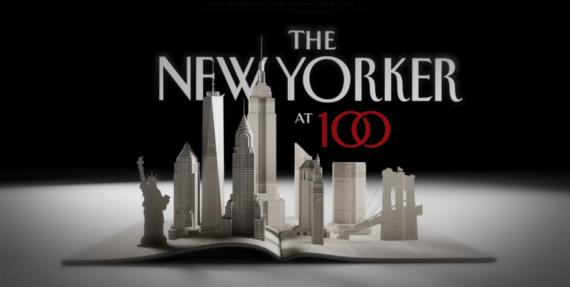
T
he documentary, released on Netflix to celebrate The New Yorker ‘s 100th anniversary, may initially appear as a retrospective of a publication, but it can be interpreted as a way for the field of cultural production to construct and legitimize its own autonomy. From the perspective of Pierre Bourdieu’s “field” theory, this production can be considered a case study illustrating the process of transforming economic capital into symbolic capital and how property relations are marginalized in this process.
In his work *The Rules of Art* (2019), Bourdieu characterizes the field of cultural production as “an inverted economic world.” In this unique field, the exclusion of economic profit and commercial success as legitimate goals is a constitutive precondition for the accumulation of intellectual authority and prestige (symbolic capital). According to Bourdieu, the autonomy of cultural production is largely made possible by the denial of the economic and the presentation of production as if it were devoid of market rationality.
Throughout the documentary, editorial rigor and fact-checking processes are highlighted as if they were sacred rituals; however, the fact that the journal was acquired by Samuel Irving Newhouse in 1984 and now operates under the Advance Publications media group is silently overlooked, which can be seen as a manifestation of this theoretical denial mechanism. This concealment of the journal’s underlying capital contributes to elevating the presentation of its editorial processes from a purely commercial activity to a purely intellectual level.
At this point, the concealment of the ownership structure can be interpreted not as a simple oversight, but rather as a structural necessity employed by the magazine to maintain its image of autonomy at the pinnacle of the intellectual sphere. Indeed, The New Yorker can only distinguish itself from its commercial sister publications —Vogue or Vanity Fair— which directly cater to fashion and consumer culture, by maintaining a sterile distance that rejects this economy. Within Advance Publications’ broad portfolio, The New Yorker is positioned as a flagship publication representing the group’s cultural prestige, not its economic profit.
This situation allows economic capital not only to be concealed but also refined and transformed into a form of “intellectual legitimacy.” For Advance Publications, The New Yorker functions as a symbolic fortress, stripped of the cold rationality of profit and loss statements, providing a moral and cultural shield for the group’s other commercial operations. The crude financial power that Vogue derives from luxury consumption is equated with lofty values in The New Yorker ‘s editorial rooms, where comma placement or ethical standards are debated. Thus, this editorial rigor is not merely a matter of professional ethics; it is a strategy by which capital, by concealing itself behind a veil of intellectual benevolence, registers its dominance within the field as a “universal authority.” Ultimately, this quiet and profound operation of ownership bestows upon the magazine a sanctity independent of market fluctuations, while granting the owner a field of cultural hegemony that money cannot buy.
In Bourdieu’s sociology, habitus refers to the ways in which individuals think, perceive, and act that are specific to the social class to which they belong. The language and aesthetics that The New Yorker has constructed over a century are not merely a production of content, but also a reproduction of a particular habitus. The sophisticated tone frequently emphasized in the documentary actually functions as a judgment of taste (distinction) that affirms the cultural capital of the magazine’s reader and distinguishes them from other social classes.
The magazine’s readers follow it not only to gain information, but also to feel part of that intellectual community and to affirm their own cultural capital. The sterile world presented in the documentary integrates the magazine’s symbolic authority with the reader’s identity by conveying the message, “You too are part of this elite and rigorous world.” Therefore, the documentary celebrates not only the history of the magazine, but also the social privilege that reading it represented.
As Bourdieu emphasizes in his book On Television (2015), the most critical intervention in the media field is not the information itself, but its framing. Bourdieu expresses this situation as follows: “The most decisive part of information sharing, that is, the knowledge about information (meta-knowledge) that serves to decide what is important and what 41is not, and what can and cannot be transmitted, comes largely from other sources.” (Bourdieu, 2015, p. 31)
The New Yorker ‘s century-long emphasis on elitism and quality can be read precisely as a process related to the construction of this meta-knowledge. The sterile world presented in the documentary decides which story will be on the cover or which details will be deemed unnecessary and discarded, arguably based not on absolute truth, but on a particular habitus and power relations within the field. Indeed, as Wesley Lowery puts it, this “pyramid of subjective decisions” tends to position the way those who hold meta-knowledge see the world as a universal standard.
Recommended
The fact that film critics sometimes describe this production as hagiographic (a style of celebratory biography) aligns with Bourdieu’s concept of the production of belief. While the documentary showcases the meticulousness and intellectual depth of the magazine’s editorial team in all its glory, it can be criticized for concealing the proprietary structures upon which this success is based and the social realities excluded by this sterile environment. This mechanism, which Bourdieu describes as “hide by showing,” can render the structural hierarchy invisible by drawing the viewer’s attention to technical perfection.
The criticisms voiced at the “Objectivity Wars” panel held at Columbia Journalism School point to the structural crises of such sterile narratives. The ideal of objectivity in journalism can sometimes become a shield that protects the status quo and silences voices that do not conform to the hierarchical structure. Masha Gessen’s proposed need for moral clarity shows that the epistemological limits of this detached and supposedly neutral narrative model are now being discussed more loudly.
The documentary “The New Yorker at 100” can be seen as a reflection of a publishing tradition’s ability to establish its own norms as universal standards. From a Bourdieutian perspective, this magnificent portrait gains its true structural meaning when we recognize the immense power of capital behind it and the meta-knowledge boundaries it defines. Productions that can analyse the structural link between property, power, and truth more transparently can transcend the illusion of autonomy and be recorded as a product of intellectual production.
The “symbolic fortress” strategy constructed by The New Yorker is actually reflected in different tones in established publications in the Anglo-American publishing world, such as The Atlantic, Harper’s Magazine, or The Paris Review. These magazines maintain their legitimacy in the field of cultural production by masking their relationships with the enormous financial structures behind them (for example, the organic link between The Atlantic and the Emerson Collective) with an image of editorial “intellectual sanctuaries.”
From a Bourdieutian perspective, the common denominator of these publications is that they blend “long-form” journalism with literary depth, promising the reader not only information but also a sense of class belonging and intellectual standards. To the extent that economic capital is obscured and production takes on the rationality of art for art’s sake, the symbolic power of these structures becomes all the more unshakable.
In this context, these publications function not merely as magazines, but as gatekeepers that determine “legitimate taste” on a global scale. The power to decide what is worth reading, which author should be promoted, or which social crisis should be addressed with which aesthetic language— a power Bourdieu defines as meta-knowledge — is concentrated in the hands of these publications. Therefore, this 100-year hagiographic narrative, as we observe specifically in The New Yorker, is a practice of reaffirming the internal hierarchy and power dynamics of the intellectual sphere. The skilful exclusion of property relations and market realities from the narrative allows these publications to maintain an “illusion of autonomy,” granting them the ability to establish a cultural hegemony beyond economic profit.

Ömer Burak Tek develops digital media projects driven by social research under the umbrella of TOMA | Media and Society Research Association, aiming to promote the use of objective data in Türkiye and enhance the quality of public debate. In March 2021, he founded Rapor Bülteni, an email newsletter that reviews expert-written reports on prominent current issues and delivers key findings to its subscribers.
He serves as a Advisor within TRT International Broadcasts. He is currently pursuing his master degree in the Department of Sociology at Istanbul Medeniyet University, focusing on international journalists in Türkiye. He is a board member of both the ILKE Foundation and Korfez Vefa Sport Club.
His main areas of interest include the sociology of communication, digital media, and public relations.
You can see how this popup was set up in our step-by-step guide: https://wppopupmaker.com/guides/auto-opening-announcement-popups/

Stay informed by subscribing to
our weekly newsletter.
You can see how this popup was set up in our step-by-step guide: https://wppopupmaker.com/guides/auto-opening-announcement-popups/
You can see how this popup was set up in our step-by-step guide: https://wppopupmaker.com/guides/auto-opening-announcement-popups/
You can see how this popup was set up in our step-by-step guide: https://wppopupmaker.com/guides/auto-opening-announcement-popups/
You can see how this popup was set up in our step-by-step guide: https://wppopupmaker.com/guides/auto-opening-announcement-popups/