Top U.S. Counterterrorism Official Resigns Over Iran War

March 18, 2026

A longtime supporter of Trump’s “America First” agenda, Kent has previously argued against U.S. military interventions abroad, warning of prolonged conflicts similar to those in Iraq and Afghanistan.
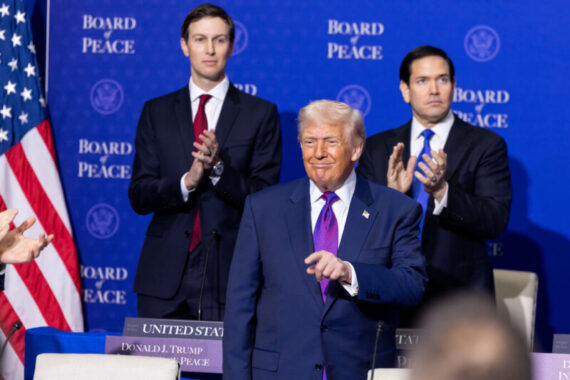
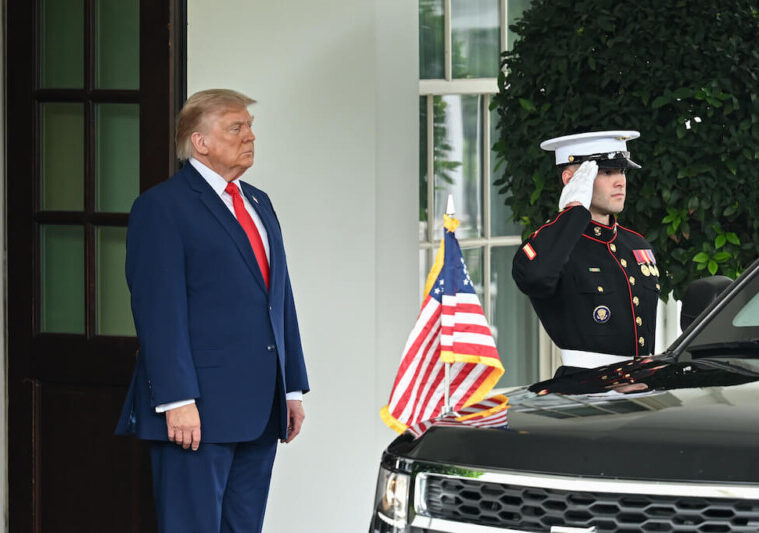
US President Donald Trump attends the inaugural meeting of the 'Board of Peace', his new institution focused on progress on Gaza, at the US Institute of Peace in Washington, DC, United States on February 19, 2026. Photo by Anadolu Images.

J

oe Kent, the head of the U.S. National Counterterrorism Center, has resigned in protest over the ongoing war with Iran, becoming the highest-ranking official to step down over the conflict and publicly challenge the administration’s justification for military action.

In a resignation letter released on social media, Kent said he could not “in good conscience” support the war, arguing that Iran posed no imminent threat to the United States at the time military operations began. His departure marks the first major internal break within the administration of Donald Trump since the conflict entered its third week.

“Iran posed no imminent threat to our nation,” Kent wrote, adding that the decision to go to war was influenced by external pressure rather than clear national security necessity.

The White House swiftly rejected Kent’s assertions. Officials maintained that the president acted on credible intelligence indicating that Iran was preparing to strike U.S. interests.

“President Trump had strong and compelling evidence that Iran was going to attack the United States,” said a spokesperson, dismissing Kent’s claims as inaccurate.

Tulsi Gabbard, who oversees the intelligence community and was Kent’s superior, also defended the administration’s position, emphasizing that determining what constitutes an imminent threat ultimately falls under presidential authority.

A rare internal dissent

Kent’s resignation is notable not only for its timing but also for his political alignment. A longtime supporter of Trump’s “America First” agenda, he has previously argued against U.S. military interventions abroad, warning of prolonged conflicts similar to those in Iraq and Afghanistan.

His criticism underscores growing unease within certain factions of the administration and its broader political base, particularly among those skeptical of foreign entanglements.

Before leading the counterterrorism center, Kent served as a U.S. Army Special Forces soldier and later as a CIA officer. He was confirmed to his post less than eight months ago.

Reaction to Kent’s resignation has been sharply divided along political lines.

Mark Warner, a senior Democrat on the Senate Intelligence Committee, said Kent’s assessment aligned with existing concerns about the administration’s rationale for war.

“There was no credible evidence of an imminent threat from Iran,” Warner said, calling the conflict a “war of choice.”

However, Republican leaders and White House allies strongly disagreed. President Trump described Kent as “weak on security,” adding that his departure was “a good thing.”

Some lawmakers also criticized the language in Kent’s letter, particularly his references to Israeli influence, arguing that such claims risk echoing harmful stereotypes.


Strategic concerns persist

Kent’s resignation comes amid broader concerns within the intelligence community about the potential consequences of the war. Assessments prior to the conflict reportedly warned that Iran was unlikely to collapse quickly and would instead retaliate against U.S. forces and regional allies.

Those warnings have gained renewed attention as the conflict continues, raising questions about long-term strategy and the risks of escalation.

Analysts say that while Kent’s departure alone is unlikely to alter U.S. military policy, it adds to mounting scrutiny of the administration’s decision-making process.

With midterm elections approaching, the resignation could carry political consequences. Kent’s standing within pro-Trump circles means his criticism may resonate beyond traditional voices, potentially influencing public opinion among segments of the president’s support base.

Still, experts caution that a single resignation is unlikely to shift the administration’s course in the near term. Instead, it may serve as part of a broader pattern of dissent that could shape debate in Washington in the weeks ahead.

For now, the war in Iran continues, even as questions surrounding its justification and trajectory intensify within the U.S. government and beyond.

(Source: Reuters and Aljazeera)

Politics Today is dedicated to publishing insightful analyses in order to understand the changing nature of contemporary politics. It aims to contribute to the sound and constructive discussion of international affairs.