Trump Intervention in FIFA World Cup Ignites Controversy
"Thank you to FIFA for doing what was right, and reversing a great injustice," the U.S. president wrote.
July 6, 2026
T
he United States’ World Cup campaign has been plunged into controversy after FIFA took the extraordinary step of suspending Folarin Balogun’s automatic one-match ban, allowing the striker to play against Belgium in the tournament’s last-16 despite receiving a straight red card in the previous match.
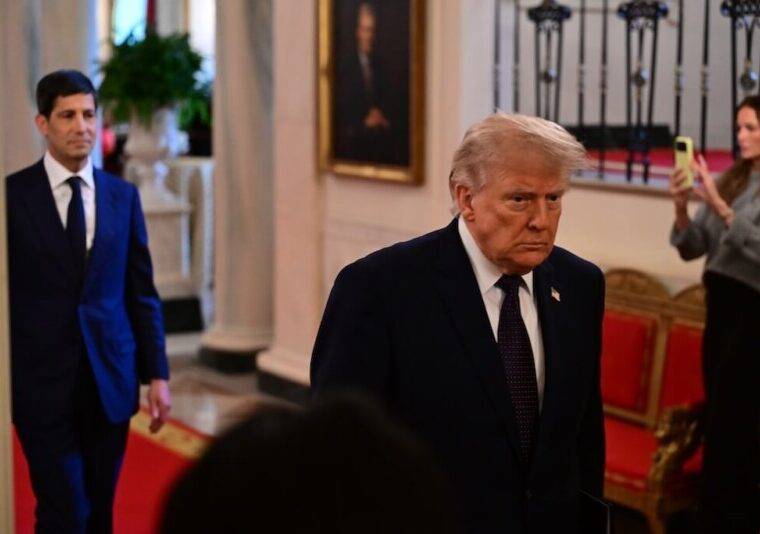
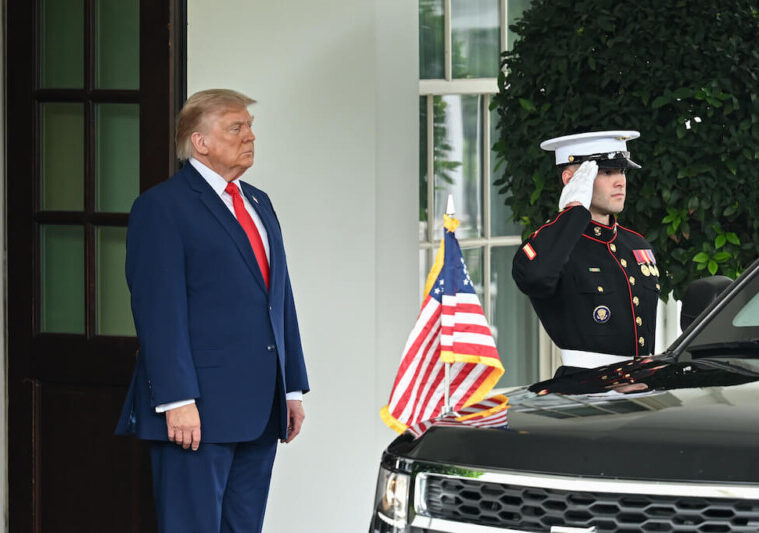
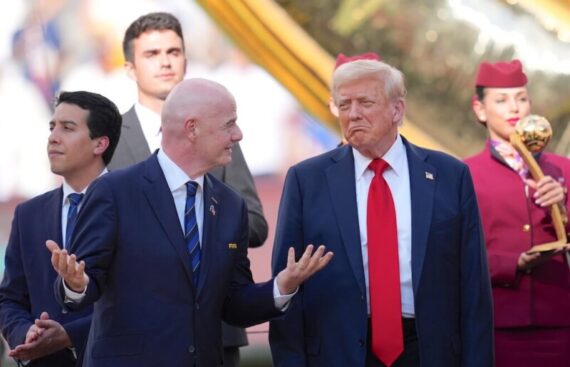
The unprecedented ruling came after U.S. President Donald Trump personally urged FIFA President Gianni Infantino to review Balogun’s dismissal, according to a source familiar with the conversation, sparking accusations of political interference and prompting an angry reaction from Belgium ahead of one of the tournament’s biggest knockout matches.
FIFA announced Sunday that Balogun’s mandatory suspension would not be enforced immediately but instead placed under a one-year probationary period under Article 27 of the FIFA Disciplinary Code.
The decision means the 25-year-old striker will be available for Monday’s clash against Belgium in Seattle while retaining the red card on his disciplinary record.
The ruling immediately became one of the World Cup’s defining controversies, shifting attention away from football and onto questions about the independence of FIFA’s disciplinary process and the influence of political leaders over international sport.
Balogun had scored his third goal of the tournament during the United States’ 2-0 victory over Bosnia and Herzegovina before being sent off after a VAR review for stamping on defender Tarik Muharemovic’s ankle during the second half.
U.S. coach Mauricio Pochettino immediately disputed the dismissal, insisting the challenge did not warrant a red card.
According to Reuters, Trump later telephoned Infantino and requested that FIFA review the incident.
Although FIFA has not overturned the sending-off itself, the governing body exercised its disciplinary discretion to suspend the implementation of the automatic one-match ban.
“In line with Article 27 of the FIFA Disciplinary Code, the implementation of the match suspension is suspended for a probationary period of one year,” FIFA said in a statement.
It added that if Balogun commits another offense of similar nature during the probation period, the suspended sanction would automatically take effect in addition to any new punishment imposed.
FIFA declined repeated Reuters requests to comment on the circumstances surrounding the decision or on Trump’s reported intervention.
Trump celebrated the outcome on his Truth Social platform.
“Thank you to FIFA for doing what was right, and reversing a great injustice,” the U.S. president wrote.
The White House also welcomed the decision, posting “USA-USA-USA” on social media shortly after FIFA’s announcement.
U.S. Soccer accepted the ruling without further comment.
American players said they first learned of Balogun’s reinstatement while traveling to training.
“We found out about it just coming over here,” captain Christian Pulisic told reporters.
“At first, you’re like, ‘Oh really, is this real?’ And then, ‘Oh, this is great news.'”
The decision drew an immediate protest from the Royal Belgian Football Association (RBFA), which described itself as “astonished” and questioned whether FIFA had violated its own disciplinary regulations.
Belgian officials argued that while Article 27 allows disciplinary sanctions to be suspended under certain circumstances, another section of FIFA’s rulebook specifically requires players sent off during a match to miss their team’s next fixture.
“Article 66.4 of the FIFA Disciplinary Code clearly provides that a red card automatically results in a suspension for the team’s next match, as has been the case for all previous red cards issued during this FIFA World Cup,” the RBFA said in a statement.
Belgium also cited Article 10.5 of the tournament regulations, which states that any player receiving a direct or indirect red card “will automatically be suspended from their team’s subsequent match.”
The Belgian federation said it was examining all available legal options before Monday’s encounter.
Pochettino rejected suggestions that FIFA had created a special exception for the United States, insisting previous disciplinary cases showed sanctions could legally be deferred.
“I think 99.9% of people in football have said this is an unfair punishment,” the Argentine coach said.
“There’s evidence from the past that makes it possible to suspend a punishment and fulfill it later on, so I don’t understand how people can be surprised.”
He added that similar disciplinary discretion had been exercised in previous FIFA competitions.
One example frequently cited is Portuguese captain Cristiano Ronaldo, who was permitted to play at the start of the World Cup after FIFA suspended part of a three-match ban imposed during qualifying.
Recommended
Another case involved Qatar midfielder Assim Madibo, whose lengthy suspension for a dangerous tackle remained fully enforced because of the seriousness of the offense.
Legal experts noted that while Article 27 grants FIFA’s disciplinary committee broad discretion to suspend sanctions, its use in relation to an automatic World Cup suspension is highly unusual and likely to generate continued debate about consistency in the application of tournament rules.
The controversy has also reignited broader concerns about FIFA’s governance and its relationship with political leaders.
Although Trump has publicly supported the U.S. national team throughout the tournament, critics questioned whether direct intervention by a head of state in an active disciplinary case risks undermining confidence in football’s independent judicial processes.
Supporters of the ruling, however, argued that FIFA acted within its legal authority and corrected what many believed was an excessively harsh punishment.
Monday’s United States-Belgium last-16 encounter will now unfold under intense scrutiny, with Balogun’s presence ensuring that debate over FIFA’s decision is likely to continue well beyond the final whistle.
Whatever the result on the field, the episode has become one of the most controversial moments of the tournament, raising difficult questions about disciplinary consistency, political influence and the balance between justice and sporting regulations at football’s biggest event.
(Source: Reuters)

Politics Today is dedicated to publishing insightful analyses in order to understand the changing nature of contemporary politics. It aims to contribute to the sound and constructive discussion of international affairs.
You can see how this popup was set up in our step-by-step guide: https://wppopupmaker.com/guides/auto-opening-announcement-popups/

Stay informed by subscribing to
our weekly newsletter.
You can see how this popup was set up in our step-by-step guide: https://wppopupmaker.com/guides/auto-opening-announcement-popups/
You can see how this popup was set up in our step-by-step guide: https://wppopupmaker.com/guides/auto-opening-announcement-popups/
You can see how this popup was set up in our step-by-step guide: https://wppopupmaker.com/guides/auto-opening-announcement-popups/
You can see how this popup was set up in our step-by-step guide: https://wppopupmaker.com/guides/auto-opening-announcement-popups/