I
n recent years, Turkey’s foreign policy has fundamentally focused on establishing a belt of stability and development stretching from Asia to Africa. In this context, Ankara has played a constructive role in regional crisis areas with the aim of achieving lasting stability. Thanks to Turkey’s positive approach, crises have been prevented from deepening in many areas, including Libya, Somalia, Syria and Sudan.
Ankara has not hesitated to cooperate with like-minded actors, bringing together all parties that can contribute positively to the processes and striving to implement solution-oriented, multilateral approaches. Rather than deepening divisions, Turkey’s position has been to bring regional actors together around common interests, resolving the problems encountered through the region’s own dynamics. In this context, Turkey has recently joined forces with countries such as Qatar, Saudi Arabia, Egypt and Pakistan, adopting joint positions on regional policies and acting in a coordinated manner to resolve issues.
Alliance motivations of regional powers
The primary motivation behind Turkey’s proposed alliance structure, which would integrate the region’s leading countries, is to address mounting security concerns and ensure lasting stability. This would allow the Middle East and the Islamic world to tackle the issues they have faced increasingly in recent years, and could pave the way for a climate of peace. In recent years, the divergent agendas and policy preferences of the relevant parties have produced destructive rather than constructive results, leading to instability becoming the norm in crisis-stricken countries and across the region as a whole. This is evident in crisis regions such as Syria, Libya, Sudan and Yemen, where resolving crises has proven much more difficult during periods of discord and lack of cooperation among regional actors.
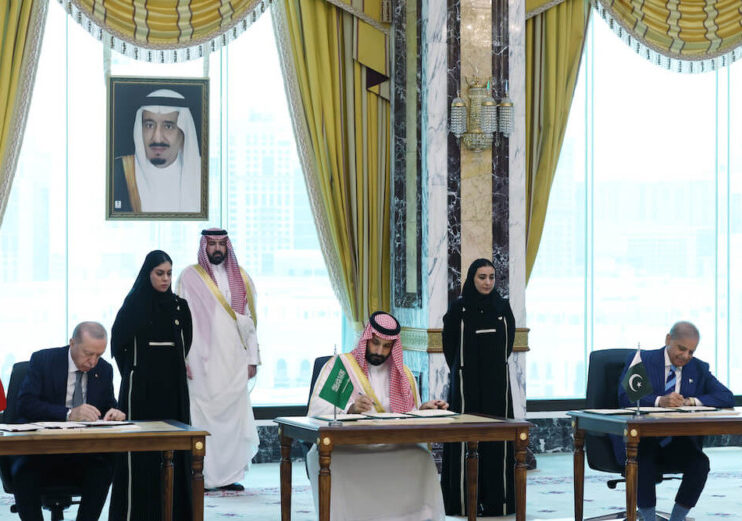
Another motivation behind this process of rapprochement among regional powers is anxiety caused by shifts in global power balances and the resulting uncertainty. The new approach to US policy in the Middle East, coupled with increasing signs of Washington’s diminishing presence in the region, has caused regional actors to adopt a more cautious approach to traditional security mechanisms. Consequently, countries in the region have increased their efforts to establish new security and cooperation mechanisms. While Turkey and Saudi Arabia’s recent initiatives towards this goal have resulted in concrete agreements being signed, the prospect of alliance structures emerging, comprising actors with shared priorities who intend to join, has strengthened.
Another factor encouraging the formation of regional alliances is the economic cooperation potential that has been stifled by an unstable political environment. Competitive foreign policies, regional leadership ambitions and mutual distrust among the region’s leading figures have hindered rapprochement and occasionally pushed these countries towards hostile policies. This situation creates a geo-economic context that conflicts with the goals of regional actors seeking to strengthen their economies or establish stronger, more resilient economic models through diversification. Cooperation initiatives between countries such as Turkey, Saudi Arabia and Pakistan have the potential to foster closer interaction, both in terms of security and economically.
A political ecosystem established with the encouragement and leadership of regional powers would encourage the participation of other actors and pave the way for all parties to embrace the broader goal of achieving economic stability and development, particularly in the Middle East and the Islamic world. If embraced by the region’s leading actors, such an initiative will yield lasting benefits in terms of its potential outcomes and will help establish long-term stability. This is particularly true for the founding and participating countries of this alliance.
Recommended
Turkey’s leadership in regional cooperation
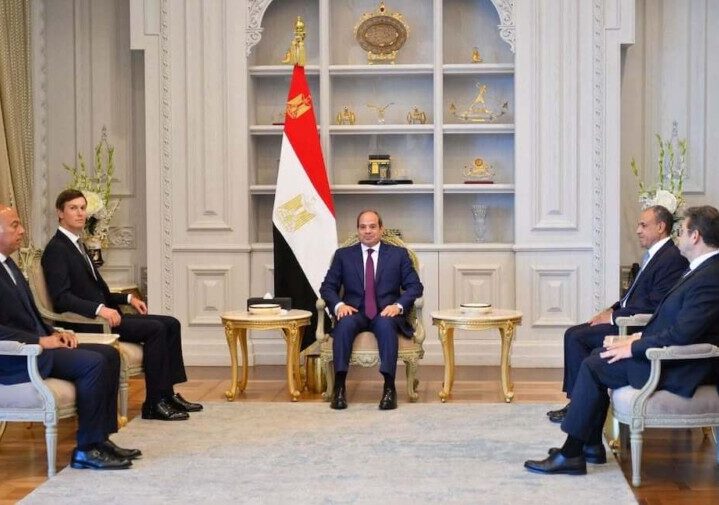
Turkey currently supports such an initiative and, in this context, is intensifying its coordination with Saudi Arabia and Pakistan in particular. Turkey has been active in many crisis areas in the region in recent years and has made intensive efforts to resolve crises and achieve lasting stability. However, Ankara prioritises cooperation with all relevant actors to achieve lasting solutions in regional crisis areas, and in this context it also needs allies. Acting together with the region’s leading powers will strengthen Turkey’s capacity to resolve crises. Increased cooperation with Egypt in Libya and Somalia, Saudi Arabia in Sudan and Qatar in Syria, for example, would strengthen coordination between these actors and enable them to play a more active role in post-stabilisation reconstruction processes in the relevant countries.
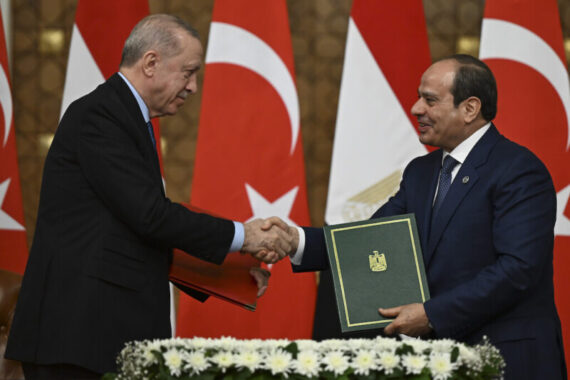
Another example of this can be seen in Gaza. Since 7 October 2023, Turkey has taken the strongest stance against the massacres carried out by Israel in Gaza and conducted intensive diplomacy with regional and global actors to stop Tel-Aviv. In particular, Turkey acted in concert with Egypt and Qatar to pressure the United States into forcing the Israeli government to agree to a ceasefire. On 9 October 2025, the Gaza Peace Plan — prepared under US leadership and agreed by Israel and Hamas — came into force, having been signed by Egypt, Turkey and Qatar. Intensive coordination between Ankara and Cairo during this process pressured both the US and Israel into accepting the ceasefire. In this respect, Ankara and Cairo’s joint action on Gaza can be seen as one of the most effective steps towards finding a solution.
Another concrete outcome of Turkey’s potential alliance with Saudi Arabia, Pakistan and other leading regional countries could be the implementation of a joint defence system. Pakistan’s nuclear capacity, Saudi Arabia’s financial power and Turkey’s advanced defense technologies, if combined, could create a power centre that would redefine regional geopolitics. Supporting and expanding such a structure in future with the involvement of like-minded countries could provide the ‘ability to act together’ that has been lacking in the Islamic world for many years. This would be of critical importance in enabling faster and more effective steps to be taken in resolving crises, fighting external threats, coordinating foreign policies and acting jointly in development processes.
In a geopolitical landscape where global risks are increasing and regional unity is becoming more important, an alliance led by Saudi Arabia, Pakistan and Turkey would, in principle, be open to actors adopting constructive regional policies and not susceptible to external destructive agendas. This bloc will adopt the fundamental approach of being an ‘inclusive cooperation platform to protect common interests’ rather than a rigid bloc.
In addition, this alliance will adopt a multinational and participatory philosophy, particularly when it comes to resolving crises centred on the Middle East, ending conflicts, and building a collective future. This approach aims to prioritise the welfare and security of the peoples of the region. The existence of such an alliance would play a pivotal role in re-establishing the Islamic world’s presence in global diplomacy, enabling countries that have struggled to form meaningful alliances for many years to become significant players in international politics.