US Reimposes Blockade on Iranian Ports, Launches New Strikes
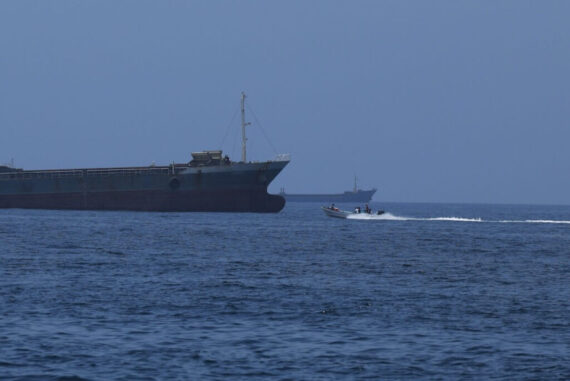
The IRGC accused the United States of encouraging vessels to violate Iranian directives.
July 15, 2026
T
he United States has reimposed a naval blockade on Iranian ports and launched another wave of military strikes targeting Iran’s southern coast, intensifying hostilities and further eroding an interim peace agreement reached last month.
The U.S. military said the renewed blockade of vessels traveling to and from Iranian ports and coastal areas took effect at 20:00 GMT on Tuesday, as Washington sought to restrict maritime activity linked to Tehran amid escalating tensions in the Strait of Hormuz.
The U.S. Central Command (CENTCOM) also confirmed a fresh round of strikes targeting Iranian military infrastructure, saying the attacks were intended to degrade capabilities used to threaten commercial shipping in the strategic waterway.
Iranian media reported explosions in or near the southern cities of Sirik and Bandar Abbas following the announcement, while earlier reports said U.S. strikes had also targeted Abadan, home to the Middle East’s oldest oil refinery, as well as Mahshahr, Qeshm Island and Kish Island.
The latest operations follow a series of U.S. strikes launched a day earlier against targets including Bushehr and Bandar Abbas, marking another escalation in a conflict that resumed despite a memorandum of understanding signed in June aimed at halting hostilities.
Iran responded by launching attacks against U.S.-linked targets across the Gulf region, including strikes on Kuwait, Bahrain and Jordan, while also targeting two commercial vessels in Omani waters within the Strait of Hormuz, according to regional officials.
The United Arab Emirates said one crew member was killed in the attacks on the ships.
Iran’s Islamic Revolutionary Guard Corps (IRGC) acknowledged striking the two supertankers, saying they had ignored repeated warnings while navigating what it described as an unauthorized route through the strait.
The IRGC accused the United States of encouraging vessels to violate Iranian directives and warned that continued cooperation with what it called the “aggressor enemy” would prolong disruption to shipping and increase the risk of a global energy crisis.
Bahrain said its air defenses intercepted an Iranian aerial attack, while Kuwait’s armed forces reported engaging hostile aerial targets. Jordan also said Iranian projectiles targeted military facilities on its territory.
Regional mediators Qatar and Oman urged restraint as the fighting intensified.
Qatar condemned attacks on commercial shipping, while Oman called on all parties to respect international law governing navigation through the Strait of Hormuz.
The International Maritime Agency expressed concern over the latest incidents, saying two seafarers had been killed and warning that the continuing cycle of military escalation threatened global maritime security.
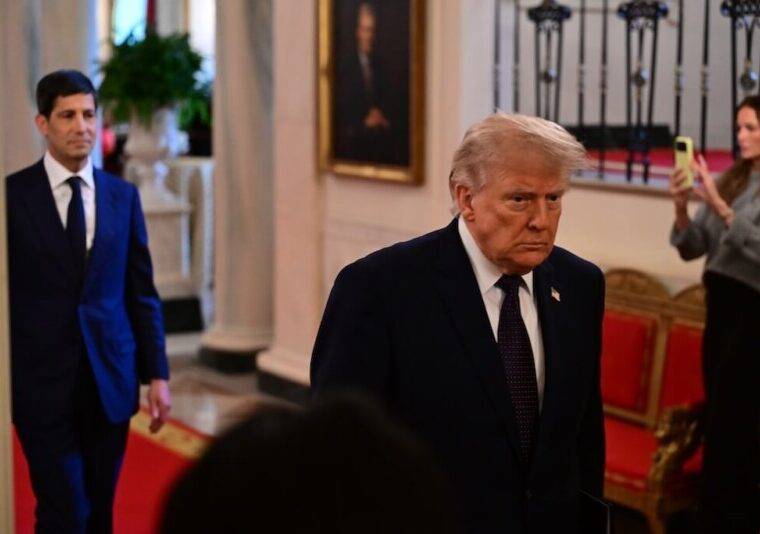
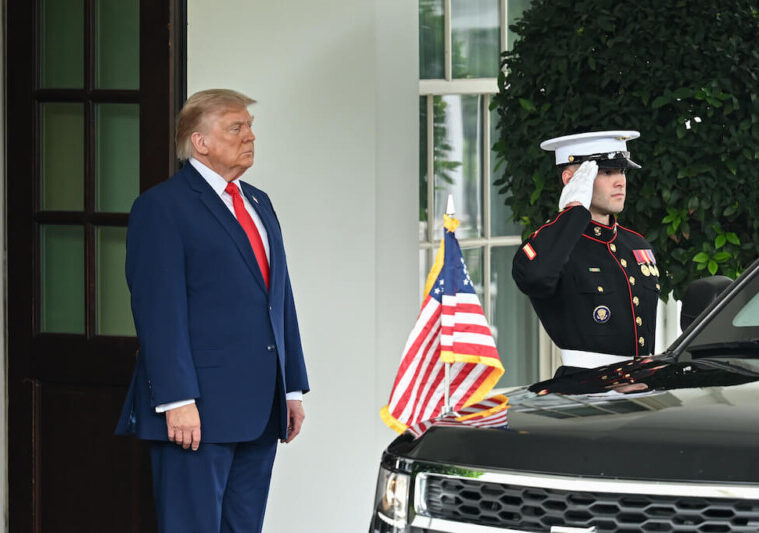
Speaking at the White House, President Donald Trump blamed Iran for reigniting the conflict.
“They shot first, and that was a big mistake because we have been knocking the hell out of them,” Trump said, defending the renewed military campaign.
Trump also announced he was abandoning a previously proposed 20% fee on vessels transiting the Strait of Hormuz, saying it would instead be replaced by expanded trade and investment agreements with Gulf allies.
“I have decided to replace the 20% United States Reimbursement Fee with trade and investment deals that the various Gulf states will be making into the United States,” he said.
Recommended
Iranian Deputy Foreign Minister Kazem Gharibabadi accused Washington of violating the interim agreement and destroying the framework established to reduce tensions.
According to Iranian state media, Gharibabadi said Tehran no longer considers itself bound by the memorandum of understanding, including provisions related to navigation through the Strait of Hormuz.
He rejected suggestions that renewed military pressure would force Iran back to negotiations, arguing that Washington had forfeited the diplomatic framework through its actions.
Analysts warned that the latest exchanges indicate the conflict is evolving into a prolonged confrontation rather than returning to full-scale war, raising concerns over regional stability and the security of one of the world’s most important energy transit routes.
(Source: Aljazeera English)

Politics Today is dedicated to publishing insightful analyses in order to understand the changing nature of contemporary politics. It aims to contribute to the sound and constructive discussion of international affairs.
You can see how this popup was set up in our step-by-step guide: https://wppopupmaker.com/guides/auto-opening-announcement-popups/

Stay informed by subscribing to
our weekly newsletter.
You can see how this popup was set up in our step-by-step guide: https://wppopupmaker.com/guides/auto-opening-announcement-popups/
You can see how this popup was set up in our step-by-step guide: https://wppopupmaker.com/guides/auto-opening-announcement-popups/
You can see how this popup was set up in our step-by-step guide: https://wppopupmaker.com/guides/auto-opening-announcement-popups/
You can see how this popup was set up in our step-by-step guide: https://wppopupmaker.com/guides/auto-opening-announcement-popups/