The US-Israel War against Iran and the Lebanese Front
Any change in Tehran would have signified, in particular, the complete collapse of Hezbollah.
April 15, 2026
S
ince the start of the US/Israel-Iran War, one of the developments set to reshape the region’s political and social fabric fundamentally is unfolding in Lebanon despite a fragile and uncertain ceasefire announced by the US and Iran. At a time when the eyes of the world are focused on the Gulf, Tel Aviv is making a concerted effort to exploit opportunities and irreversibly alter the status quo on the ground, disregarding Lebanon’s sovereign rights.
Factors such as rising energy prices on the international stage, the pressure that the prolongation of the war will exert on production and supply chains, and the tendency of foreign investors in Gulf monarchies—which are beginning to lose their ‘safe haven’ status—to leave their host countries have led to all discussions and expectations regarding the war being centred around the Persian Gulf. In this process, where attention has been focused on a limited area due to potential risks whose destructive effects will be felt globally, the Zionist regime has launched a move towards the annexation of South Lebanon, in line with the aggressive expansionist strategy it has accelerated in recent years.
Following the assassination of Ali Khamenei, Hezbollah’s launch of attacks on occupied territories and its de facto intervention in the war prompted the Zionist regime to intensify its attacks on Lebanon, despite the long-standing ceasefire. Following the Al-Aqsa Flood on 7 October 2023, the occupying army implemented a strategy of diversion and securing significant gains in Lebanon through aggressive and provocative attacks on Lebanese territory, to continue the genocide in Gaza. Having gained significant psychological superiority following the assassination of Hassan Nasrallah in September 2024, Tel Aviv postponed its strategy of focusing on Lebanon, despite inflicting serious damage on Hezbollah, due to the strong resistance demonstrated by the resistance in Gaza despite limited resources.
Given the realities on the ground in Gaza, an army severely demoralized psychologically, launching a large-scale ground operation in Lebanon could have meant facing a result far beyond the Zionist administration’s expectations. For this reason, placing Lebanon in a position where it would be constantly monitored and could be attacked if necessary was, in fact, the most reasonable option for Tel Aviv. On the other hand, Hezbollah’s reluctance to engage in an all-out war created a reality that heightened the fragility in southern Lebanon and multiplied the risks.
Despite the occupation army launching hundreds of attacks on southern Lebanon and targeting Hezbollah members following the ceasefire signed between the parties in November 2024, no retaliation was carried out against Israel. Seeking to avoid becoming the actor escalating tensions on the ground under the “Strategic Patience” approach, Hezbollah endeavored to keep its contact with Israeli forces as limited as possible, adhering as closely as possible to the rules of engagement adopted after the 2006 war.
The deep crisis unfolding in the country, driven by Lebanon’s political and economic conditions, was in fact one of the main reasons behind the strategy adopted by Hezbollah. Seeking to avoid a complete loss of its already shaken legitimacy within the country, the organization attempted to defuse the Zionist administration’s aggressive stance; however, following the commencement of attacks against Iran on 28 February, it shifted from a defense-oriented passive strategy to a military activism strategy that prioritized the offensive.
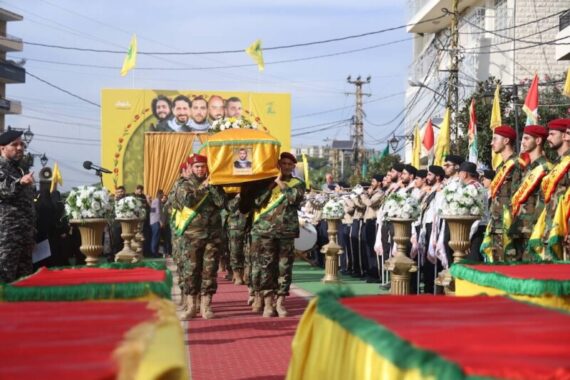
In the weeks following the Al-Aqsa Flood Operation, the question of whether Hezbollah would declare war on the occupying state was the one everyone was most eager to have answered. Following the announcement on 6 November 2023 that Hassan Nasrallah would address the nation, all news agencies immediately turned their attention to Lebanon and Nasrallah’s speech. What put an end to expectations of a declaration of war was Nasrallah’s statement at the very beginning of his speech that they had gathered “to commemorate the martyrs”.
Despite the heavy blow dealt to Hezbollah by the occupying forces, the movement’s decision to limit itself to deterrence was linked not only to the sensitive conditions in Lebanon mentioned above but also to the fact that the process had been initiated by Hamas, or more specifically, the Qassam Brigades. Hizbullah, unwilling to become a part of someone else’s war, strove not to back down from the strategy it had adopted, despite losing two of its secretaries-general and founding members of its leadership cadre. The fact that the US-Israeli coalition directly targeted the Supreme Leader in its war against Iran, however, made it imperative for Hizballah to engage in the process actively.
The elimination of the highest echelons of the Iranian leadership in the opening hours of the war led the proxy forces in the region to face an existential crisis of unprecedented magnitude. Any change in Tehran would have signified, in particular, the complete collapse of Hezbollah. This new situation, arising without the movement being able to regain the ground it had lost within Lebanon’s political and social structure, compelled Hezbollah’s leadership to assess the two options and act swiftly. The movement would either adopt a stance of waiting for the process in Iran to conclude, thereby tolerating the Zionist administration’s moves, or it would choose the path of attack to weaken the occupying army, thereby enabling Iran to emerge from the process with gains and strengthen its own presence in Lebanon.
Given the risks the first scenario would pose to the organization, Hezbollah opted to enter the war directly, despite the possibility of the occupation expanding within Lebanese territory. In particular, Hezbollah’s primary expectation upon entering the war was to force the Tel Aviv administration to withdraw by inflicting the heavy losses they hoped to inflict during the occupying army’s planned ground operation. In the current situation, where Zionist leaders have escalated matters to the point of claiming sovereignty over Southern Lebanon, Hezbollah is resisting the occupiers with all the means at its disposal. Meanwhile, the Israeli army is attempting to alter Lebanon’s borders and annex them to its own territory by supporting its air strikes with ground forces.
Tel Aviv, which does not hesitate to resort to any form of aggression or unlawful action to implement its political vision built on religious references, aims to apply a similar policy in Lebanon to that pursued in the Palestinian territories. Believing that a significant portion of the region has been granted to them by God, and pursuing an expansionist strategy that is difficult to contain in this context, the Zionist administration hopes to take another step towards its goal of expanding its territory by annexing South Lebanon.
Bolstered by political backing from the US and leading European states, the decision-makers of the occupying state—who deem any unlawful action permissible—are seeking to capitalize on international concern over the situation in the Gulf to engineer a major shift in the status quo in Southern Lebanon. The fact that the country does not hold a significant position within either the regional or global system, coupled with the absence of a powerful patron, is the primary reason why many parties remain indifferent to developments in Lebanon during this process. Seizing upon this environment to shape the process as it sees fit, Tel Aviv intends to establish a status quo over Lebanon that is independent of the war against Iran.
The Zionist regime, which invaded southern Lebanon in 1982 under the pretext of the country’s civil war, had not embarked on establishing settlements in southern Lebanon similar to those it had built for Jewish settlers in the West Bank, owing to regional and global dynamics. The occupying army, which remained in the region until 2000, pursued a security-focused protection strategy.
Subsequently, the withdrawal process from Lebanon was completed due to the rising political cost of maintaining a presence there. At that time, as conditions were not yet ripe, Tel Aviv did not implement its Judaization strategy in southern Lebanon; however, it is now seeking to exploit the vacuum that has emerged to extend Israel’s fluid borders as far as the Litani River. In recent days, the occupying army has continued its advance despite ground resistance, consolidating its presence in the region by seizing strategic points in the south.
Recommended
Prioritizing the severing of the north-south link by striking the bridges over the Litani River, the occupying army is simultaneously attempting to completely sever Hezbollah’s maritime connection, which has been severely restricted since 7 October 2023, through a gradual advance towards the city of Tyre along the coastal strip. Furthermore, by pursuing a second land-based advance strategy along the occupied Golan Heights, the Zionist administration is making a move to create an area in which to squeeze Hezbollah and other resistance groups, large and small.
In particular, the occupying army aims to effectively strike the positions of Hezbollah or other groups from the ground using the artillery batteries it has redeployed to Lebanese territory via Mount Hermon in the Syrian territories it has held under control since the occupation; in this way, it plans to completely eliminate any form of resistance that could pose a threat to its presence in southern Lebanon.
Alongside its strategy to annex the south, the occupying state’s current demographic engineering is a step designed to destabilize Lebanon’s political and social fabric further and enable it to establish control over the entire country in the event of a potential civil war. There is a risk that the approximately 1.5 million displaced Lebanese will become a serious problem within the country in the coming period. The situation will fundamentally affect the country’s internal dynamics when one million Shia Lebanese—who have been forcibly removed from their homes and villages by the occupying army—are resettled in Sunni, Christian, or Druze areas.
The deepening of the social crisis in economically bankrupt Lebanon will open the door to a new period of instability across the entire Middle East. Should such an event occur, it would serve Tel Aviv’s aggressive expansionist strategy, thereby creating a new reality in which Israel establishes a vast sphere of influence over Lebanon, starting from north of the Litani River.
The deep anxiety caused by the closure of the Strait of Hormuz and the disruption of the production and transfer of petrochemical products will further accelerate multi-dimensional and multi-layered initiatives in the coming days to end the war against Iran and find a formula for a sustainable and realistic ceasefire. However, at a time when everyone is striving to propose solutions for the Gulf due to the greater risks involved, the status quo in Lebanon—set to be altered by the occupying state—will open the door to a process that may have far more destructive effects in the Middle East, particularly in the Levant region, than those in the Gulf.
For this reason, regional and global actors must focus not only on developments in the Gulf but also on those in Lebanon and take serious action not merely to secure a ceasefire but also to curb the Zionist regime. Otherwise, a phase will likely follow in which the aggressiveness of the occupying state is felt with considerable severity in Palestine and Syria after Lebanon.
(Originally published in Turkish by Kriter)

Muhammed Hüseyin Mercan is a faculty member in the Department of International Relations at Ankara Yıldırım Beyazıt University, generally conducts research on Middle Eastern politics.
You can see how this popup was set up in our step-by-step guide: https://wppopupmaker.com/guides/auto-opening-announcement-popups/

Stay informed by subscribing to
our weekly newsletter.
You can see how this popup was set up in our step-by-step guide: https://wppopupmaker.com/guides/auto-opening-announcement-popups/
You can see how this popup was set up in our step-by-step guide: https://wppopupmaker.com/guides/auto-opening-announcement-popups/
You can see how this popup was set up in our step-by-step guide: https://wppopupmaker.com/guides/auto-opening-announcement-popups/
You can see how this popup was set up in our step-by-step guide: https://wppopupmaker.com/guides/auto-opening-announcement-popups/