Who Is Right in the Trump-Merz Row Over Iran?
Merz’s statements supporting the war initiated by the U.S. and Israel against Iran—which was in violation of international law—had also greatly pleased Trump.
May 19, 2026
E
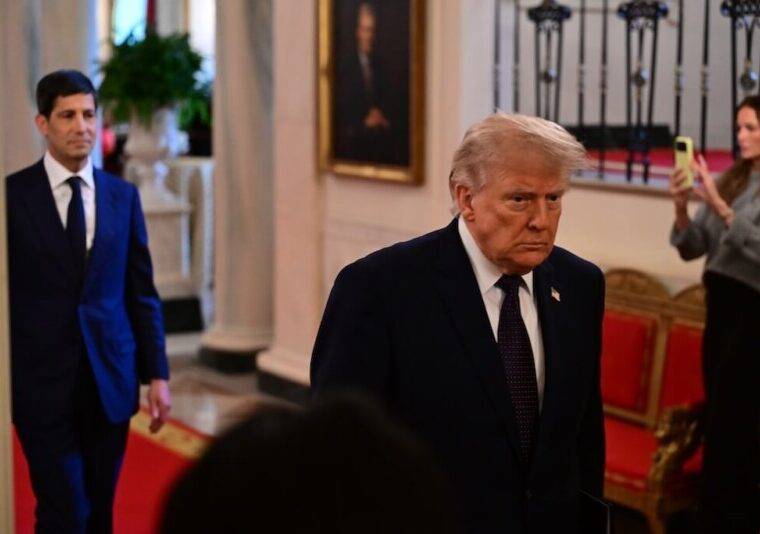
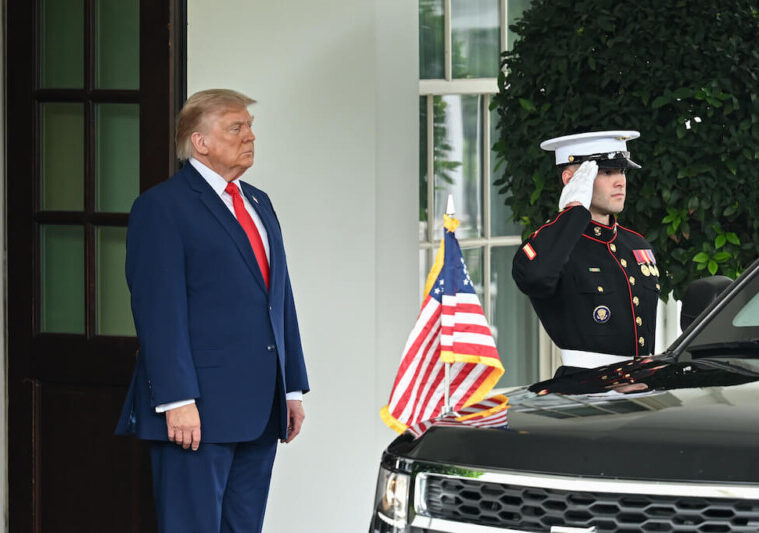
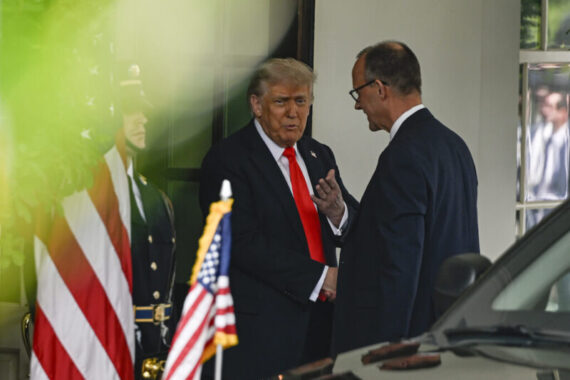
xchanges between US President Donald Trump and German Chancellor Friedrich Merz are becoming increasingly heated. Merz was initially one of the European leaders with whom Trump got on best. While leaders of major European nations, such as France and Spain, found themselves embroiled in disputes with Trump following his inauguration for a second term in early 2025, Merz’s first meeting with Trump at the White House in June 2025 ended without incident. Trump’s warm welcome and words of praise were also well received in the German media.
Merz’s praise for Trump, his avoidance of raising issues between the two countries, and his assertion that the US was an indispensable partner for Germany all played a key role in ensuring the meeting’s positive outcome. Furthermore, Merz brought a copy of his German grandfather’s birth certificate as a gift and did his utmost to win over the American president.
Despite Trump’s threats regarding Greenland and the economic toll of his tariffs on European industry, the positive start to the Trump-Merz relationship proved resilient for a long duration. This was because Merz was one of the European leaders who was most vocal in advocating a cautious and conciliatory approach in response to Trump’s aggressive policies. Unlike France, Spain and the UK, Germany continued to unconditionally support Israel’s actions in the Middle East during Merz’s tenure. While the aforementioned countries recognized the State of Palestine in response to Israel’s actions, Germany’s refusal to recognize Palestine also contributed to Trump’s satisfaction with Merz.
Finally, Merz’s statements supporting the war initiated by the U.S. and Israel against Iran—which was in violation of international law—had also greatly pleased Trump. The German Chancellor, who supported Israel during last year’s 12-Day War by stating, ‘This is the dirty work Israel is doing for all of us,’ entered into a heated dispute with Iranian leaders by demanding regime change prior to the Israel/U.S. offensive that began on February 28 of this year, earning the appreciation of the Trump-Netanyahu duo.
Regarding the US and Israel’s stance on attacking Iran with the aim of changing its regime, Merz argued that this was in accordance with international law. Shortly after the war began, the German chancellor visited Trump at the White House. While he expressed his support for the US and Israel, he remained silent in the face of Trump’s harsh criticism of the Spanish and British prime ministers, who had announced during the meeting that they would not allow their countries’ bases to be used for the war. Clearly, Merz’s stance also pleased the American president.
It was clear that the German chancellor would anger Trump by changing his stance on Iran and making critical statements as events took a turn for the worse, given that he had pursued an Iran policy aligned with the US and Israel. The deterioration in the relationship between Trump and Merz became apparent when the US and Israel realized that effecting a regime change in Iran would be more difficult than they had anticipated. They had not even managed to reopen the Strait of Hormuz, which had been closed by Tehran. Merz’s rejection of Trump’s request for assistance against Iran in reopening the Strait of Hormuz infuriated the American president.
Merz’s rejection of this request, accompanied by the question, ‘Did they ask us when they started the war?’, led to an intense response from Trump, given that the German chancellor had previously adopted a stance in his pre-war statements along the lines of ‘Yes, the regime in Iran must change’ and ‘Go on, do our dirty work for us’. Now that the process was not going as planned and the global cost of the war was rising daily, Merz’s reluctance to offer support was causing Trump distress.
It should be noted that both parties believed they were justified in their actions. Merz feels vindicated in his stance, arguing: ‘Our support was purely rhetorical; you entered this war confidently without the need to consult us, so do not ask us to join now. We are already occupied with a war against Russia in Ukraine, and our military strength is insufficient. Trump, on the other hand, believed he was in the right, reasoning, ‘You said the regime in Iran must change. You said our attack was in accordance with international law, so why aren’t you supporting us?’
Recommended
These differences in position and perspective appear to have damaged the relationship between the two leaders, as well as US–German relations, to an extent that will be difficult to repair. The German chancellor’s remarks in a speech on 27 April further enraged Trump. In the speech, she stated that ‘the US would not be able to end the war against Iran in the short term because the Iranians are stronger than anticipated and the Americans lack a truly persuasive negotiating strategy’, and that ‘the entire American nation has been humiliated by the Iranian regime’. Trump, who has threatened to withdraw American troops from Germany, said that ‘it is hardly surprising that Germany is in such a dire state, both economically and in other respects, under the leadership of Merz, who has no idea what he is talking about’.
Unable to contain his anger, Trump took his criticism of the German chancellor a step further, accusing Merz of being ‘completely ineffective’ in the war in Ukraine thus far and stating that ‘instead of meddling in other matters, he should be trying to put his “ruined country” back in order’. Trump’s remarks that the German chancellor should devote more time to ending the war between Russia and Ukraine, followed by his instruction to the defense minister to withdraw 5,000 troops from Germany, may prevent Merz from further escalating this dispute. This is because, while US interest in and support for Ukraine has diminished significantly under Trump, an escalation of tensions between Washington and Berlin could leave Germany and other European countries in an even more difficult position with regard to Russia.
The failure of the US and Israel to achieve their objectives in the unjust war they launched against Iran, coupled with Iranian resistance, is causing a rift among even Trump’s most loyal supporters. The US could face serious problems with its allies and Israel if the Strait of Hormuz were to close for an extended period.
(This article was originally published in Turkish by the Middle East Africa website)

Kemal Inat received his PhD from Siegen University with his doctoral thesis focusing on Turkish Middle Eastern Policy at the turn of the 21st Century. Currently, Inat is a Professor at the Department of International Relations at Sakarya University.
You can see how this popup was set up in our step-by-step guide: https://wppopupmaker.com/guides/auto-opening-announcement-popups/

Stay informed by subscribing to
our weekly newsletter.
You can see how this popup was set up in our step-by-step guide: https://wppopupmaker.com/guides/auto-opening-announcement-popups/
You can see how this popup was set up in our step-by-step guide: https://wppopupmaker.com/guides/auto-opening-announcement-popups/
You can see how this popup was set up in our step-by-step guide: https://wppopupmaker.com/guides/auto-opening-announcement-popups/
You can see how this popup was set up in our step-by-step guide: https://wppopupmaker.com/guides/auto-opening-announcement-popups/