
300 US Military Aircrafts Deployed to CENTCOM
Israel’s air capabilities could significantly shape any potential escalation with Iran too. Israel operates approximately 66 F-15 variants, 173 F-16 variants and 48 F-35 fighter jets.
February 25, 2026
M
ore than 300 US military aircraft have been deployed across the Middle East under U.S. Central Command (CENTCOM), according to open-source intelligence monitoring, as Washington and Tehran prepare for a new round of indirect nuclear talks in Geneva.
The buildup, tracked through publicly available flight data and defense analysis platforms, reflects a significant concentration of American airpower in the region amid heightened tensions with Iran.
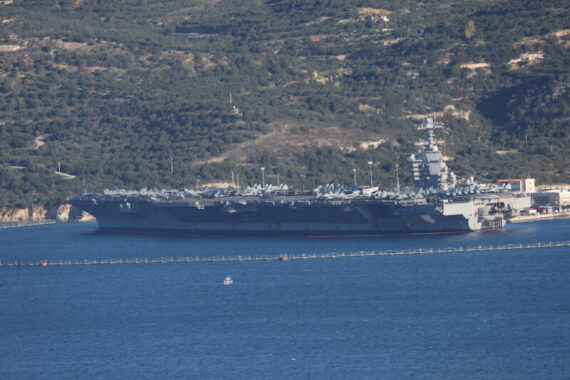
The aircraft are primarily distributed among major U.S. installations, including Al-Udeid Air Base, Muwaffaq Salti Air Base, and Prince Sultan Air Base. In addition, carrier air wings 8 and 9 are embarked aboard the aircraft carriers USS Abraham Lincoln and USS Gerald R. Ford, extending operational reach across the Gulf and surrounding areas.
Since early January, an estimated 270 C-17 Globemaster III and C-5 Galaxy transport flights have reportedly supported the buildup, delivering personnel, aircraft components and advanced missile defense systems. These include Patriot surface-to-air missile batteries and Terminal High Altitude Area Defense (THAAD) systems aimed at strengthening regional air and missile defenses.
Open-source assessments also indicate that approximately 75 KC-46 Pegasus and KC-135 Stratotanker aircraft remain deployed to CENTCOM or are currently en route, significantly enhancing long-range strike and sustainment capabilities.
According to defense analysts reviewing the data, the assembled force includes a broad mix of strike and support aircraft:
These jets account for nearly 70% of the deployment. The remaining aircraft serve specialized roles, including:
No confirmed movements of B-2 Spirit stealth bombers — reportedly used in Operation Midnight Hammer last June — have been observed in recent weeks.
Analysts note that Israel’s air capabilities could significantly shape any potential escalation. Israel operates approximately 66 F-15 variants, 173 F-16 variants and 48 F-35 fighter jets, effectively doubling the potential airpower available for coordinated operations against Iran.
On Tuesday, Israel reportedly received 12 US F-22 Raptor stealth fighters. An additional six F-22s were observed departing Langley Air Force Base, with indications they could transit via RAF Lakenheath en route to the region.
The F-22 is regarded as one of the most advanced air superiority platforms in the US arsenal, designed to penetrate contested airspace and disable sophisticated air defense systems.
Recommended
Despite the military buildup, the White House has emphasized that diplomacy remains the preferred path. Spokesperson Karoline Leavitt said President Donald Trump continues to prioritize negotiations with Iran but would authorize military action if necessary.
“President Trump’s first option is always diplomacy, but as he has shown, he is willing to use the lethal force of the United States military, if necessary,” Leavitt told reporters, referencing Operation Midnight Hammer, which she described as “overwhelmingly successful” in targeting Iran’s nuclear facilities.
Her remarks come as a third round of indirect nuclear talks between the United States and Iran, mediated by Oman, is scheduled for Thursday in Geneva, where Iranian officials are expected to present a draft proposal.
The concentration of US airpower across CENTCOM highlights the high-stakes environment surrounding the negotiations, with Washington signaling both readiness for dialogue and a robust military deterrent as discussions resume.
(Source: Anadolu Agency)

Politics Today is dedicated to publishing insightful analyses in order to understand the changing nature of contemporary politics. It aims to contribute to the sound and constructive discussion of international affairs.
You can see how this popup was set up in our step-by-step guide: https://wppopupmaker.com/guides/auto-opening-announcement-popups/

Stay informed by subscribing to
our weekly newsletter.
You can see how this popup was set up in our step-by-step guide: https://wppopupmaker.com/guides/auto-opening-announcement-popups/
You can see how this popup was set up in our step-by-step guide: https://wppopupmaker.com/guides/auto-opening-announcement-popups/
You can see how this popup was set up in our step-by-step guide: https://wppopupmaker.com/guides/auto-opening-announcement-popups/
You can see how this popup was set up in our step-by-step guide: https://wppopupmaker.com/guides/auto-opening-announcement-popups/