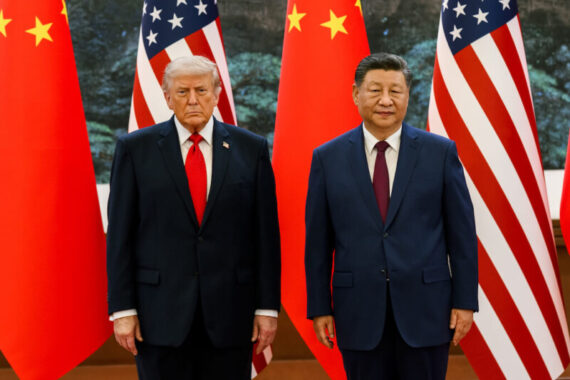
Trump Warns Patience with Iran Is Running Out after Talks with Xi
The White House said Trump and Xi agreed during their meetings that the Strait of Hormuz must remain open to international shipping and that Iran should never obtain nuclear weapons.
May 15, 2026
U
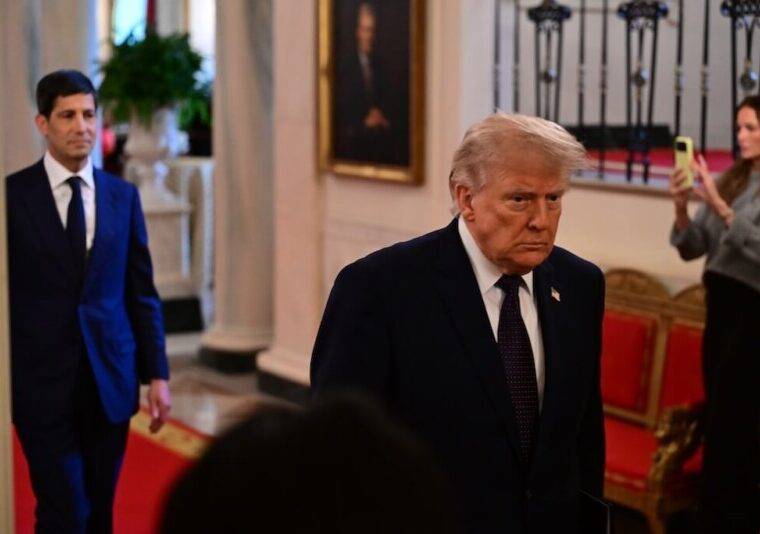
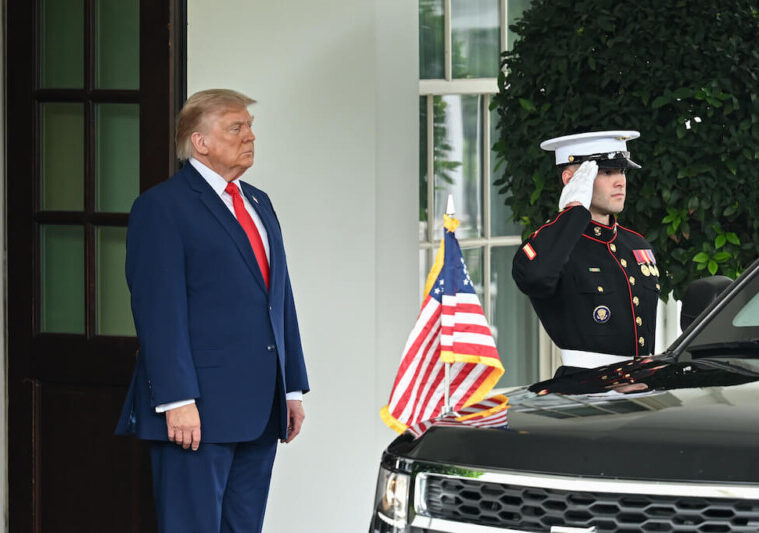
.S. President Donald Trump said his patience with Iran is “running out” after talks with Chinese President Xi Jinping in Beijing, as tensions in the Gulf escalated with new attacks on commercial shipping near the Strait of Hormuz.
Speaking in an interview on Fox News’ “Hannity” program, Trump urged Tehran to agree to a deal with Washington after negotiations stalled over Iran’s nuclear program and its stockpile of enriched uranium.
“I am not going to be much more patient,” Trump said. “They should make a deal.”
The White House said Trump and Xi agreed during their meetings that the Strait of Hormuz must remain open to international shipping and that Iran should never obtain nuclear weapons.
According to the White House readout, Xi also opposed militarization of the strait and rejected any effort to impose tolls on ships passing through the waterway, which carries a significant share of global oil and liquefied natural gas supplies.
Trump further claimed Xi promised China would not provide military equipment to Iran.
“He said he’s not going to give military equipment, that’s a big statement,” Trump said during the interview.
The comments came as maritime security concerns intensified in the Gulf region.
An Indian cargo vessel transporting livestock from Africa to the United Arab Emirates sank off the coast of Oman on Wednesday after what security officials believe was a missile or drone strike. India said all 14 crew members were rescued by the Omani coast guard.
Separately, British maritime security authorities reported that unidentified personnel boarded a ship anchored near the UAE port of Fujairah and redirected it toward Iran. Security consultancy Vanguard said the vessel was believed to have been seized by Iranian personnel.
Fujairah is strategically important because it allows some oil exports to bypass the Strait of Hormuz, which Iran has partially restricted since the conflict began following U.S. and Israeli strikes on Iran in February.
Iran appears to be selectively allowing some vessels through the strait under negotiated arrangements with certain countries. Iranian media reported agreements enabling some Chinese ships to pass, while a Japanese tanker also crossed after diplomatic contacts between Tokyo and Tehran.
Iran’s Islamic Revolutionary Guard Corps said 30 vessels had passed through the strait since Wednesday evening, although shipping volumes remain far below pre-war levels.
Despite the Trump-Xi talks, negotiations between Washington and Tehran remain frozen.
The United States is demanding that Iran surrender its enriched uranium stockpile and permanently halt uranium enrichment activities. Tehran, meanwhile, is seeking sanctions relief, compensation for war damage and international recognition of its authority over the Strait of Hormuz.
Analysts say Trump is eager to secure diplomatic progress as the war increasingly affects domestic politics ahead of U.S. midterm elections later this year.
However, experts remain skeptical that China will pressure Iran aggressively. Beijing relies heavily on Iranian oil and views Tehran as an important strategic partner against U.S. influence in the Middle East and Asia.
U.S. Treasury Secretary Scott Bessent said in Beijing that China would likely support efforts to reopen shipping routes because stability in the strait is “very much in their interest.”
Recommended
Trump defended the military campaign against Iran, saying its goals were to damage Iran’s nuclear program, reduce its ability to threaten neighboring states and weaken the country’s leadership.
A senior U.S. military commander told a Senate committee on Thursday that Iran’s capacity to threaten regional partners had been “significantly degraded.”
Admiral Brad Cooper said Iran no longer posed the same level of threat across multiple military domains, though he declined to comment directly on reports that Tehran still retains substantial missile and drone capabilities.
Despite the prolonged conflict and thousands of casualties from U.S. and Israeli strikes, Iran’s leadership has remained in control domestically. Analysts say Tehran’s continued influence over the Strait of Hormuz has given it additional leverage in negotiations with Washington.
(Source: Reuters)

Politics Today is dedicated to publishing insightful analyses in order to understand the changing nature of contemporary politics. It aims to contribute to the sound and constructive discussion of international affairs.
You can see how this popup was set up in our step-by-step guide: https://wppopupmaker.com/guides/auto-opening-announcement-popups/

Stay informed by subscribing to
our weekly newsletter.
You can see how this popup was set up in our step-by-step guide: https://wppopupmaker.com/guides/auto-opening-announcement-popups/
You can see how this popup was set up in our step-by-step guide: https://wppopupmaker.com/guides/auto-opening-announcement-popups/
You can see how this popup was set up in our step-by-step guide: https://wppopupmaker.com/guides/auto-opening-announcement-popups/
You can see how this popup was set up in our step-by-step guide: https://wppopupmaker.com/guides/auto-opening-announcement-popups/