Have US-Ukraine Relations Returned to Square One?
The US President was also extremely pleased with Ukraine’s dominance, achieved through drones and guided missiles, extending as far as 2,000 kilometers into Russian airspace
July 21, 2026
F
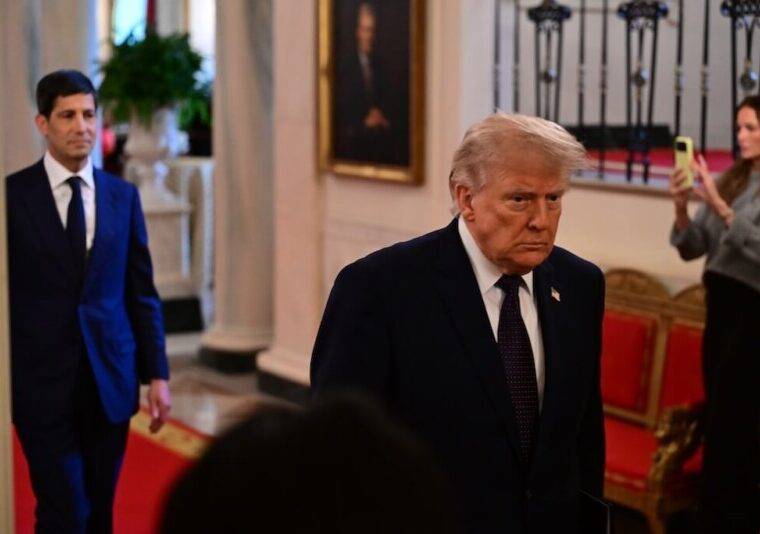
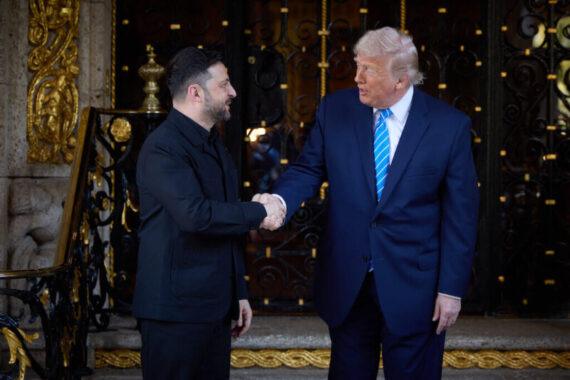
ebruary 28, 2025 was one of the darkest days of the Ukraine-Russia War. Yet, for Ukraine, the catastrophe is unfolding not on the front lines but in Washington, right at the gates of the White House. In the early days of his second presidential term, Donald Trump opens proceedings by publicly mocking Ukrainian President Zelensky’s attire in front of the press, in a manner contrary to diplomatic protocol, before the President has even had a chance to enter the residence. Whilst Zelenskyy thought he would have to make do with this cold shower at the door, inside the White House he was subjected to a barrage of heavy criticism, this time joined by Vice-President James David Vance.
In a sense, those 10 minutes – during which all the aid the US had provided over the past three years was thrown in his face – must have felt like a decade, not only to the Ukrainian President but also to the European countries that had supported Ukraine. Donald Trump consistently maintained his line of accusing his predecessor, Joe Biden, over the Ukraine–Russia War right up until August 2025.
The Trump–Putin summit held on August 15, 2025, at Elmendorf–Richardson Air Force Base in Alaska had further reinforced the impression that all hope for Ukraine had been completely dashed. Furthermore, events at the White House just three days later, on August 18, 2025, reinforced the perception that the US had completely capitulated to Russia’s position on the war in Ukraine. That day, Trump lined up European Commission President Ursula von der Leyen, Finnish President Stubb, French President Macron, German Chancellor Merz, Italian Prime Minister Meloni, British Prime Minister Starmer, Ukrainian President Zelensky and NATO Secretary-General Rutte before him, and dictated his expectations regarding the course of the Ukraine–Russia War.
Furthermore, by catching this group off guard in front of the media, he forced them to speak on the validity of his own views. However, the evolving relations between the People’s Republic of China and Russia, the support Moscow provided to the Tehran regime during the Iran war, and Russia’s reluctance to sit down at the negotiating table have shifted the course of events.
On 8 July 2026, the image presented by the Trump–Zelensky duo when they faced the media at the NATO Summit in Ankara was very different from the unpleasant scenes witnessed a year and a half earlier. Beyond the positive messages conveyed, Trump had warmed relations to the point of joking with Zelensky about Ukraine’s drone and missile strikes on Moscow. When Trump asked, “Would you like to go to Moscow?”, Zelensky replied, “I don’t think so; there are far too many Ukrainian drones there.”
Clearly, the US President was also extremely pleased with Ukraine’s dominance, achieved through drones and guided missiles, extending as far as 2,000 kilometers into Russian airspace. Indeed, during the summit, NATO Secretary-General Mark Rutte remarked: “Some key targets deep inside Russia have been struck. ‘Over the past two months, Ukraine has been hitting targets more successfully’.” It is clear that Ukraine has not only made significant strides in the field of FPV drones and guided missiles.
There has also been an increase—the details of which we are not yet fully aware—in the quality and quantity of satellite-based electronic intelligence provided to Ukraine by NATO member states. The fact that around 100 naval vessels operating for the Russian ‘Ghost Fleet’ were struck by Ukrainian drone attacks in the Sea of Azov in the week following the NATO Summit is a matter that warrants attention in terms of the level these capabilities have reached. Looking back a little further, we can conclude that events took place which led Trump to lose hope that Russia and Putin would make peace with Ukraine in the final quarter of 2025.
From the very first days of 2026, the nature and scale of Ukraine’s drone attacks saw a significant increase. Whilst all logistics routes supplying food and fuel to Crimea were paralyzed, almost all of the peninsula’s fuel depots and main electricity transmission stations were taken out of action by July. Petrochemical plants and refineries across Russia were struck 200 times in six months. This represents an 11-fold increase compared with the first six months of 2025. In May alone, 16 highly successful attacks were carried out against Russian refineries.
It has become commonplace for Ukrainian kamikaze UAVs to reach a range of 2,000 kilometers, or for FPV drones to strike targets more than 100 kilometers behind the front line. Having lost 40 per cent of its oil refining capacity, Russia has reached the point of banning diesel exports following its decision to ban the export of petrol and aviation fuel. Having been reduced to the point of having to import refined oil from India, Russia was unable to parade tanks and mobile missile launchers on Red Square during the traditional Second World War Victory Day commemorations on May 9.
As the military balance rapidly shifted against Russia, US President Trump’s behavior towards Ukrainian President Zelensky at the G7 Summit in Paris and the NATO Summit in Ankara, held between and June 15-17, signaled that even tougher times lay ahead for Moscow. At the summit, a commitment of 70 billion euros was made to provide Ukraine with military equipment, ammunition and training by 2026. Furthermore, following statements from some NATO member states that ‘we have nothing left to give to Ukraine’, the alliance decided to take an unprecedented step. Led by Canada, an initiative was launched to establish the ‘Defense, Security and Resilience Bank (DSRB)’ with the participation of certain NATO member states.
The bank, scheduled to become operational in 2027, aims to provide low-cost financing of up to 100 billion pounds for defense projects. The members set to participate in this bank project include Turkey, Albania, Belgium, Greece, Latvia, Luxembourg, Romania and Ukraine. It is clear that the Alliance does not wish to see a repeat of the chaos that ensued regarding support for the Kyiv administration from the outset of the war in Ukraine and intends to find an institutional solution to this.
Recommended
Returning to the final communiqué of the NATO Summit in Ankara, it appears that the mobilization launched against the Russian threat directed at Ukraine – and even Poland and the Baltic states – will continue with an open-ended timeline. The communiqué, referencing the NATO Hague Summit Communiqué dated June 25, 2025, emphasised that Russia poses a long-term threat to Euro-Atlantic security and stability. In other words, NATO members will channel more of their economic capacity into deterrence and defense against threats originating from Russia.
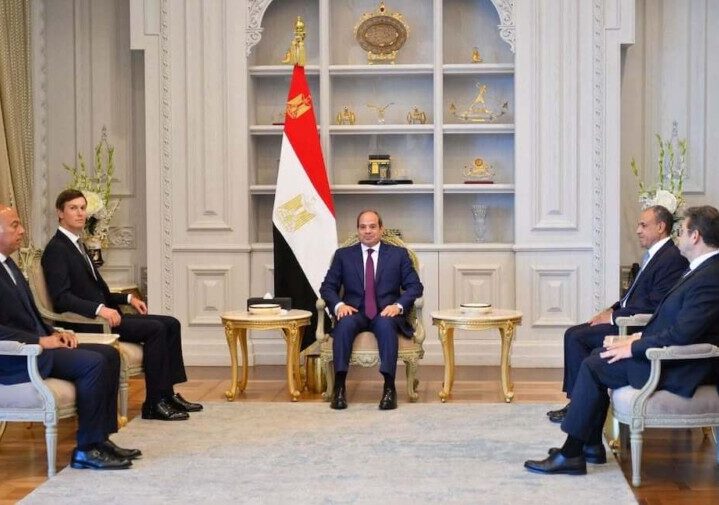
The emphasis on Russia as a “long-term threat” could be interpreted as the US having given up hope on the Putin administration. The visits to Moscow by US Special Envoys Jared Kushner and Steve Witkoff – which the Kremlin has been awaiting for nearly two months but which have yet to materialize – could also be seen as a manifestation of this “loss of hope”. Reports by the Russian TASS news agency in the first week of July stated that this visit, which Moscow was apparently eagerly awaiting, “could take place by the end of the summer, though a definite date has not yet been set”.
A report published in the British newspaper The Telegraph on July 10, 2026, however, indicates that the growing aversion towards Russia, particularly in Washington and other NATO capitals, is set to increase exponentially. According to the British newspaper’s report, the Dutch intelligence services, the AIVD (Dutch General Intelligence and Security Service) and the MIVD (Military Intelligence and Security Service), have discovered that doorbell cameras at hundreds of homes along the routes leading from NATO bases in the Netherlands to airports and seaports have been hacked. So, who would want access to the footage from hundreds of doorbell cameras?
According to the Dutch intelligence services, the culprits are cybercriminals backed by Moscow. Their aim is to determine the contents and quantities of arms shipments to Ukraine. According to The Telegraph, this Russian operation is not limited to the Netherlands. Across Europe, thousands of doorbell cameras are under the control of Russian intelligence. In other words, the Ukraine-Russia War has reverted to the ‘factory settings’ established at the outset by the US-UK duo. The objective is no longer limited to simply expelling Russia from Crimea and the Donbas region, which it has annexed. The ultimate goal has been updated to create the conditions necessary to topple Putin’s regime in Moscow.
(This article was originally published in Turkish by Kriter)

Turkish author and security expert who writes on Ukraine, Russia, NATO and African politics. Prigozhin Died for Wagner to Live On.
You can see how this popup was set up in our step-by-step guide: https://wppopupmaker.com/guides/auto-opening-announcement-popups/

Stay informed by subscribing to
our weekly newsletter.
You can see how this popup was set up in our step-by-step guide: https://wppopupmaker.com/guides/auto-opening-announcement-popups/
You can see how this popup was set up in our step-by-step guide: https://wppopupmaker.com/guides/auto-opening-announcement-popups/
You can see how this popup was set up in our step-by-step guide: https://wppopupmaker.com/guides/auto-opening-announcement-popups/
You can see how this popup was set up in our step-by-step guide: https://wppopupmaker.com/guides/auto-opening-announcement-popups/