The Collapse of Western Hegemony Amid the Ruins of Gaza
Germany serves as the normative shield of the regime of moral exceptionalism. Britain, on the other hand, is the imperial architect of this regime.
September 21, 2026
I
srael’s practices of forced displacement and even extermination in Gaza have created a rift in the architecture of security and memory that post-World War II Europe constructed. This rupture clearly signifies a crisis. Rather than framing this crisis as a mere foreign policy divergence, it is important to characterize it as the collapse of the moral exceptionalism generated through the absolutization of the suffering of the Holocaust. The diplomatic protest process currently led by Spain and Ireland takes the form of a rebellion by the periphery and postcolonial memory against the hegemony of memory represented by the center—Germany and the United Kingdom. Consequently, with this protest, the capital of victimhood has been exhausted, and the colonial codes within Western rationality have begun to be deciphered.
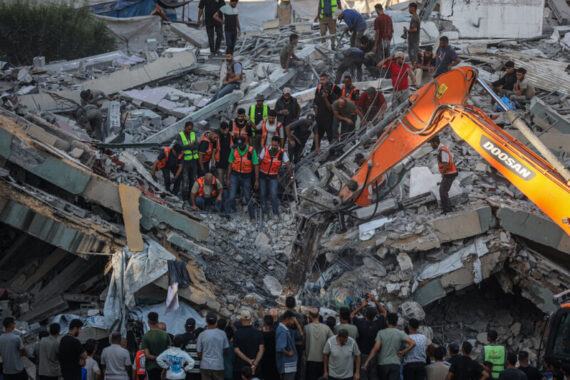
The most significant case illustrating this is the images of destruction emerging from Gaza. These images not only triggered a diplomatic fault line in Western capitals but also led to the fracturing of the most fundamental pillar of memory upon which modern European identity was built. The scene unfolding is less about ceasefire negotiations or humanitarian crisis management and more about the collapse of the perception of “moral exceptionalism”—the transformation of the trauma of the Holocaust into a political shield. This collapse lays bare just how fragile and internally fragmented Western rationality—which was assumed to be a homogeneous whole—truly is.
With the end of World War II, the Israeli state apparatus converted its unique “capital of victimhood” into a pragmatic geopolitical strategy within the international community. At the root of this capital of victimhood lies the Holocaust perpetrated by Nazi Germany. Undoubtedly, the Holocaust was an organized and bureaucratic machine of extermination in human history. However, rather than interpreting this historical tragedy as a universal warning against fascism, Israel’s official political discourse has transformed it into a functional diplomatic shield that legitimizes every military move by the state and disregards international law.
The danger articulated by sociologist Michael Rothberg lies precisely here. As he puts it, when memory is constructed as a zero-sum game, the recognition of one suffering necessitates the invisibilization of all other sufferings. This zero-sum regime of memory, which Israel has imposed not only on the West but on nearly the entire world, has placed the Jewish Holocaust in an absolute and incomparable position. In this process, the dispossession of Palestinians and the violence they have endured have been reduced to an ontologically secondary and insignificant detail. Another manifestation of the effort to render this genocide absolute and incomparable was Europe’s granting of the privilege to Israel to operate beyond the bounds of the law in order to suppress its own sense of guilt. The entire spectrum of practices currently taking place in Gaza—based on dispossession, violence, displacement, and annihilation—is being carried out in connection with this privilege.
The case of Germany serves as the most jarring laboratory for this privilege-based normative blindness. Without distinguishing Israel’s security from its own state rationality, Germany is attempting to atone for its past experience of the Holocaust through its silence today. To such an extent that German bureaucratic rationality, in an effort to free itself from the burden of its negative historical legacy, has become incapable of naming the violence Israel is perpetrating in Gaza. Its reflexive criminalization of pro-Palestinian protests in the streets as anti-Semitism should not be interpreted as an authoritarian securitization practice. This situation amounts to the center’s preservation of its own hegemony of memory. For Germany, criticizing Israel would mean the collapse of its moral foundation. Thus, preserving the uniqueness of the Holocaust paradoxically necessitates turning a blind eye to the crimes being committed today.
Germany serves as the normative shield of the regime of moral exceptionalism. Britain, on the other hand, is the imperial architect of this regime. The British state mind approaches the issue not so much through the lens of Holocaust guilt but rather through a colonial continuity inherited from the 1917 Balfour Declaration and the Mandate for Palestine. The British government’s current stance—suspending the rule of law in the face of the destruction in Gaza—is a reflex to protect the center’s own imperial legacy. For this reason, the United Kingdom occupies the center of moral exceptionalism in terms of imperial architecture.
Germany’s normative position and Britain’s imperial architectural position are what tie the issue together precisely at this point. The rift taking shape in Europe regarding this issue originates not from the center but from the historical and geographical “periphery.” The fact that Spain, Ireland, Norway, and Slovenia have recognized the State of Palestine and adopted the harshest diplomatic language in modern European history against Israel does not signify a sudden awakening of human rights consciousness.
Ireland, in particular, carries within its national memory the trauma of British colonialism and forced displacement from its lands. The fundamental factor that makes Ireland’s rebellion within Europe so jarring is directly linked to Britain’s imperial background. Indeed, when the Dublin government looks at Gaza, it sees the colonial geopolitical order that its former master, Britain, established in the Middle East and continues to support to this day. Consequently, an Irish diplomat’s assessment of Gaza is built not on the victims of World War II, but on the recognition of a 21st-century prototype of 19th-century colonial logic—a displaced people and an occupying power.
Although in a different way than Ireland, Spain has a political fabric shaped by confronting the aftershocks of the Franco dictatorship, the civil war, and ultimately its own imperial past, bearing the traces of the leftist political tradition and the post-ETA disarmament processes. With such a political fabric, Spain resonates on the international stage as the most significant voice from the periphery. Consequently, from the perspective of the Madrid administration, events at the Al-Aqsa Mosque or in Gaza enable it to take a leading role in taking significant steps to expose the hypocrisy of the exceptional protection Europe grants to Israel.
These countries, in Rothberg’s words, are operating the mechanism of “Multidirectional Memory.” These countries do not deny the Holocaust, but they openly rebel against its use as a cloak to cover up today’s colonial violence, the apartheid regime, demographic engineering, and the massacre in Gaza.
Recommended
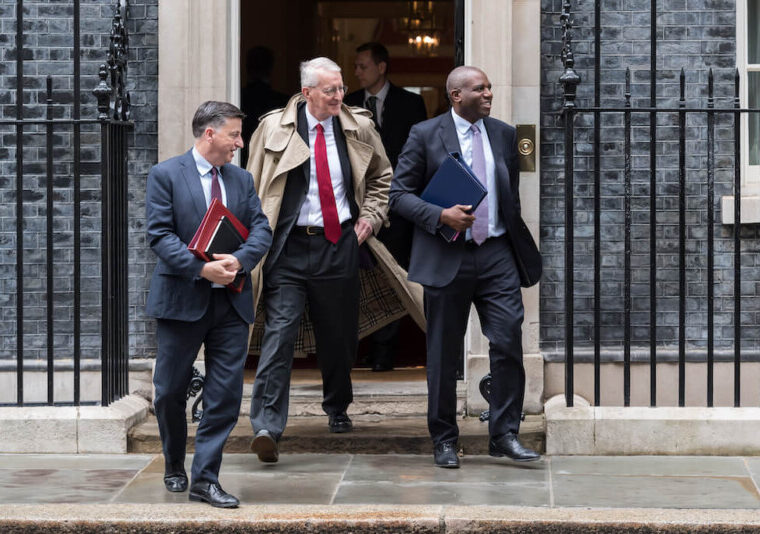
It therefore does not seem possible to speak of a homogeneous West. On one side are the Central European nations (Germany, France, and the United Kingdom), which have become prisoners of their own historical guilt regarding the Holocaust and view international law merely as a “stick of discipline” to be applied only to the Global South. On the other hand, there are actors such as Spain and Ireland, which—particularly following South Africa’s historic move at the International Court of Justice—have brought the Global South’s discourse into the heart of Europe.
Such a political divide signifies that the diplomatic capital built on the “capital of victimhood” has been exhausted. The rational brutality inherent in the Holocaust narrative has reached the limits of its own political legitimacy. Israel’s policy of destruction and dispossession in Gaza, as demonstrated by Spain and Ireland, has now moved beyond the context of a “European internal matter.” It has, in and of itself, become a matter of global colonialism and international law.
The phenomenon we are witnessing today should not be interpreted as Europe clearing its own conscience. This situation is a deadly political battle waged by two different memories, two different Europes, and two different rationalities over the ruins of Gaza. And neither the current nor the former liberal democratic order stands a chance of emerging unscathed from this battle.
(Originally published in Turkish by Kriter)
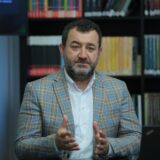
Born in Bursa in 1979, Prof. Dr. Celalettin YANIK completed his primary and secondary education in Bursa. He graduated from the Department of Sociology, Faculty of Arts and Sciences at Uludağ University in 2002. He completed his Master's degree in 2006 and his Ph.D. in 2012 in the same field and at the same university.
He worked at Çankırı Karatekin University from 2009 to 2012, Çanakkale Onsekiz Mart University from 2012 to 2016, and Bandırma Onyedi Eylül University from 2016 to 2024. Since 2024, he has been serving at Bursa Uludağ University.
Prof. Dr. YANIK has authored books, book chapters, and articles both domestically and internationally on political science and sociology, nationalism, and ethnicity. His academic footprint includes papers presented at national and international symposiums and published in conference proceedings. Additionally, his articles have been featured in various newspapers and magazines such as Anadolu Agency Analysis, Yeni Şafak Düşünce Günlüğü, Star Newspaper Açık Görüş, and SETA Kriter Magazine.
You can see how this popup was set up in our step-by-step guide: https://wppopupmaker.com/guides/auto-opening-announcement-popups/

Stay informed by subscribing to
our weekly newsletter.
You can see how this popup was set up in our step-by-step guide: https://wppopupmaker.com/guides/auto-opening-announcement-popups/
You can see how this popup was set up in our step-by-step guide: https://wppopupmaker.com/guides/auto-opening-announcement-popups/
You can see how this popup was set up in our step-by-step guide: https://wppopupmaker.com/guides/auto-opening-announcement-popups/
You can see how this popup was set up in our step-by-step guide: https://wppopupmaker.com/guides/auto-opening-announcement-popups/