Israel’s Strategy to Break Its Isolation in Latin America
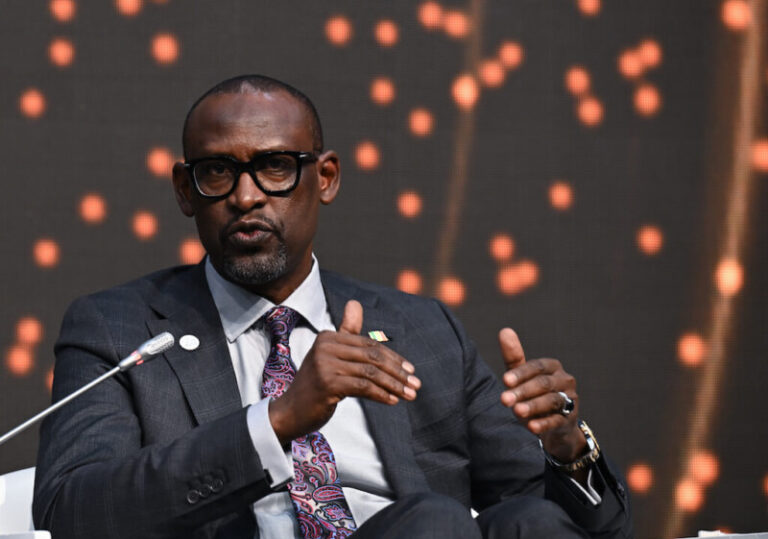
Peru remains among the countries maintaining traditionally strong economic, technological and security cooperation with Israel.
October 9, 2026
Alongside strengthening diplomatic relations with Latin American countries, the Israeli government is seeking to expand cooperation in the fields of the economy, technology, security and innovation. However, Israel’s outreach to Latin America also faces certain limitations. While the foreign-policy priorities of governments in the region can change, the Israel-Palestine issue remains an important factor in relations with Latin American countries. Israel’s actions in Gaza have provoked the strongest reaction among Latin American populations in recent history. Israel is aware of this and is therefore pursuing new policies in the region.
The decision by Israeli Foreign Minister Gideon Sa’ar to declare 2026 the “year of focusing on Latin America” from the ministry’s perspective is being presented as part of Tel Aviv’s strategy to break its isolation in the region. Alongside strengthening diplomatic relations with Latin American countries, the Israeli government is seeking to expand cooperation in the fields of the economy, technology, security and innovation.
One of the important steps in this policy was the Isaac Accords launched between Israel and Argentina in April 2026. The agreement aims to promote security, counterterrorism, trade, technology and economic cooperation between the two countries and other Western Hemisphere countries that share similar policies.
Bolivia restored diplomatic relations with Israel in December 2025, with the two countries agreeing to reappoint ambassadors and increase bilateral contacts. Relations with Colombia were also restored in August 2026. Under the new President Abelardo de la Espriella, steps were taken to reestablish diplomatic ties with Tel Aviv, appoint ambassadors and strengthen economic relations.
These developments indicate that Israel is seeking to reverse the diplomatic ruptures experienced in Latin America in the previous period and rebuild its diplomatic network across the region.
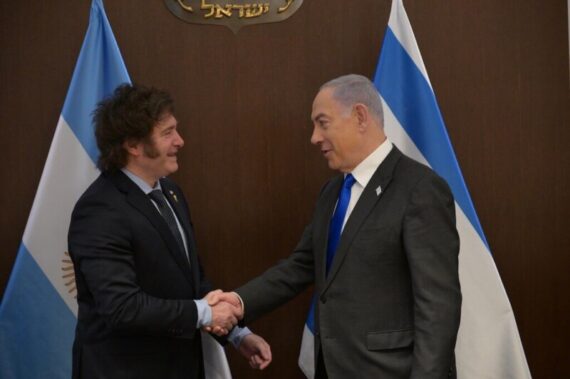
Relations between Israel and Argentina have become closer politically and diplomatically than ever before following Javier Milei’s election as president in 2023. The Milei administration has described Israel as one of Argentina’s principal strategic partners, designated Hamas as a terrorist organization and continued to express strong support for Israel on international platforms.
Milei’s visit to Israel in 2024 and his visit to the Western Wall were among the symbolic steps reflecting the political rapprochement between the two countries. One of the key elements of this rapprochement was Argentina’s decision to move its embassy to Jerusalem. Milei announced the decision in 2024 and stated that the embassy would be moved to Jerusalem in 2026.
While the ideological and strategic alliance established by the Milei administration with Israel in foreign policy has reached a peak, Argentina is experiencing a deep socioeconomic crisis at home. The “shock therapy” economic policies implemented by Milei after taking office—including cuts in public spending, the removal of subsidies and the devaluation of the peso—were intended to bring inflation under control but severely affected the population’s purchasing power.
As a result of these measures, the country’s official poverty rate surpassed 50 percent, reaching its highest levels in two decades. Pensioners, public-sector workers and low-income groups in particular were pushed into a severe cost-of-living crisis as food, transportation and energy costs increased.
Relations between Colombia and Israel began to take a new shape following the diplomatic rupture that occurred under former President Gustavo Petro over Israel’s actions in Gaza. The new period began with Abelardo de la Espriella, who took office on August 7 and had refused to recognize the victory of the left-wing administration, describing it as fraudulent.
The Petro administration had severed diplomatic relations with Israel in May 2024 over Israel’s actions in Gaza. Following de la Espriella’s assumption of office, a rapid normalization process began between the two countries.
One of the most notable steps in the new administration’s shift in Israel policy was Colombia’s recognition of Israeli sovereignty over the Golan Heights. In a statement issued on August 10, 2026, Colombia announced that it recognized Israel’s sovereignty over the Golan Heights and considered Israeli control of the area important for Israel’s security.
The decision was one of the clearest indications that Bogotá had departed significantly from the previous administration’s policy toward Israel.
Another important component of the change in relations is the relocation of the Colombian Embassy to Jerusalem. The de la Espriella administration had already included the relocation of the embassy from Tel Aviv to Jerusalem among its campaign promises.
While the two sides have discussed strengthening security and economic ties alongside diplomatic relations, the possibility of Colombia resuming coal exports to Israel and changing its position in certain international legal proceedings against Israel has also emerged.
Most recently, Colombia withdrew its request to intervene in the genocide case filed against Israel at the International Court of Justice.
Brazil’s general elections, scheduled for October 4, 2026, represent an important turning point for the future of relations between Israel and Latin America’s largest country.
During the Lula administration, relations between the two countries experienced serious diplomatic tensions over the Gaza war. Brazil’s position on the Palestinian issue became a particularly clear source of divergence.
In February 2024, Israel declared Lula “persona non grata,” while Brazil recalled its ambassador from Tel Aviv. Diplomatic tensions between the two countries continued into 2025.
Against this backdrop, Flavio Bolsonaro, the presidential candidate of Brazil’s right-wing opposition, has been sending clear messages about strengthening relations with Israel. In a statement in June, Bolsonaro said that if elected, Brazil would once again move closer to Israel, relocate its embassy in Tel Aviv to Jerusalem and join the Isaac Accords.
Bolsonaro’s Israel policy has not been limited to foreign policy during the election campaign. Bolsonaro also presented to the public at an election event a video message sent to his campaign by Israeli Prime Minister Benjamin Netanyahu.
This development indicates that political contacts between Brazil’s right-wing camp and the Israeli government have become increasingly visible during the electoral process.
Depending on the election result, two different approaches are expected to emerge regarding Brazil’s Israel policy: the continuation of the Lula administration’s existing position on the Palestinian issue or a Bolsonaro administration seeking to restore and strengthen diplomatic and strategic relations with Israel.
Flavio Bolsonaro’s statements on Jerusalem, Israel and the Isaac Accords have already outlined the main areas in which foreign policy could change in the event of a change of government.
Paraguay’s decision regarding Jerusalem has come to the fore twice in recent years amid changing foreign-policy preferences. In 2018, then-President Horacio Cartes moved the country’s embassy to Jerusalem. However, five months later, Mario Abdo Benítez, who took office, moved the embassy back to Tel Aviv, citing international law and United Nations resolutions.
The decision triggered a diplomatic crisis that led Israel to close its embassy in Paraguay.
The diplomatic fluctuations surrounding Paraguay’s decision to move its embassy to Jerusalem demonstrate how relations with Israel in Latin America can be shaped not only by domestic political dynamics but also by ideological divisions across the region.
The new administration led by Paraguayan President Santiago Peña once again moved the country’s embassy to Israel to Jerusalem. Israeli Foreign Minister Gideon Sa’ar subsequently paid an official visit to Asunción, elevating relations between the two countries to a strategic level.
However, this rapprochement requires an analytical assessment that also takes into account domestic public opinion in Paraguay, a lack of information and insufficient awareness of the Palestinian issue.
As part of Israel’s “Year of Latin America” strategy announced for 2026, Tel Aviv has also increased its contacts with the Uruguayan government, helping Uruguay establish a diplomatic representation in Jerusalem focused on innovation and technology.
Following the political tensions in relations with Israel during the administration of former left-wing President Gabriel Boric, a new period began in Chile with the assumption of office by far-right politician José Antonio Kast in 2026.
Kast’s meeting with Israeli President Isaac Herzog was one of the developments indicating renewed contacts between the two countries. Chile’s appointment of a new ambassador to Israel in August 2026 also signaled an effort to strengthen diplomatic channels.
Nevertheless, Chile’s historical ties with Palestine remain strong. Chile’s Foreign Ministry says that approximately 500,000 people of Palestinian descent live in the country and that Santiago has long maintained its support for the Palestinian state.
For this reason, the development of Chile’s relations with Israel following the political transition does not necessarily mean that the country’s traditional approach to the Palestinian issue has completely changed.
Recommended
Ecuador, under President Daniel Noboa, is seeking to develop its relations with Israel particularly in the areas of security, the economy and technology.
During Israeli Foreign Minister Sa’ar’s visit to Ecuador in August, the two sides agreed to make progress toward a free-trade agreement and increase cooperation in counterterrorism, economic affairs and innovation.
Following the severing of diplomatic relations between Venezuela and Israel in 2009 during the Hugo Chávez era, an important but limited normalization step was taken in August 2026.
The two countries agreed to establish a coordination mechanism to provide consular services to their citizens. They also agreed to continue technical cooperation that began following the earthquakes that struck Venezuela in June.
The development does not mean that full diplomatic relations have been restored. However, the opening of consular channels after 17 years of estrangement demonstrates that a new, albeit limited, channel of communication has emerged between Caracas and Tel Aviv.
Peru remains among the countries maintaining traditionally strong economic, technological and security cooperation with Israel.
Mexico, meanwhile, has supported a two-state solution to the Israel-Palestine conflict from the outset while pursuing a more balanced approach based on maintaining diplomatic relations.
Mexico’s Jewish-born President Claudia Sheinbaum reiterated in 2026 that Palestine and Israel should be recognized as two separate states. Her government has criticized Israel’s policies in Gaza while advocating continued diplomatic dialogue and efforts toward a multilateral solution.
The examples of Bolivia and Colombia demonstrate how political changes in the region can have a decisive impact on the direction of relations with Israel.
However, Israel’s outreach to Latin America also faces certain limitations. While the foreign-policy priorities of governments in the region can change, the Israel-Palestine issue remains an important factor in relations with Latin American countries.
Israel’s actions in Gaza have provoked the strongest reaction among Latin American populations in recent history. Israel is aware of this and is therefore pursuing new policies in the region.
(Originally published in Turkish by Kriter)
You can see how this popup was set up in our step-by-step guide: https://wppopupmaker.com/guides/auto-opening-announcement-popups/

Stay informed by subscribing to
our weekly newsletter.
You can see how this popup was set up in our step-by-step guide: https://wppopupmaker.com/guides/auto-opening-announcement-popups/
You can see how this popup was set up in our step-by-step guide: https://wppopupmaker.com/guides/auto-opening-announcement-popups/
You can see how this popup was set up in our step-by-step guide: https://wppopupmaker.com/guides/auto-opening-announcement-popups/
You can see how this popup was set up in our step-by-step guide: https://wppopupmaker.com/guides/auto-opening-announcement-popups/