What Does COP31 Mean for Africa?

November 16, 2026

Africa is coming to Antalya with a clearly defined agenda. In a preparatory meeting in Nairobi in early October, the chair of the African Group of Negotiators (AGN) said Antalya should not become another cycle of new promises.
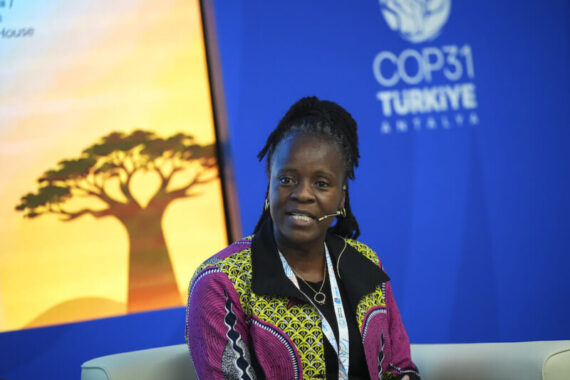
Patience Mutopo, Director at Zimbabwe's Ministry of Environment and Climate, speaks during a panel titled “From Africa's Cultural Heritage to Climate Action: Invisible Labor and Social Resilience” at the Circularity Stage of the Zero Waste Museum as part of the 31st Conference of the Parties (COP31) to the UN Framework Convention on Climate Change in Antalya, Turkiye, on November 13, 2026. Photo by Anadolu Images.

C

OP31 will convene in Antalya, Türkiye, under Türkiye’s presidency from November 9 to 20, 2026. The presidency has described the summit as an “implementation COP,” a vision reflected in the structure of its Action Agenda. Among the agenda’s 10 priority themes, the clean energy transition and electrification, along with climate-resilient cities, stand out. Financing, technology and capacity-building are treated as cross-cutting conditions for all themes. For Africa, the most significant initiative is the Climate Implementation Bridge, which aims to improve access to climate finance.

The emphasis on implementation was also carried into the pre-COP ministerial meeting held in Fiji in early October. At the meeting, Türkiye and Australia announced that they had agreed to prepare a presidency-led decision for Antalya. COP31 President Murat Kurum said the proposed text would not replace the formal negotiation tracks or create new obligations, and that it would be developed through early, transparent and inclusive consultations with the parties. Its adoption will ultimately depend on consensus among them.

These developments are unfolding at a time when the United States’ withdrawal from the Paris Agreement took effect in January 2026 and confidence in the multilateral process has weakened.

When Türkiye agreed to host COP31, it pledged to organize a conference connecting the Global North and South, with a focus on vulnerable regions such as the Pacific and Africa. Africa is among those expecting tangible results from this commitment. And those expectations have an existing foundation: Türkiye and Africa already have a functioning framework for climate cooperation.

The clearest example is the 2022–2026 Türkiye-Africa Joint Action Plan. Its infrastructure and agriculture component includes activities on climate resilience and disaster preparedness, combating drought and desertification, weather and climate, the impact of climate change on agriculture, and climate-friendly farming.

For example, the plan envisages a workshop, with the participation of Türkiye’s General Directorate of Meteorology, on incorporating weather and climate services into national strategies, development plans and programs. It also includes sharing Türkiye’s experience in combating desertification, land degradation and drought with experts from African Union member states, as well as supporting the Great Green Wall initiative across the Sahara and Sahel.

The plan identifies the Ministry of Environment, Urbanization and Climate Change as the implementing institution for most of these activities. This means that the ministry leading the COP31 presidency already has a defined role in climate cooperation with Africa. The central question in Antalya, therefore, is how this existing partnership can be aligned with Africa’s current priorities.


An implementation COP and Africa’s agenda

Africa is coming to Antalya with a clearly defined agenda. In a preparatory meeting in Nairobi in early October, the chair of the African Group of Negotiators (AGN) said Antalya should not become another cycle of new promises.

During consultations with the COP31 presidency in mid-October, the group identified climate finance, adaptation, and the relationship between climate action and development as its priorities. It also called on the multilateral system to deliver on issues that have already been agreed. The AGN used the same consultations to call for a clear signal on the replenishment of the Green Climate Fund (GCF).

These demands align with the presidency’s emphasis on implementation. Africa wants commitments already made to be followed through.

Adaptation is central to this agenda. In a September briefing to the Committee of African Heads of State and Government on Climate Change, the AGN chair said negotiations on the Global Goal on Adaptation had stalled during the June talks in Bonn.

The group also called in Nairobi for predictable, scalable and grant-based financing for adaptation in Africa. This demand builds on an appeal made at the previous climate summit in Belém, Brazil. At COP30, parties called for efforts to increase adaptation finance at least threefold by 2035, but did not establish a baseline year.

As the first summit after Belém, Antalya will be an important test of how that commitment is followed up.

A common position and regional priorities

Africa is entering the negotiations with a common position, although priorities vary across its subregions.

Delegates and experts from East African Community (EAC) countries adopted a joint position at a meeting in Kenya in late September and early October. They called for existing public climate finance commitments to be fulfilled, adaptation finance to be tripled by 2035, and direct access to climate funds to be expanded.

They also stressed that this support should not increase the debt burden of vulnerable countries.

In West Africa, meanwhile, Economic Community of West African States (ECOWAS) members are seeking stronger international support for climate-related losses and adaptation. A three-day workshop organized by ECOWAS in Accra aimed to coordinate the region’s negotiating position ahead of COP31.

For Türkiye, this presents a practical lesson: rather than offering the continent a single climate package, it may be more effective to pursue separate areas of cooperation with institutions such as the EAC, ECOWAS and the African Union.

The financing gap and the climate implementation bridge

For Africa, access to climate finance is just as important as the amount available.

Speaking in Nairobi, the AGN chair said Africa’s efforts at COP31 should focus on securing access to finance, technology and stronger national capacities. The group also called for support to help translate adaptation plans from policy documents into investment projects.

Türkiye identifies the problem in similar terms. In a special event organized by the president of the UN General Assembly ahead of COP31 in mid-October, Türkiye’s permanent representative to the United Nations emphasized that climate finance must not only be sufficient in volume but also available, accessible, affordable and predictable.

According to the ministry, Kurum told permanent representatives at a UN General Assembly presentation in March that annual global climate finance needs stood between $7.5 trillion and $9 trillion, while existing financing amounted to approximately $1.9 trillion.

The figures illustrate the gap in the overall volume of funding, while Africa’s demands highlight the barriers to accessing it.

The presidency’s proposed instrument for addressing this problem is the Climate Implementation Bridge. In a letter sent to the parties at the end of August, Kurum listed the initiative as one of the 10 priority themes of the Action Agenda.

As Kurum emphasized in June, the initiative is not a new fund. Developed in cooperation with the United Nations Development Programme (UNDP), it aims to turn countries’ climate and development priorities into investment-ready project portfolios and connect those projects with the existing international support system.

The presidency announced the first five pilot countries in New York at the end of September: Ethiopia, Fiji, Indonesia, Pakistan and Uzbekistan. Ethiopia is the only African country on the list.

The initiative’s role needs to be clearly understood. Rather than creating new sources of funding, the Climate Implementation Bridge aims to make existing resources easier to access. Its greatest contribution could therefore be in strengthening national capacities and preparing projects, areas also highlighted by the AGN.

Recognizing these limitations from the outset would help keep expectations of the initiative realistic.

The existing partnership and the Ethiopia connection

Ethiopia’s inclusion in the pilot program is particularly significant for Africa.

In November 2025, at COP30 in Belém, the African Group of Negotiators supported Ethiopia’s bid to host COP32. The proposal was accepted at COP30, and the next summit was scheduled to take place in Addis Ababa in November 2027.

At a UN event in mid-October, Ethiopia warned that access to finance and technology was increasingly determining who would benefit from the transition and who would be left behind. It also recalled that Africa accounts for approximately 3 percent of global greenhouse gas emissions while facing some of the most severe consequences of climate change.

The only African country selected for the Climate Implementation Bridge pilot is therefore also the host of the next COP. Ethiopia is placing the question of access to climate finance at the center of its own priorities.

The AGN is also emphasizing the importance of continuity. In the same September briefing, its chair called for COP31, COP32 and COP33 to be treated as a single, connected political cycle.

The strategy presented at the briefing includes providing specific support to Ethiopia to help turn negotiation outcomes into implementation and lay the groundwork for formal decisions at COP32.

This continuity has also found its way into the adaptation negotiations. At COP30, parties adopted the Belém Adaptation Indicators, a set of 59 voluntary indicators designed to track progress on adaptation.

The “Belém-Addis Adaptation Vision,” launched to develop guidance on implementing those indicators, is a two-year policy alignment process to be carried out by the parties, extending through COP32 in Addis Ababa.

Türkiye’s economic, political and development-focused relations with African countries, built over the past three decades, offer an advantage in this process.

A COP presidency lasts only one year and passes to the next host country at the following conference. However, linking the existing partnership with Africa to COP32 through Ethiopia could ensure that the impact of Türkiye’s presidency extends beyond Antalya.

Steps Türkiye can take in Antalya

Two areas stand out as opportunities to advance cooperation with Africa during Türkiye’s presidency.

The first is Ethiopia’s participation in the Climate Implementation Bridge pilot program. Antalya could provide an appropriate starting point for presenting the pilot’s roadmap and objectives. Which national priorities have been translated into projects, and which sources of funding have been matched with them, could then be reported at COP32 in Addis Ababa a year later.

As the initiative expands toward 2035, prioritizing the capacity of national institutions in new African pilot countries to access funding directly could also respond to a key demand from the EAC.

The second opportunity concerns the proposed presidency decision. Kurum’s statement that the text would not create new obligations already acknowledges the limits of what it can achieve. However, language referring to the call to triple adaptation finance and the Belém-Addis Adaptation Vision could establish continuity between Antalya and Addis Ababa without making consensus more difficult.

There is also an important milestone between Antalya and Addis Ababa. The 2022–2026 Türkiye-Africa Joint Action Plan expires this year, and the framework for the next period could be established at the fourth Türkiye-Africa Partnership Summit, planned for the coming months.

Including the steps taken in Antalya in that new plan would help place climate cooperation on a more lasting footing, independent of the COP calendar.

(Orignally published in Turkish by Kriter)

Assistant Professor of International Relations at Mersin University and a researcher at the SETA Foundation. His research focus is the Horn of Africa.