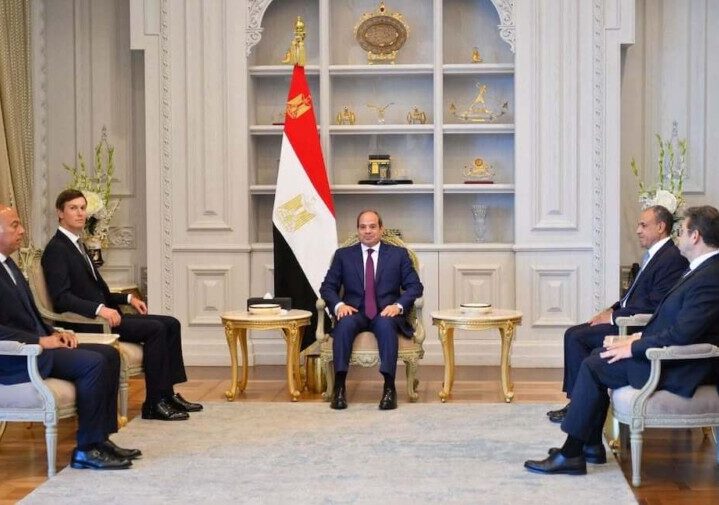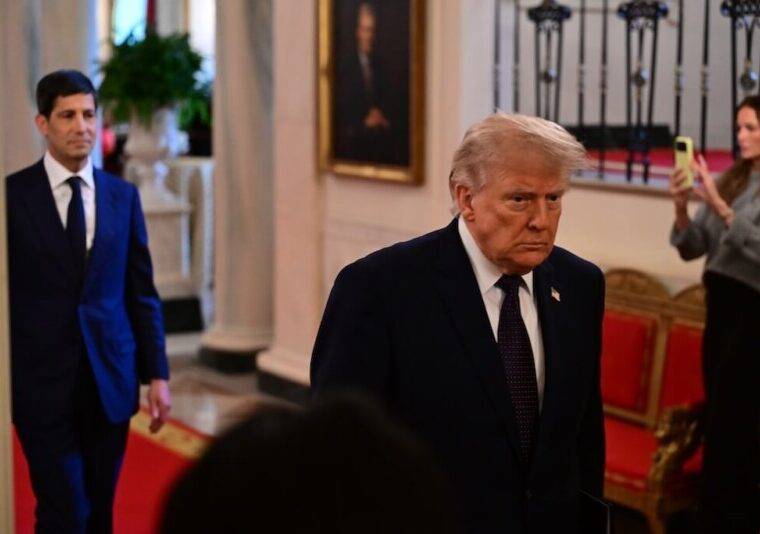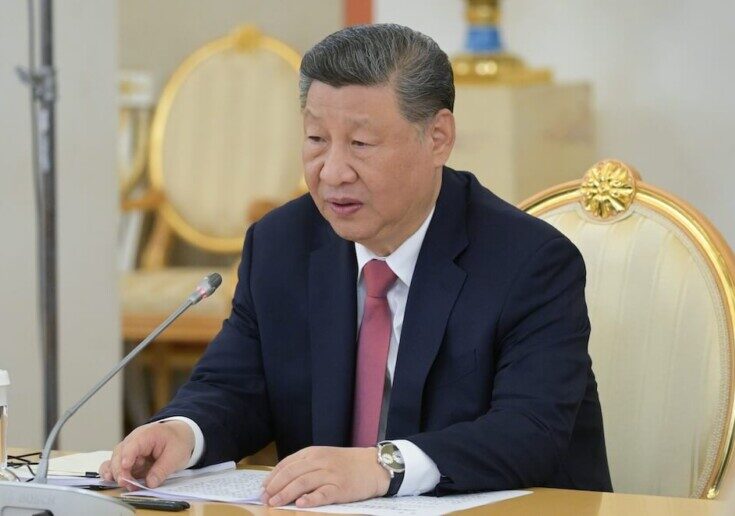
Act II of the New World Disorder: American Neo-Hegemonism
American foreign policy after 2025 has produced a fivefold rupture that has fundamentally transformed the international system.
August 26, 2025
P
ost-2025 American foreign policy has produced a five-pronged rupture that fundamentally transforms the international system. The resulting order can be characterized as ‘order-internal disorder.’ The global system is evolving into a multipolar arena of negotiation, where security, trade, and norms have become subjects of bargaining; this points to international cooperation taking flexible, fragmented, and highly uncertain forms for the remainder of the 21st century.
In the past, we analyzed the international system as being characterized by uncertainty and defined the new world as being characterized by disorder. These analyses were based on events that took place in the international arena and the actions of the United States, which was one of the main determinants of the system in the post-Cold War period. The United States’ relative loss of power, particularly after 2008, and the resulting shift toward a multipolar system, tensions within multinational security alliances, and the emergence of regional powers were the primary determinants.
Former U.S. President Biden’s statements regarding his country’s relative decline and the plan to repair liberal norms in the international arena, so to speak, and implement a soft bloc against Russia and China did not materialize. Biden’s foreign policy choices led to his downfall. President Trump, in his second term (referred to as Trump II), is attempting to manage the uncertainty and disorder in the international system in different ways by fundamentally changing U.S. foreign policy, and naturally, the reflection of these policies directly affects both systemic and regional analyses.
The Biden administration’s liberal rhetoric, namely ‘a return to a rules-based order,’ came to an end with Donald Trump’s return to the presidency in 2025. In the new era, the White House adopted an approach that could be described as neo-sovereigntism.
The executive order numbered 14162, titled ‘Putting America First in International Environmental Agreements,’ published on 20 January 2025, clarified the departure from the global public goods approach by withdrawing the United States from the Paris Climate Agreement for the second time. Subsequently, the Trump administration cut budget support for the United Nations Human Rights Council and the UN Climate Damage Fund, and the payment of mandatory contributions approved by Congress was suspended on the grounds that it ‘limited American sovereignty.’
The ideology based on international organizations founded on liberal norms, rooted in the founding hegemon logic of the Biden era, shifted during the Trump II era towards freeing national interests from institutional constraints.
At the June 2025 Hague Summit, NATO members committed to increasing defense spending to 5% of GDP by 2035. Prior to the decision, Trump announced that he would link the Alliance’s Article 5 obligation to fiscal discipline, stating that ‘those who do not pay cannot be defended.’ This situation points to the emergence of asymmetric dependency in alliance theories instead of ‘collective action’: the U.S. security umbrella is now a service provided in exchange for an economic rent (security rent).
In practice, Washington combined the defense-economy axis with the U.S.-E.U. 15% Tariff Agreement signed with the E.U. in July 2025, and as a result, Europe agreed to apply a 15% base tariff on most U.S. goods in exchange for the continuation of U.S. deterrence against Russia. Thus, the security cost was officially included in a trade agreement for the first time.
The Trump II administration has elevated China from the status of ‘revisionist rival’ to ‘systemic threat.’ On 29 May 2025, the Department of Commerce halted exports of semiconductor design software to China by imposing licensing requirements on Electronic Design Automation (EDA) software companies such as Cadence and Synopsys. Within the same framework, despite the 90-day tariff ceasefire signed on 12 May 2025, Trump initiated additional controls on critical minerals and artificial intelligence chips.
This approach is an effort to maintain technological hegemony, but the ‘selective decoupling’ that aims to reduce supply chain dependency by at least 30 per cent corresponds to the risk diversification mechanism in the complex interdependence literature. In the first six months, U.S.-China trade volume declined by 14%, and Beijing responded by restricting exports of rare earth elements.
On July 2, 2025, the Pentagon’s ‘temporary’ suspension of arms shipments made support for Ukraine conditional. This was followed on July 28 by Trump’s ultimatum to Moscow for a ‘ceasefire within 10-12 days.’ The Trump administration’s grand strategy in this context is based on shifting the cost of the war to European allies and Kiev in order to reduce the U.S.’s commitment burden. This policy is also consistent with the classic ‘offshore balancing’ strategy: Washington intervenes until a regional power balance is established, then transfers responsibility to regional states.
During the Biden administration, military and diplomatic support for Israel was based on the rhetoric of a ‘democracy alliance,’ while the Trump II administration has elevated this support to the level of unconditional strategic proxy. On 30 June 2025, the State Department approved an additional sale worth $510 million to Tel Aviv for 3,845 BLU-109 and 3,280 MK-82 bombs, including JDAM guidance kits. The Pentagon statement emphasized that the sale was essential for ‘Israel’s regional deterrence and U.S. joint operational capabilities.’ Immediately following the arms transfer, on June 4, 2025, a resolution calling for a ‘permanent ceasefire’ in Gaza was blocked by a U.S. veto, despite 14 ‘yes’ votes in the United Nations Security Council.
Washington’s justification was that the resolution did not condemn Hamas, but the veto demonstrated how far the United States would go to protect Israel from international pressure. Furthermore, on July 29, 2025, President Trump announced that the distribution of U.S. aid to Gaza would be ‘left to Israel’s discretion’; this statement signaled that even humanitarian aid would be subject to the military control of the ally.
Congress followed a similar line, continuing to provide Israel with $3.3 billion in FMF and $500 million in missile defense support under the Full-Year Appropriations Act No. 119-4, passed in April 2025; Additionally, $1.2 billion was allocated for the Iron Beam laser defense system. These figures demonstrate that Israel’s regional military capabilities were further strengthened financially and technologically during the Trump II era.
The unconditional support provided by the U.S. to Israel is triggering a significant search for balance in the security strategies of Gulf countries such as Saudi Arabia, the UAE and Qatar. This is because the U.S.’s role as a neutral guarantor and its loyalty to its allies has become debatable. This situation is prompting Gulf countries to both redefine their relations with the United States and seek alternative security guarantees.
Recommended
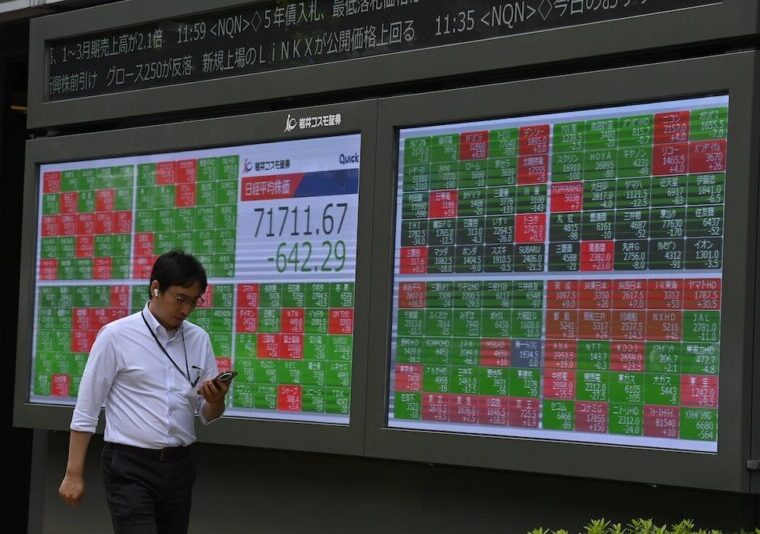
American foreign policy after 2025 has produced a fivefold rupture that has fundamentally transformed the international system:
(1) The evolution of the founding hegemon’s role into selective hegemony has diminished Washington’s willingness to finance global public goods and imposed a “pay-as-you-go” logic on alliances;
(2) The financialization of alliances, as exemplified by NATO, has transformed the security umbrella into economic rent, accelerating allies’ pursuit of strategic autonomy;
(3) The instrumentalization of institutions has weakened the binding force of international law, with the U.S. withdrawing from multilateral regimes or using them solely as instruments of pressure;
(4) The weaponization of economic and technological tools, the deepening rift with China, tariff threats against Russia, and secondary sanctions through the dollar system have consolidated the trade–finance architecture;
(5) The leadership gap in the global commons has institutionalized “fragmented globalization” by opening the normative arena in climate and health to EU–China initiatives. This process has redefined the balance between the fiscal–normative responsibility assumed by classical hegemonic stability theory and the inference-based approach envisioned by realism, in Washington’s favor.
The resulting order can be characterized as “disorder within the order.” The United States sits at the top of the global power hierarchy thanks to its military–technological capacity and financial leadership, but its unpredictable and transactional commitment model both forces allies to engage in cautious balancing and creates space for mid-sized actors to develop autonomous strategies.
The global system is evolving into a multipolar bargaining arena where security, trade, and norms serve as bargaining chips. This suggests that international cooperation will remain flexible, fragmented, and highly uncertain for the rest of the 21st century.
(Originally published in Turkish by Kriter)

A Turkish professor of history and religious studies. He is a member of parliament from the city of Samsun in the Black Sea region of Turkey representing the National Party (MHP).

A PhD Candidate in Strategy and Security Studies and a research assistant at the National Defense University.
You can see how this popup was set up in our step-by-step guide: https://wppopupmaker.com/guides/auto-opening-announcement-popups/

Stay informed by subscribing to
our weekly newsletter.
You can see how this popup was set up in our step-by-step guide: https://wppopupmaker.com/guides/auto-opening-announcement-popups/
You can see how this popup was set up in our step-by-step guide: https://wppopupmaker.com/guides/auto-opening-announcement-popups/
You can see how this popup was set up in our step-by-step guide: https://wppopupmaker.com/guides/auto-opening-announcement-popups/
You can see how this popup was set up in our step-by-step guide: https://wppopupmaker.com/guides/auto-opening-announcement-popups/