China Signals Support for Diplomacy in US-Israel Iran War
Taking on a genuine peace broker role in the Iran war would require commitments Beijing has historically avoided.
April 2, 2026
A
s the war between the United States and Israel against Iran enters its second month with no clear path to de-escalation, China is increasingly positioning itself as a voice for peace. Yet analysts say Beijing’s actions suggest caution, raising doubts about whether it is ready to take on a central role as a mediator in one of the world’s most volatile geopolitical crises.
China’s diplomatic posture came into sharper focus this week following high-level talks in Beijing between Pakistani Foreign Minister Ishaq Dar and Chinese Foreign Minister Wang Yi. The two sides issued a joint statement calling for an “immediate ceasefire,” the swift launch of peace negotiations, and a long-term settlement backed by the United Nations.
The initiative, described by officials as a five-point proposal, also emphasized the protection of civilians, the security of critical shipping lanes, and respect for the sovereignty of all states involved. While the statement marked one of China’s most detailed responses to the ongoing war, it stopped short of outlining concrete mechanisms for achieving these goals.
China’s approach reflects a broader strategic calculation. Under President Xi Jinping, Beijing has sought to expand its global diplomatic footprint and present itself as a stabilizing force in contrast to what it characterizes as Western interventionism. Calling for dialogue and restraint allows China to project influence without becoming entangled in the operational complexities of conflict resolution.
However, experts note that taking on a genuine peace broker role would require commitments Beijing has historically avoided. Acting as a guarantor of any agreement—ensuring compliance or responding to violations—could draw China into direct confrontation or force it to deploy military or monitoring capabilities abroad.
“China wants the credit of mediation without the burden of enforcement,” said one regional analyst, pointing to Beijing’s longstanding reluctance to engage in security alliances or military interventions beyond its immediate periphery.
While China has voiced support for diplomacy, Pakistan has emerged as a more active player in mediation efforts. Islamabad has offered to host talks between Washington and Tehran, leveraging its diplomatic ties with both sides. Pakistani officials have also reportedly explored the possibility of China acting as a guarantor in a future agreement, though no formal commitment has been made.
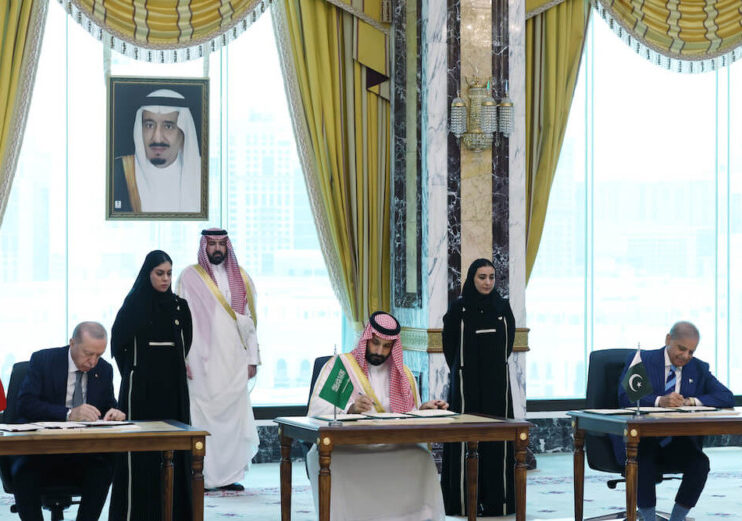
Behind the scenes, coordination appears to be ongoing. Reports indicate that Pakistani leadership has engaged with Chinese officials to discuss potential frameworks for de-escalation, including multilateral arrangements involving regional powers such as Saudi Arabia, Egypt, and Türkiye.
Still, China has maintained a measured tone. In response to questions about a guarantor role, its foreign ministry reiterated that Beijing supports mediation efforts by “relevant parties” and is willing to play a “constructive role,” without specifying what that role would entail.
China’s diplomatic ambitions are not without precedent. In 2023, Beijing successfully brokered a normalization agreement between Iran and Saudi Arabia, a breakthrough widely seen as a milestone in its Middle East engagement. That deal demonstrated China’s ability to leverage its economic ties and political neutrality to facilitate dialogue.
However, analysts caution that the current war presents far greater challenges. Unlike the Saudi-Iran rapprochement, which involved two regional rivals seeking to reduce tensions, the present war involves active military confrontation and deep-seated hostility between Iran and the United States and Israel.
Moreover, trust between the parties remains minimal. Iranian officials have indicated openness to a ceasefire only under strict conditions, including guarantees against future attacks, while U.S. leadership faces its own domestic and strategic pressures.
Recommended
China’s hesitation also stems from its complex web of relationships in the region. It maintains strong economic and energy ties with Iran, while also engaging closely with Gulf states and preserving a deeply interconnected—if competitive—relationship with the United States.
Taking a more assertive mediation role risks alienating one or more of these partners. It could also complicate upcoming diplomatic engagements, including anticipated high-level exchanges between Beijing and Washington.
At the same time, the ongoing war carries economic risks for China, particularly through disruptions to global energy markets and trade routes. This gives Beijing an incentive to advocate for stability, even if it avoids direct involvement in enforcement.
For now, China appears content to occupy a middle ground: advocating for peace, supporting dialogue, and coordinating with partners like Pakistan, while steering clear of binding commitments.
Whether that stance evolves will depend on how the war unfolds. If opportunities for negotiation emerge and the costs of inaction rise, Beijing may face increasing pressure to translate its rhetoric into action.
Until then, China’s role is likely to remain that of a cautious stakeholder—keen to shape the narrative of peace, but wary of the responsibilities that come with delivering it.
(Source: CNN)

Politics Today is dedicated to publishing insightful analyses in order to understand the changing nature of contemporary politics. It aims to contribute to the sound and constructive discussion of international affairs.
You can see how this popup was set up in our step-by-step guide: https://wppopupmaker.com/guides/auto-opening-announcement-popups/

Stay informed by subscribing to
our weekly newsletter.
You can see how this popup was set up in our step-by-step guide: https://wppopupmaker.com/guides/auto-opening-announcement-popups/
You can see how this popup was set up in our step-by-step guide: https://wppopupmaker.com/guides/auto-opening-announcement-popups/
You can see how this popup was set up in our step-by-step guide: https://wppopupmaker.com/guides/auto-opening-announcement-popups/
You can see how this popup was set up in our step-by-step guide: https://wppopupmaker.com/guides/auto-opening-announcement-popups/