Conflict Prevention is the UN’s Core Mandate: Why Does It Keep Failing?
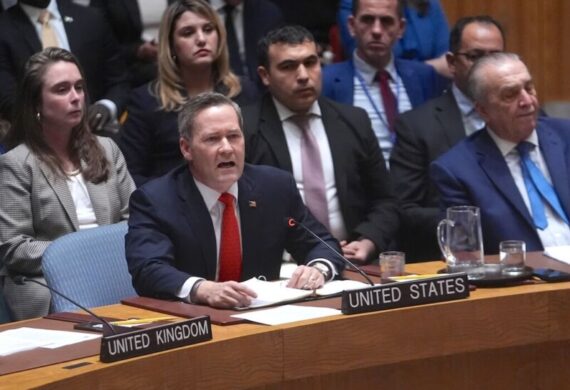
Washington has invoked the U.N. to confer legality and legitimacy on the use of force when multilateral authorization has aligned with U.S. strategic interests.
January 26, 2026
E
ight decades after the establishment of United Nations, humanity still faces an alarming rise in conflict. According to the Global Peace Index, more countries are involved in active conflict today than at any given time since World War II.
Lacking effective enforcement mechanisms, the U.N. remains embedded in a post-colonial power hierarchy that privileges dominant states and functions more as a mechanism that reflects existing power dynamics.
Post-1945 conflict trends emphasize this structural weakness. Significant here is the role of the United States. The U.S. military has been engaged in conflicts across the world at virtually all times over the past century. The United States has never experienced a period in which its armed forces were entirely disengaged from conflict. Post second world war, U.S. military action has increasingly occurred without formal declarations of war, relying instead on executive authority, congressional authorizations (such as the 2001 Authorization for Use of Military Force ), or broad interpretations of self-defense and preemptive wars.
Washington has invoked the U.N. to confer legality and legitimacy on the use of force when multilateral authorization has aligned with U.S. strategic interests. When it has not, the U.S. has demonstrated a consistent willingness to act unilaterally or through alliances of willing bypassing the U.N. framework altogether.
This selective multilateralism has often been justified through expansive references to the “international world order”, a term frequently employed as a flexible political narrative that legitimizes U.S. action while accommodating exceptions for itself. In practice, international law is treated arbitrarily, invoked when useful and sidelined when constrained.
Today’s American behavior is reminiscent of a declining power which feels increasingly threatened by external forces and is therefore willing to contradict the very architecture of international law it once helped create.
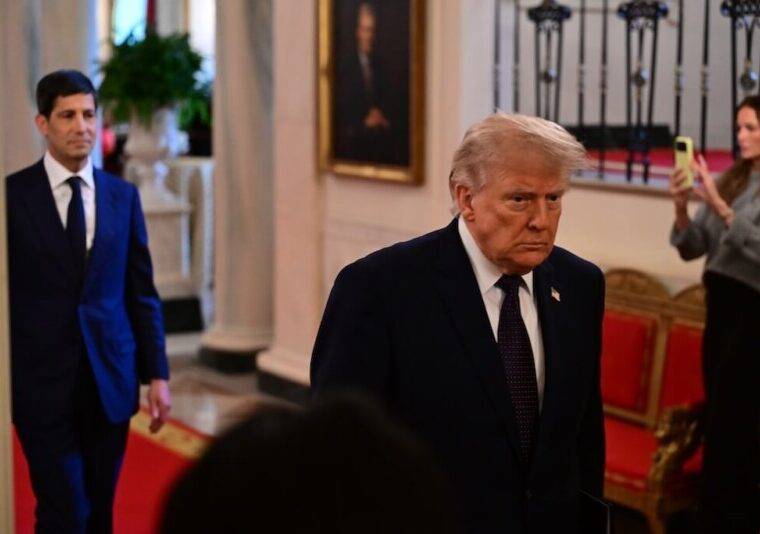
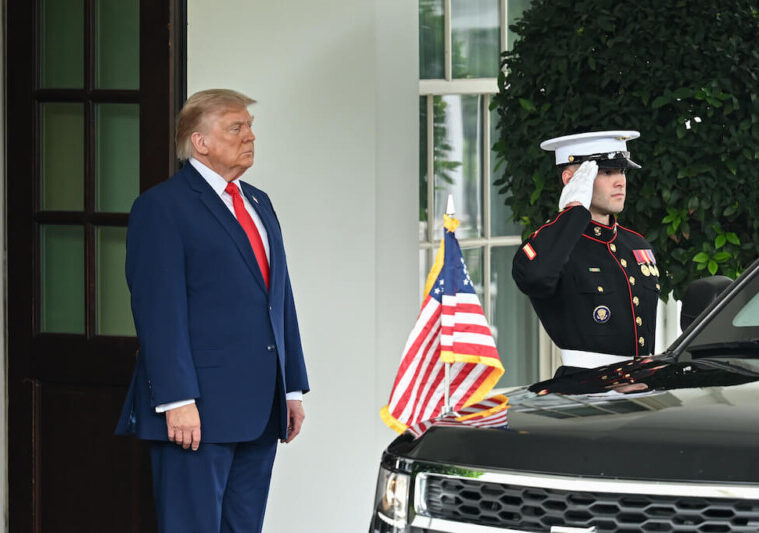
On January 7, 2026, President Donald J. Trump signed a memorandum initiating U.S. withdrawal from 66 international organizations, including 31 United Nations bodies such as the United Nations Framework Convention on Climate Change (UNFCCC), the Intergovernmental Panel on Climate Change (IPCC) , and UN Women. Since returning to office for a second term, Trump has cut funds to the United Nations, exited from the Human Rights Council and the United Nations Educational, Scientific and Cultural Organization (UNESCO), continued suspension of support for the United Nations Relief and Works Agency for Palestine Refugees in the Near East (UNRWA), withdrew from the World Health Organization (WHO) as well as the Paris Climate Agreement.
The institutions deemed expendable are overwhelmingly those concerned with human rights, climate governance, and humanitarian relief. The administration has justified these moves on the grounds of “national interest.” This, however, is a display of selective disengagement from norms that impose political or economic costs.
As such hegemonic actors violate international norms, where enforcement mechanisms effectively collapse. Condemnation alone is insufficient.
The same logic is applicable in Washington’s actions in Venezuela. In a direct violation of state sovereignty, the United States led an intervention to seize President Nicolás Maduro and assert indefinite control over Venezuelan oil revenues. U.N. human rights bodies condemned the act as a breach of the U.N. Charter and international law, warning of its destabilizing consequences.
Trump’s open statements regarding Greenland further extend this posture. By explicitly keeping the use of force “on the table,” the U.S. president normalized territorial acquisition rhetoric that international law was designed to eliminate in the first place. Any such action would constitute an unprecedented intra-NATO confrontation, threatening the coherence of the alliance system itself.
This moment has also bought forth growing transatlantic divergence. European leaders have criticized Washington’s increasingly unilateral and coercive approach. For the first time in decades, the United States and Europe appear contradicting the fundamental principles holding the post-war international order.
Humanitarian discourse has become strategically selective. While the U.S. administration has voiced concern for Iranian protesters amid domestic unrest, it has simultaneously shielded and supported Israeli actions in Gaza. The value of human life varies with geography.
The import of democracy has always been pursued in continuation of U.S. geopolitical interests rather than supporting idea of democracy in principle. U.S. interventions are shaped only by strategic interests, particularly around oil and regional influence. Interventions in energy-rich regions, rising unilateralism, and institutional retreat, indicate anxiety over economic instability, mounting debt, and the weakening centrality of the dollar.
United States’s retreat from international institutions and violations of international law only further damaged an already fragile global system. As power politics reassert themselves, international law lays formally intact but practically hollow. International systems, long shaped by colonial hierarchies and power asymmetries, have been fraying for decades. What is new is its plain brazenness.
Historically, some conflicts have attracted far more international attention than others.
What, then, determines whose suffering matters most? Why does the global response to contemporary wars reveal a clear hierarchy of concern and intervention?
In principle, international law exists to promote peace and equality. In practice, however, the international system is deeply anarchic and increasingly governed by power politics. This dynamic produces selective engagement, in which humanitarian response is activated through geopolitical relevance.
Patterns of neglect persist across parts of Africa; Sudan, the Democratic Republic of Congo, Ethiopia and the Sahel, where prolonged violence generates little more than episodic concern. By contrast, conflicts situated along critical energy corridors, alliance systems, or great-power rivalries prompt emergency summits, sanctions regimes, and continuous media attention.
Both military intervention and strategic non-intervention have consistently generated large-scale displacement, producing refugee flows that are later treated as external burdens rather than consequences. Rising anti-migrant sentiment and increasingly restrictive asylum policies are against the spirit of international humanitarian laws. If migration is framed as a threat, then its root causes must also be acknowledged as policy outcomes but the same states that shape these conflicts often adopt restrictive and exclusionary migration policies when displacement reaches their borders.
Recommended
Humanitarian principles, therefore, are not universally applied. Intervention is guided by political calculation. In such a system, human suffering is bound to become stratified, with some lives rendered more visible, and more valuable, than others. Beyond ethical inconsistency, this selective engagement erodes the credibility of global humanitarian advocacy and weakens collective leverage within international institutions, allowing entire regions to remain structurally marginalized.
U.N. possesses normative authority grounded in international law, but its decisions have often remained unenforceable in practice, beyond mere verbal criticism. It lacks enforcement power and effectiveness as a mechanism for both conflict prevention and management. Entrenched power asymmetries, most visibly within the U.N. Security Council, have hollowed out the organization’s capacity to act impartially. Compliance has largely remained contingent upon the political will of states rather than legal obligation. Over the years, this has significantly damaged the credibility of international law, as state interests repeatedly superseded collective wellbeing.
Global solidarity within the U.N. framework is not a finite resource but unless international institutions are restructured to prioritize the idea of universal human rights over strategic hierarchy, conflict prevention will remain aspirational.

Noor Eman is an undergraduate student at Istanbul Aydin University, specializing in International Relations and Political Studies. Her work focuses on combining research, analysis, and storytelling to shed light on complex social and political issues.
You can see how this popup was set up in our step-by-step guide: https://wppopupmaker.com/guides/auto-opening-announcement-popups/

Stay informed by subscribing to
our weekly newsletter.
You can see how this popup was set up in our step-by-step guide: https://wppopupmaker.com/guides/auto-opening-announcement-popups/
You can see how this popup was set up in our step-by-step guide: https://wppopupmaker.com/guides/auto-opening-announcement-popups/
You can see how this popup was set up in our step-by-step guide: https://wppopupmaker.com/guides/auto-opening-announcement-popups/
You can see how this popup was set up in our step-by-step guide: https://wppopupmaker.com/guides/auto-opening-announcement-popups/