Lula Wins Historic Fourth Term in Brazil
In Brazil, 80-year-old Lula won more than 51% of Sunday's vote, compared with approximately 48% for Bolsonaro.
October 26, 2026
B
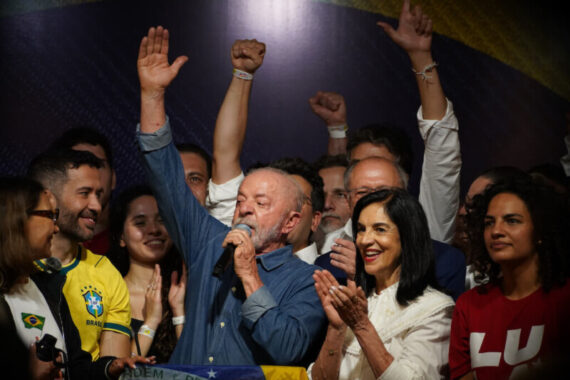
razilian President Luiz Inacio Lula da Silva has secured a historic fourth term in office after narrowly defeating right-wing Senator Flavio Bolsonaro in a dramatic presidential runoff, overcoming a first-round defeat.
The 80-year-old leftist leader won more than 51% of Sunday’s vote, compared with approximately 48% for Bolsonaro, the son of jailed former President Jair Bolsonaro. Electoral authorities declared Lula the winner after 98.76% of ballots had been counted.
The victory marks an unprecedented political comeback in modern Brazilian history, making Lula the first presidential candidate in nearly four decades to overturn a first-round defeat and win the subsequent runoff.
Bolsonaro had initially emerged ahead in the October 4 election, securing 47.03% of votes against Lula’s 45.16%, a difference of approximately 2.2 million ballots.
However, an intensive three-week campaign focused on economic concerns, social welfare programs and mobilizing absent voters helped Lula reverse the result.
His victory also represents a significant setback for Brazil’s right wing, which had hoped to return the Bolsonaro family to power.
Sunday’s election was marked by confusion after a last-minute judicial decision extended voting hours by two hours following complaints from both presidential campaigns.
Lula’s campaign accused local authorities of deliberately reducing public transportation services in several cities, potentially preventing lower-income voters from reaching polling stations.
Bolsonaro’s campaign separately requested additional voting time in areas affected by heavy rainfall and flooding.
In Minas Gerais, authorities reported electricity outages at 349 polling locations, although electronic voting machines continued operating using backup batteries.
Supreme Court Justice Cristiano Zanin subsequently ordered polling stations that remained open to continue accepting voters until 7 p.m., two hours beyond the original closing time.
However, some polling stations had already closed and shut down their voting equipment before the decision was announced.
The resulting confusion prompted Bolsonaro to question the election’s legitimacy and pledge to seek annulment of the results.
Bolsonaro accused Zanin, who previously served as Lula’s personal lawyer before being appointed to the Supreme Court in 2023, of improperly changing election procedures.
Brazil’s Federal Police are also investigating allegations of election-related transportation disruptions across five states.
In Salvador, a court ordered the arrest of the city’s transportation secretary over allegations that he directed reductions in bus services.
The developments have raised concerns about potential legal disputes following an already deeply polarized presidential contest.
Recommended
Increased voter participation appears to have played an important role in Lula’s comeback, particularly in northeastern Brazil, a longstanding stronghold of his Workers’ Party.
According to Andrei Roman, head of polling firm AtlasIntel, lower abstention may have contributed to the president’s victory.
Approximately 33.4 million Brazilians stayed home during the first round, representing nearly 21% of eligible voters and marking the highest general-election abstention rate since 1998.
Lula spent the final weeks of campaigning seeking to mobilize those voters, emphasizing household economic pressures and promising measures including free public transportation on weekends.
His victory also carries significant international implications, particularly for relations with the United States.
President Donald Trump has maintained close ties with the Bolsonaro family, while Lula has repeatedly criticized Washington’s tariff policies and what he describes as interference in Brazil’s domestic affairs.
Reuters reported that US State Department officials had pushed for sanctions against Brazil as part of efforts to weaken Lula’s administration and facilitate the Bolsonaro family’s political return.
Asked Sunday which candidate he preferred, Trump declined to publicly endorse either contender.
Lula, meanwhile, portrayed his victory as a defense of Brazilian sovereignty and democratic institutions against domestic and international pressure.
In his election-night address, the president said Brazilians had overcome external interference and rejected political misinformation.
“The election was a defeat for denialism,” Lula declared. “It was a defeat for lies.”
Despite the celebrations among his supporters, Lula begins his historic fourth term facing a divided electorate, threatened legal challenges and the difficult task of rebuilding political consensus in Latin America’s largest country.
(Source: Aljazeera English)

Politics Today is dedicated to publishing insightful analyses in order to understand the changing nature of contemporary politics. It aims to contribute to the sound and constructive discussion of international affairs.
You can see how this popup was set up in our step-by-step guide: https://wppopupmaker.com/guides/auto-opening-announcement-popups/

Stay informed by subscribing to
our weekly newsletter.
You can see how this popup was set up in our step-by-step guide: https://wppopupmaker.com/guides/auto-opening-announcement-popups/
You can see how this popup was set up in our step-by-step guide: https://wppopupmaker.com/guides/auto-opening-announcement-popups/
You can see how this popup was set up in our step-by-step guide: https://wppopupmaker.com/guides/auto-opening-announcement-popups/
You can see how this popup was set up in our step-by-step guide: https://wppopupmaker.com/guides/auto-opening-announcement-popups/