What Türkiye and Somalia Are Building at Warsheikh
Ankara gains a launch site near the equator and a foothold in a market it hopes to sell into. Mogadishu could gain skills and revenue, depending on terms neither side has yet made public.
October 26, 2026
O
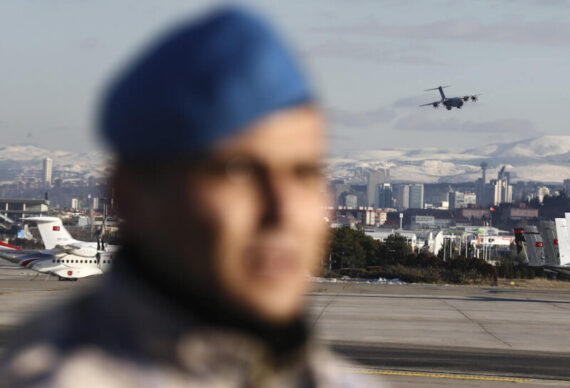
n October 9, at the International Astronautical Congress in Antalya, Industry and Technology Minister Mehmet Fatih Kacır said Türkiye was building a launch site in Somalia for its own rockets and missiles and for the growing world demand for launches.
Reports of possible missile testing at the site had surfaced months earlier, but this time a minister was speaking in public. Somalia supplies the land, and much of what the deal means for both countries will be settled long before anything leaves the pad.
President Recep Tayyip Erdoğan had confirmed four days earlier that construction was under way, and described it as a contribution to Africa’s space ecosystem. Kacır announced the completion of feasibility and design work in December 2025, and in Antalya he described the site as a very large area allocated to Türkiye. It belongs to Türkiye’s National Space Program, whose aim is to launch vehicles developed in Türkiye, and no date has yet been given for the first launch from Somali soil.
Türkiye’s relationship with Somalia grew closer during the 2011 famine and now runs through military training, maritime security and offshore energy exploration. The spaceport takes that cooperation into commercial launches, a business neither country has yet operated.
Somalia’s government has welcomed the project. What it has agreed to on land use, commercial revenue and oversight has not been published.
Warsheikh sits about 2.3 degrees north of the equator. Europe’s spaceport at Kourou, in French Guiana, lies at roughly five degrees. A rocket flying east into a low-inclination orbit picks up speed from the Earth’s rotation and needs less energy to get there, and from Somalia’s eastern shore the flight path heads straight out over the Indian Ocean.
Kacır said the feasibility studies had ranked Somalia as the most favorable location, and pointed to cost as well: an equatorial launch, he said, can run about 30 percent cheaper than a comparable one from Türkiye.
He also set a target in Antalya. A 400-kilogram Turkish satellite is to reach a 550-kilometer orbit aboard the domestically developed Şimşek-1 by the end of 2027. Whether that mission will fly from Somalia, he did not say. The 2027 target gives the launcher a timetable. The Somali facility has no comparable public deadline.
Finding buyers is another matter. African governments have so far purchased launches abroad, from India, China, Europe and the United States. Their combined space budgets rose to $828 million in 2026 from $627 million a year earlier, although much of that money is tied to satellites, observatories and ground infrastructure.
A working spaceport on the continent would still give African operators one more option, if its prices and reliability can compete with established providers.
Ankara is looking further afield as well. Arif Karabeyoğlu, a board member of the Turkish Space Agency, said at the congress that the spaceport would serve global operators as well as Turkish vehicles. Turning that intention into contracts requires a safety record the facility has yet to build.
Somalia would not be the first African state to host a launch site run by a foreign partner. In 1967 Italy began sending satellites into orbit from platforms off the Kenyan coast near Malindi. Nine had gone up by 1988, when the launches stopped, although the ground installations stayed in use.
Kenya and Italy renegotiated the arrangement for the Luigi Broglio Space Centre in 2016, and the new agreement took effect in 2020. It provides for an annual land-use payment starting at $250,000, with a $50,000 increase every five years.
Kenya is entitled to half the profits from commercial services sold to third parties, has a role in managing the facility and retains authority over launch approvals. Yet in 2023 Kenya’s defense minister, Aden Duale, told a parliamentary committee that Kenyans had yet to see significant tangible benefits. The center, the committee heard, had been reluctant to disclose its commercial activities in full.
At Alcântara, in Brazil, the trouble lay on land. Quilombola communities displaced by the space program have contested the area for decades. Brazil signed its 2019 safeguards agreement with Washington while the dispute was still open, and only in September 2024 did a settlement clear the way for land titles.
The Inter-American Court of Human Rights ruled on the case two months later, in a judgment covering 171 communities. Some 45,900 hectares were titled in March 2026, although other parts of the settlement remain unfinished. Around Warsheikh, the people who live and fish along the coast will have their own questions about access to land and sea once launches begin.
Recommended
For Türkiye, the prize is launch infrastructure for its own vehicles and an entry point into the commercial launch market. Somalia could earn revenue, train engineers and build technical services around the site.
How much of this materializes rests on details still out of public view, among them the length of the lease, the division of earnings and responsibility when something goes wrong. Somali engineers would benefit most from working directly on the facility’s operations, with training tied to jobs they can actually take up.
Liability for damage, including harm to fishing grounds, is easier to agree in advance than to dispute after an accident. Residents in Warsheikh will also want to know which parts of the coast are to close on launch days and what procedures will apply in an emergency.
Kacır’s mention of missiles stood out in Antalya. He did not say which systems would be tested at the site or under what rules. Mogadishu will want those answers, and so will any foreign company thinking of booking a launch, because a site that hosts both civilian services and missile launches has to decide how safety zones are drawn and who sets the launch calendar.
A successful first launch from Warsheikh would be a major achievement for Türkiye. Keeping the site busy afterwards is slower work, and it depends on customers coming back and on rules that both governments can actually enforce.
Somalia has made its coast available for a project whose ambitions reach far beyond it. The terms on which it did so deserve to be made public.
Göktuğ ÇALIŞKAN is a PhD candidate at the International University of Rabat (UIR) in Morocco, conducting research as a scholar of the Turkish Ministry of National Education (YLSY program). Simultaneously, he serves as an International Relations Specialist at ANKASAM. He holds undergraduate degrees in Political Science and Public Administration (Ankara Yıldırım Beyazıt University) and Law (Erciyes University). He completed his master’s studies at Ankara Hacı Bayram Veli University and UIR (in French). His analyses on global politics and security have been featured in various international outlets, including Türkiye Today, Daily Sabah, TRT Afrika, and FokusPlus.
You can see how this popup was set up in our step-by-step guide: https://wppopupmaker.com/guides/auto-opening-announcement-popups/

Stay informed by subscribing to
our weekly newsletter.
You can see how this popup was set up in our step-by-step guide: https://wppopupmaker.com/guides/auto-opening-announcement-popups/
You can see how this popup was set up in our step-by-step guide: https://wppopupmaker.com/guides/auto-opening-announcement-popups/
You can see how this popup was set up in our step-by-step guide: https://wppopupmaker.com/guides/auto-opening-announcement-popups/
You can see how this popup was set up in our step-by-step guide: https://wppopupmaker.com/guides/auto-opening-announcement-popups/