Drone Diplomacy: How Türkiye is Rewriting Africa’s New Security Order
The perception of Türkiye as a primarily humanitarian actor, has not disappeared, but it no longer sits at the center of the relationship of the African continent and Türkiye.
August 27, 2026
A
cross the African capital cities like Addis Ababa, Mogadishu, Bamako, Abuja and Niamey or Rabat, a strategic recalibration has been underway for some years now, one that rarely announces itself in strategic policies communiques but is nonetheless visible in procurement contracts, bilateral training agreements, and the silhouettes overhead in contested airspace. Where the vocabulary of Turkish engagement with Africa once belonged almost entirely to the register of humanitarian development and religious solidarity, it has, in the span of a single decade, acquired a second and increasingly dominant grammar, that of the arms deal, the joint operations center, and the strategic partnership memorandum.
To understand how Ankara has repositioned itself as an indispensable actor in African security affairs is to understand something broader about the fracturing of the postwar arms export order, wherein middle powers unbound by the conditionalities that have long governed Western defense relationships are discovering that hardware, sold cheaply at affordable prices and without diplomatic or political instruction attached, can purchase influence that decades of soft power initiatives struggled to secure. In one decade Türkiye has become a major strategic and military partner of many African countries.
For much of the past two decades, Türkiye’s presence on the African continent was narrated and framed through the lens of humanitarianism: hospitals built by the Turkish Cooperation and Coordination Agency (TIKA), Türkiye burslari scholarships (YTB) extended to students from Mogadishu to Ouagadougou, mosques and Yunus Emre cultural centers that carried Ankara’s new vision and humanitarian diplomacy into capital cities where Western embassies had long since retreated. This perception of Türkiye as a primarily humanitarian actor, has not disappeared, but it no longer sits at the center of the relationship of the African continent and Türkiye.
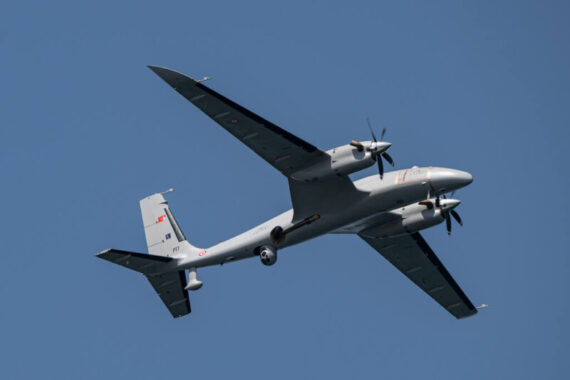
What has displaced this perception of Türkiye is a harder currency altogether, one measured in drone airframes rather than aid packages. The Bayraktar TB2 and its heavier sibling, the Akıncı, have become the most visible symbols of a Turkish foreign policy that increasingly treats military defense exports as a vehicle for coorperation and alliance-building, and the African continent, more than any other region outside Turkey’s immediate neighborhood, has become the proving ground for this new military and security approach to diplomatic engagements.
The growing need for Turkish military cooperation and bilateral relations on security, is not difficult to trace. A Bayraktar TB2, priced at somewhere between two and five million dollars (the price range depends on the included equipment and systems), costs a fraction of comparable American or European drone platforms, and it arrives without the geopolitical interest conditionalities, congressional reviews, or parliamentary scrutiny that typically accompany Western arms transfers.
For African governments confronting insurgencies, militias, rebel groups and security issues with strained budgets, that combination of affordability and political convenience and non-interference is decisive. Baykar, the company behind the TB2 and Akıncı lines, now counts more than a dozen African states among its clients, a list that spans North Africa, the Horn, and the Sahel and that continues to grow with each passing procurement cycle.
What emerges from this pattern, then, is not simply a commercial success story for Baykar or a diplomatic or strategic coup for Ankara against the West, but a demonstration of how thoroughly the terms of security assistance on the continent have been rewritten in the absence of a single hegemonic supplier. The African governments turning to Turkish drone platforms are not merely choosing a cheaper alternative to American or European systems; they are opting into a relationship structured by a fundamentally different logic, one in which the seller neither interfere with internal politics nor conditions delivery on governance benchmarks, and in which the transaction itself becomes an instrument of legitimation for regimes that might otherwise struggle to access military capability at all.
Whether this arrangement proves durable, or whether it merely defers the reckoning between weak states and the insurgencies that flourish in their ungoverned peripheries, is a question that drone sales alone cannot answer, and one that Ankara’s own diplomatic ambitions on the continent will eventually have to confront.
If the African continent as a whole has become the proving ground for Ankara’s drone-centered approach to security diplomacy, Somalia has functioned as something closer to a strategic and diplomatic laboratory, the site where each successive increment of Turkish military involvement has first been tested before being exported elsewhere on the continent – and of course Libya is another case. What began in 2011, in the wake of a devastating famine, as an ostensibly humanitarian intervention had by the following decade acquired a military architecture nested inside it, one that has continued to deepen rather than plateau.
The clearest evidence of this trajectory arrived in January 2026, when Türkiye moved beyond its established drone operations to forward-deploy F-16 fighter jets to Mogadishu’s Aden Adde International Airport, flown not by Somali pilots but by Turkish personnel stationed there for what officials described, tellingly, as Ankara’s own security and strategic interests.
Where the Bayraktar and Akıncı platforms had allowed Turkey to shape Somalia’s counterterrorism campaign at a comfortable remove, the arrival of manned combat aircraft signaled a willingness to send Ankara’s own forces directly into the kinetic dimension of that campaign, collapsing the distinction between arms supplier and co-combatant that had, until then, given Turkish involvement in Somalia a degree of plausible deniability.
Somalia remains the clearest illustration of what this military and security partnership looks like when it matures past a single arms sale into something closer to institutional entanglement. Türkiye’s military training facility in Mogadishu, opened in 2017 and reportedly the largest such overseas base Ankara operates, has run alongside a steadily deepening supply relationship, one that culminated in Somalia’s acquisition of the Akıncı, a far more capable long-endurance strike platform than the TB2, as the al-Shabaab terror group intensified its campaign against Somali government forces. Turkish trainers, Turkish drone equipment, and Turkish-managed port and airport contracts in Mogadishu now sit alongside one another and it has become a model many African countries expect of relations with Türkiye.
Moreover, Ankara has leaned on this accumulated leverage diplomatically as well, positioning itself as mediator in the dispute that erupted after Ethiopia’s January 2024 memorandum with Somaliland, a deal that would have granted Addis Ababa naval access to the Red Sea in exchange for recognizing Somaliland’s independence. Turkey’s ability to broker a subsequent diplomatic arrangement between Mogadishu and Addis Ababa owed much to the credibility it had already banked as many African countries’ principal security partner and assistance in military capacity buildings across the continent.
What the Somali case shows, then, is the logical endpoint toward which drone diplomacy tends when a partnership is allowed to mature unrestrained by the kind of parliamentary or congressional friction that constrains Western security assistance: not merely the sale of platforms but the gradual absorption of the client state’s security architecture into the “patron’s” own operational command, such that Mogadishu’s airspace, its port, its officer training pipeline, and now its combat air component all answer, in some meaningful sense, to Ankara.
This is a different order of strategic entanglement than the transactional drone sales occurring elsewhere in the Sahel, where governments purchase platforms and operate them with whatever sovereignty their capacity allows; in Somalia, the jets themselves remain Turkish, flown by Turkish crews, protecting what Turkish officials have openly termed Turkish interests, which raises the uncomfortable possibility that the mediating role Ankara has claimed between Mogadishu and its neighbors rests less on disinterested diplomatic credibility than on the leverage that comes from having, in practice if not in name, assumed responsibility for a portion of Somalia’s own war.
Beyond the Horn, the pattern repeats with variations across the African continent. Niger, still absorbing the fallout from the 2023 coup and the departure of French forces, received its first Turkish drones between 2021 and 2022 and signed a further financial cooperation agreement in mid-2025 to expand its fleet and bring in additional Turkish trainers to Niamey. Nigeria, whose Bayraktar purchases have expanded considerably since 2024, now flies TB2s and Hürkuş light attack aircraft against Boko Haram insurgents in its north, while Nigerian and Togolese forces jointly use Turkish drones to patrol the porous frontier they share with Burkina Faso and Niger.
Mali’s forces have credited Turkish-supplied platforms with battlefield gains, including the 2023 recapture of Kidal from separatist fighters, even as one of its Akıncı drones was shot down near the Algerian border in 2025, a reminder that these platforms are neither invulnerable nor immune from geographical terrain and climatic conditions. Ethiopia’s use of Bayraktar drones against Tigrayan rebel forces, meanwhile, has been widely credited with tipping a war that had, for two years, resisted decisive military resolution, a fact that has not gone unnoticed by neighboring governments weighing their own procurement decisions.
Furthermore, Morocco’s request to host a Baykar production and maintenance facility, announced in late 2024, signals that Ankara intends to make its African footprint not just a matter of exports but of manufacturing presence, allowing faster delivery to clients across the continent while embedding Turkish industrial interests more permanently within African defense infrastructure. Kenya’s arrival on Baykar’s client list in late 2024, following the completion of operator training earlier that year, extends this network into East Africa proper, suggesting that what began as a series of bilateral arrangements is congealing into something closer to a continental military and security architecture, one in which Ankara increasingly functions as the default supplier for governments unwilling or unable to meet Western procurement standards and high prices.
Taken together, these cases suggest that Türkiye’s expansion has ceased to depend on any single crisis or client and has instead settled into something resembling a strategic infrastructure, a supply chain distributed widely enough across the continent that setbacks in one theater, a downed Akıncı here, a stalled procurement there, register as friction rather than failure.
What Niger, Nigeria, Mali, Ethiopia, Morocco, and Kenya share is not a common conflict but a common calculation, that Turkish platforms arrive faster, cost less, and demand less political interest or string accounting than the alternatives, and it is this calculation, replicated across regimes with otherwise little in common, that is quietly converting a decade of bilateral drone sales into the architecture of a continental security order authored in Ankara.
Recommended
Having traced the arc from humanitarian aid to drones, from bilateral arms sales to something approaching a continental security architecture, it becomes necessary to ask what this expansion has actually purchased for the African states that have embraced it, and whether the question that matters most has been quietly displaced by the one that is easiest to answer. It is simpler, after all, to count drones delivered, bases opened, and insurgent strongholds recaptured as in the case of Mali than to ask whether any of it addresses why those strongholds existed in the first place.
None of this, however, answers the harder question that ought to sit beneath any accounting of Turkey’s African security and military diplomacy: whether a continent whose conflicts, violence and insecurities are so often rooted in weak governance, contested land and resource claims, and unresolved questions of political legitimacy can be stabilized through an instrument that, by design, addresses only the symptom of armed violence rather than its causes.
Drones can degrade a militia or an insurgency’s capacity to strike, but they cannot adjudicate a land dispute, cannot build a functioning judiciary, and cannot resolve the grievances that produce recruits for al-Shabaab, Boko Haram, or the Sahel’s jihadist networks in the first place.
Yet, Türkiye’s growing security engagement with Africa should not be understood solely through the lens of military hardware and defense exports. Turkish drones and broader military partnerships are undoubtedly reshaping Africa’s security landscape by providing governments with affordable, effective, and politically accessible tools to confront immediate security threats.
However, the long-term significance of Ankara’s role on the continent will depend on its ability to move beyond the battlefield and translate security partnerships into broader diplomatic influence. Türkiye has already demonstrated its capacity to mediate complex disputes, from the Somalia–Ethiopia tensions to other regional crises where traditional actors have struggled to produce meaningful outcomes. As Ankara’s political, economic, and security ties with African states deepen, it has an opportunity to position itself not only as a defence partner but also as a trusted mediator and peace-building actor. Türkiye, as professor E. Eyrice-Tepeciklioğlu has observed, has become “Africa’s mediator.”
The future of Africa-Türkiye relations may therefore lie not only in controlling contested skies, but also in helping to resolve the conflicts that continue to shape Africa’s political order on the ground.
The honest strategic accounting, then, is a divided one: Türkiye has demonstrated a genuine capacity to alter the tactical balance in Africa’s conflicts, and an emerging, still unproven capacity to convert that battlefield leverage into the kind of political mediation that might actually address what produces those conflicts, but the two capacities are not the same achievement, and conflating them risks mistaking the suppression of violence for its resolution.
Ankara’s own rhetoric increasingly gestures toward the latter ambition, and its interventions in the Somalia-Ethiopia dispute suggest the mediating role is not merely aspirational, yet a continent’s worth of governance failures, land disputes, and legitimacy crises.
Whether Türkiye chooses, and is permitted, to become something more than Africa’s most efficient arms dealer will determine whether drone diplomacy is remembered as a transitional phase in the continent’s security history or as its settled condition.

Abdirashid Diriye Kalmoy is an Assistant Professor of Social Philosophy whose research explores the intersections of African thought, social theory, political philosophy, decolonial theory, migration, and questions of memory, violence, and belonging. He is the author of Hopes in Transition: An Ethnography of African Migrants in Istanbul (Ibn Haldun University Press, 2025). His forthcoming book, Decolonizing Social Philosophy and Theory: Insights and Praxis from African Thought (Brill, 2027), brings together critical interventions that rethink the foundations of social philosophy through the intellectual traditions, concepts, and lived experiences of Africa. The book seeks to expand the horizons of social theory by engaging African philosophical traditions and exploring their contributions to contemporary debates on knowledge, power, ethics, and social transformation. You can reach him at: https://x.com/Sahansame93
You can see how this popup was set up in our step-by-step guide: https://wppopupmaker.com/guides/auto-opening-announcement-popups/

Stay informed by subscribing to
our weekly newsletter.
You can see how this popup was set up in our step-by-step guide: https://wppopupmaker.com/guides/auto-opening-announcement-popups/
You can see how this popup was set up in our step-by-step guide: https://wppopupmaker.com/guides/auto-opening-announcement-popups/
You can see how this popup was set up in our step-by-step guide: https://wppopupmaker.com/guides/auto-opening-announcement-popups/
You can see how this popup was set up in our step-by-step guide: https://wppopupmaker.com/guides/auto-opening-announcement-popups/