
EU Asylum Applications Drop 23% in 2025
Germany, which had long been the leading destination during the peak years of the Syrian and Afghan migration crises, received fewer applications in early 2025 than Spain, Italy, and France.
September 8, 2025
T
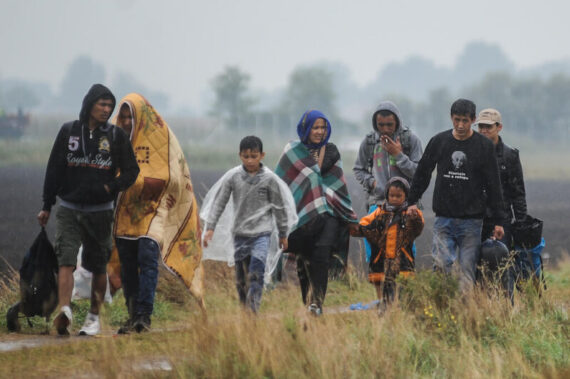
he number of asylum applications to the European Union and associated countries fell by 23 percent in the first half of 2025, driven primarily by a dramatic reduction in applications from Syrians following the fall of President Bashar al-Assad. The figures released Monday by the European Union Agency for Asylum (EUAA), mark one of the steepest mid-year declines in recent years and signal a significant shift in the continent’s migration dynamics.
According to the EUAA, overall asylum requests across the EU’s 27 member states, along with Switzerland and Norway (collectively referred to as the EU+), totaled 399,000 applications between January and June 2025. This represents a marked decrease compared to the same period in 2024, when the bloc recorded over 518,000 applications.
The most striking trend in the report is the sharp fall in applications from Syrians, who for much of the past decade constituted the largest group of asylum seekers in Europe. In May 2025, only 3,100 Syrians applied for asylum, down from around 16,000 in October 2024—a nearly fivefold decrease over just seven months.
“Monthly Syrian asylum applications fell drastically, reflecting changing conditions within Syria rather than policy shifts in the EU,” the EUAA said. “This downturn, the like of which has not been seen since the initial wave of COVID-19, is likely not due to any asylum policy changes in the EU+.”
The fall coincides with profound political changes in Syria following the ouster of longtime leader Bashar al-Assad in December 2024. The interim government, now led by President Ahmed al-Sharaa, has launched a platform focused on stability and reconstruction to encourage displaced Syrians to return home.
The new leadership has faced ongoing challenges, including Israeli military strikes, but international agencies report a surge in return migration. The United Nations Refugee Agency (UNHCR) estimates that as of mid-May 2025, over 500,000 Syrians have crossed back into the country.
At the height of Syria’s civil war, millions of people fled the country, with neighboring states like Turkey, Lebanon, and Jordan absorbing the bulk of refugees, while over a million made their way to Europe. The recent trend suggests a gradual reversal of that exodus, though humanitarian organizations caution that conditions in parts of Syria remain precarious.
With the decline in Syrian requests, Venezuelans have now become the largest group of asylum seekers in the EU+, surpassing both Afghans and Syrians. The report attributes this surge to a combination of factors, including the severe economic and political crisis in Venezuela and evolving United States immigration policies that may have shifted migration routes toward Europe.
Afghanistan remained the second-largest source country for asylum seekers, continuing a trend of high migration flows linked to instability and repression following the Taliban’s return to power.
The EUAA report also notes a shift in the most popular destinations for asylum seekers. Germany, which had long been the leading destination during the peak years of the Syrian and Afghan migration crises, received fewer applications in early 2025 than Spain, Italy, and France.
This shift reflects changing migration networks, evolving border policies, and in some cases, the secondary movement of asylum seekers within Europe after their initial entry.
The overall decline in asylum applications is likely to be welcomed by governments across the EU that have faced sustained domestic pressure over migration levels in recent years. However, the drop is not attributed to stricter border enforcement or new asylum regulations, according to the EUAA.
Instead, the fall appears closely tied to developments in origin countries, particularly Syria, where the end of Assad’s rule has temporarily altered the calculus for many displaced people. Analysts caution, however, that the situation remains fluid and that migration flows could rise again if political or security conditions deteriorate.
Recommended
Humanitarian groups warn against complacency, stressing that while fewer Syrians are seeking refuge in Europe, many returnees face uncertain futures in a country still recovering from years of war, economic collapse, and foreign intervention.
For now, the report suggests a temporary easing of asylum pressures on European systems. But with persistent crises in regions such as Venezuela, Afghanistan, and parts of sub-Saharan Africa, European policymakers remain cautious about declaring any long-term trend.
(Source: Aljazeera)

Politics Today is dedicated to publishing insightful analyses in order to understand the changing nature of contemporary politics. It aims to contribute to the sound and constructive discussion of international affairs.
You can see how this popup was set up in our step-by-step guide: https://wppopupmaker.com/guides/auto-opening-announcement-popups/

Stay informed by subscribing to
our weekly newsletter.
You can see how this popup was set up in our step-by-step guide: https://wppopupmaker.com/guides/auto-opening-announcement-popups/
You can see how this popup was set up in our step-by-step guide: https://wppopupmaker.com/guides/auto-opening-announcement-popups/
You can see how this popup was set up in our step-by-step guide: https://wppopupmaker.com/guides/auto-opening-announcement-popups/
You can see how this popup was set up in our step-by-step guide: https://wppopupmaker.com/guides/auto-opening-announcement-popups/