Gold Hoarded “Under Mattresses” in Türkiye: Is It an Economic Problem?
Over the past fifteen years, various tools have been introduced in Türkiye to incorporate 'mattress gold' into the financial system.
February 5, 2026
F
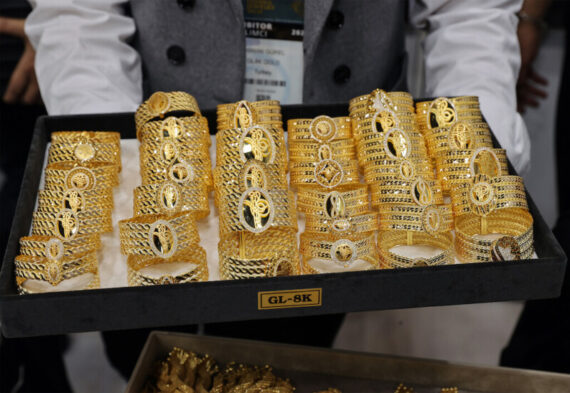
rom a macroeconomic perspective, gold savings kept under mattresses represent idle wealth. It is estimated that Turkish households hold around 4,000–4,200 tonnes of gold. At current prices, this is worth around $550 billion. Of this amount, 1,000–1,200 tonnes are held within the financial system (in the Central Bank and in bank gold accounts), while an estimated 3,000 tonnes remain outside it. In other words, it is estimated that there are 3,000 tonnes of gold under mattresses, with an economic value of 415 billion dollars! In my opinion, it is worth even more than half a trillion dollars!
If you ask what this figure means, I will briefly explain: it represents around 30 KAAN-scale defense industry projects. It signifies the end of structural unemployment in Türkiye, with 8,300 factories employing 4 million people. It means around 500 world-class universities. It means 1,400 city hospitals, each with 1,000 beds. It means becoming Europe’s largest energy powerhouse with 380,000 MW of wind energy capacity. It also means 700,000 MW of solar energy capacity. This is six times Türkiye’s current installed electricity capacity, which would eliminate the need for energy imports and close the current account deficit. Shall I continue? It means 400 Eurasia tunnels, 185 Çanakkale bridges and 350 Osmangazi bridges. Therefore, the question we are seeking an answer to is very valuable. We need to address the issue within this framework.
According to a 2025 ING Türkiye study, physical gold held under mattresses is the most popular savings instrument in our country (35 per cent). It is not difficult to guess what comes second: cash foreign currency held under mattresses (28 per cent). Third on the list are TL deposit accounts (21%), and so on.
In order to answer the question of how to bring gold held under mattresses into the financial system, we must first understand why it is outside of it and grasp the characteristics of the saver.
There are two essential pillars of the economy: trust and stability. The above figures clearly show that Türkiye’s long-standing preference for gold stems from a lack of trust in the financial system. Past periods of high inflation, collapsed banks and financial crises have damaged the trust of the Turkish people. Combined with religious sensitivities, this has led to the widespread accumulation of physical gold over the years, with people adopting the mindset of ‘just in case, I’ll keep it under my control’.
Over the past fifteen years, various tools have been introduced in Türkiye to incorporate ‘mattress gold’ into the financial system. For example, in 2011 the Central Bank of the Republic of Türkiye (CBRT) introduced a gold option to its Reserve Requirement Mechanism (RRM), leading to the development of gold banking. Banks drew physical gold into the system through gram gold accounts. However, the requirement to import gold in order to reach the targeted volume limited the release of existing under-the-pillow stocks. Although approximately 60 tonnes of gold were brought into the system in subsequent years through scrap gold campaigns organized by banks and collaborations with jewelers, society’s adoption of gold as a financial instrument remained limited.
In 2017, the Treasury and Finance Ministry issued gold bonds and gold-backed lease certificates, which aimed to build trust by allowing physical gold to be redeemed in kind at maturity and offering additional returns in gold. However, these lost their appeal in an environment of high inflation, and the amount collected remained limited to a few tonnes. The Mint Gold Certificate, issued by the General Directorate of the Mint and Stamp Printing House and traded on the Istanbul Stock Exchange since 2022, has attracted new investment to the market by offering the opportunity to invest in small amounts of digital gold in a safe way. However, it has not significantly reduced the existing stock of gold.
Over the past fifteen years, various tools have been introduced in Türkiye to incorporate ‘mattress gold’ into the financial system. For example, in 2011 the Central Bank of the Republic of Türkiye (CBRT) introduced a gold option to its Reserve Requirement Mechanism (RRM), leading to the development of gold banking. Banks drew physical gold into the system through gram gold accounts. However, the requirement to import gold in order to reach the targeted volume limited the release of existing under-the-pillow stocks. Although approximately 60 tonnes of gold were brought into the system in subsequent years through scrap gold campaigns organized by banks and collaborations with jewelers, society’s adoption of gold as a financial instrument remained limited.
Consequently, while these instruments have provided technical diversity, they have failed to fundamentally resolve the issue of gold held under mattresses, as they have not fostered the strong trust and behavioral transformation required to bring gold into the system without selling it or undermining the sense of ownership.
This situation is better explained by structural factors relating to trust, behavior and perception than by a lack of technical tools. Research shows that a significant proportion of citizens view gold as ‘too valuable to entrust’ and are deeply mistrustful of handing it over to banks and the state. It is also important to highlight a paradox regarding trust. Although negative responses to calls to enter the system are driven by a lack of trust, it should also be noted that some citizens deliver their gold to local jewelers in the hope of making a profit.
Another reason is that the financial returns offered are not appealing to individuals. In a high inflation environment and at a time when gold prices were already rising strongly, the annual returns of 0–2.4 per cent offered on gold deposit accounts and gold bonds were not considered attractive; in some products, the fact that the return was in Turkish lira reinforced the feeling of relative loss when the gold price rose. Concerns about liquidity and access also played a part: while physical gold held at home can be converted into cash immediately, individuals perceived the maturity, procedures and physical delivery conditions in the banking system as a loss of flexibility.
In addition, the loss of craftsmanship and sentimental value when gold jewelery is brought into the system makes it difficult to convert gold, particularly family heirlooms, into financial instruments. The perception that registration could pose future risks through taxation, questioning or possible regulations has also led to a continued belief that keeping gold unregistered is ‘safer’. In these circumstances, the state’s objectives of strengthening reserves and financing have not been sufficiently aligned with individuals’ motivation to protect themselves from uncertainty.
International comparisons show that hoarding gold is not a universal problem. Rather, it is closely linked to a country’s cultural structures, the depth of its financial system, and the relationship between the state and its citizens. The issue is more prevalent in countries with a cultural affinity for gold. In contrast, in economies with robust financial infrastructures and high levels of trust, gold accumulation is not considered a policy issue.
International comparisons reveal that Türkiye and India have taken the most concrete steps towards incorporating gold held in private hands into the financial system, but the outcomes vary significantly between countries.
The gold leasing model is based on the principle of providing financing to the real economy without selling the gold held in people’s homes and without changing ownership. At the same time, it generates returns in gold for the owner of the gold. This approach aims to transform gold from a mere store of value into a productive asset. The model’s fundamental promise is that ‘gold earns gold’; in other words, investors focus not on monetary interest, but on increasing the amount of gold they hold.
This structure is based on a three-way relationship between the gold-owning investor, the business using the gold and the intermediary platform. Investors entrust their physical gold to the platform for safe storage in vaults, and the gold is leased through the platform rather than directly. Payment in the form of gold returns is a critical element that eliminates inflation and currency risk.
Businesses that lease gold are usually jewelers, refiners, miners and industrial firms that use gold in their production processes. By leasing gold instead of purchasing it, these businesses can produce goods without tying up capital, gain natural protection against price fluctuations (hedging), and obtain off-balance-sheet financing. The lease term is usually short-term, but can be renewed if both parties are satisfied. The platform’s role is to match investors with businesses, perform risk analysis, manage contracts and provide secure storage.
The fundamental objective is to establish an integrated ‘Gold Financing Ecosystem’, in which gold owners can participate with confidence, earning real returns in gold while providing low-cost financing to the real sector and making lasting macroeconomic contributions to public authorities. Drawing inspiration from international best practices, the process is fully adapted to Türkiye’s institutional structure, savings behavior and market realities.
The proposed structure centres around a specialized gold financing institution (Altınbank) and a licensed platform.
The financial aspect of the process is based on the principle of gold savings and returns. Gold owners can participate in the system by contributing their physical gold or existing gold accounts, and transactions are conducted based on their balance of grams of gold. Participants are offered various options, including gold leasing with specific maturities, gold-backed securities issued by the state or the platform itself, and, to a limited extent, Turkish lira (TL) products indexed to gold. The collected gold is leased to businesses, primarily authorized refiners in the relevant sector, which require gold for production and trade in the real economy; the proceeds are distributed directly to gold investors. Thus, investors both preserve their principal and earn a return that is independent of inflation and exchange rate risk.
Recommended
The process involves various risks, including counterparty, liquidity, operational and reputational risks. However, these can be managed through collateralization, portfolio diversification, insurance, transparent reporting and independent auditing. The nature of the gold leasing structure significantly limits price risk. In the face of macroeconomic uncertainties, the long-term, predictable policy stance of public authorities is crucial.
Gold owners can either store their gold securely or choose to ‘put it to work’ on the condition that it remains untouched for a certain period. In this case, the gold is entrusted to companies that require it for production and trade purposes. These companies do not purchase the gold, and ownership remains with the gold owner. They only use it for a specified period and pay rent in gold in return. Thus, the return obtained is not interest or TL-based profit, but is reflected directly in the accounts as gold. The rental fee is determined by market supply and demand. Investors can view their accounts online via the official platform and perform various transactions, either physically or online.
At the end of the term, investors can choose to keep their gold in the system or retrieve it along with any additional gold they have earned. In both cases, investors retain control of their gold: it is not liquidated, its value is not diminished and the perception of it being ‘entrusted’ remains intact. Behind the scenes, this gold is sourced from domestic rather than imported resources, enabling companies to produce at a lower cost and allowing the economy to put idle savings to productive use. From a citizen’s perspective, the system is extremely simple: the gold never leaves their hands, it never loses its value, it multiplies as gold and can be returned as gold whenever desired.
Although US-based gold leasing models are technically successful, they are not particularly relevant in terms of the scale and nature of the ‘mattress gold’ problem in Türkiye. These models offer financial products at a micro level that appeal to a narrow, sophisticated investor base which trusts the financial system, views gold as a portfolio instrument and is not sensitive to interest rates. However, Türkiye needs a macro-financial solution that goes beyond generating individual returns and addresses the cultural, behavioral and institutional dimensions of mattress gold.
Our proposal therefore accepts gold as both a rentable investment asset and a form of savings within social trust relationships. Our proposal’s uniqueness lies in generating real gold returns while retaining investor ownership, directly and strategically funding the real sector, and making public authorities an integral part of the design.
What will therefore find greater resonance in Türkiye is not the direct application of the existing US model, but rather the domestic gold financing ecosystem proposed in this study, which is compatible with the country’s socio-economic realities, scalable and effective at the policy level.
(Originally published in Turkish by Kriter)

Dr. Yüksel Okşak holds degrees in Economics and Public Relations, with postgraduate studies in Capital Markets and a PhD in Economics.
He has extensive professional experience spanning international trade, finance, development projects, and senior management roles at TÜV Rheinland. He earned the title of Associate Professor through his scholarly work in Macroeconomics, with numerous publications and nationally and internationally funded projects. Dr. Okşak has been actively involved in public policy, think tanks, conferences, and media, sharing economic analysis across major platforms and TV channels in Türkiye. He currently serves as Head of the Department of International Trade at Bursa Uludağ University and continues his academic and public engagement work.
You can see how this popup was set up in our step-by-step guide: https://wppopupmaker.com/guides/auto-opening-announcement-popups/

Stay informed by subscribing to
our weekly newsletter.
You can see how this popup was set up in our step-by-step guide: https://wppopupmaker.com/guides/auto-opening-announcement-popups/
You can see how this popup was set up in our step-by-step guide: https://wppopupmaker.com/guides/auto-opening-announcement-popups/
You can see how this popup was set up in our step-by-step guide: https://wppopupmaker.com/guides/auto-opening-announcement-popups/
You can see how this popup was set up in our step-by-step guide: https://wppopupmaker.com/guides/auto-opening-announcement-popups/