Iran’s Economy Buckles Under Pressure as Millions Face Unemployment

May 8, 2026

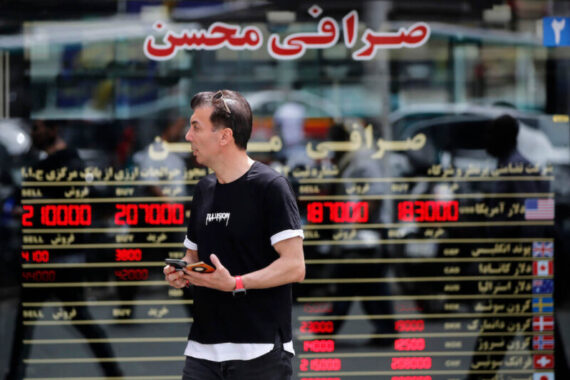
Official data placed annual inflation in Iran at 72% in March, though prices for essential goods rose even faster, putting food and household necessities beyond the reach of many families.
Citizens of Iran are seen as the US dollar hits an all-time high on the open market as the national currency continues to depreciate sharply under the impact of heavy US sanctions and war-driven economic pressures, driving up prices of essential goods and affecting commercial activity across the country, on May 4, 2026, in Tehran, Iran. Photo by Anadolu Images.

B

y late April 2026, the war involving Iran, the United States and Israel has pushed Iran’s already fragile economy into a deepening crisis, leaving millions of Iranians facing unemployment, inflation and growing poverty.

Across the country, workers from nearly every sector, from heavy industry and aviation to online services and education, are losing jobs or seeing their incomes collapse as airstrikes, internet shutdowns and trade disruptions cripple economic activity.

For many Iranians, the consequences of the conflict are immediate and personal.

Asal, a freelance designer in her 30s living in Tehran, said international work opportunities disappeared after prolonged internet restrictions cut her off from clients abroad.

“Everything just stopped overnight,” she told CNN, explaining that her income no longer covers basic living expenses.

Her story reflects a broader national crisis unfolding as Iran’s economy absorbs the impact of war after years of sanctions, inflation and structural weakness.

Economy fragile before war

Even before the fighting escalated, Iran’s economy was under severe pressure. National income per person had dropped from roughly $8,000 in 2012 to about $5,000 by 2024, weakened by international sanctions, corruption and years of high inflation.

Now economists warn that conditions are deteriorating rapidly.

According to estimates from the United Nations Development Program, as many as 4.1 million additional Iranians could fall into poverty because of the conflict.

Thousands of airstrikes have damaged factories, infrastructure and industrial sites across the country. Iranian media outlet EcoIran reported that more than 23,000 factories and businesses have been affected.

Iranian Deputy Work and Social Security Minister Gholamhossein Mohammadi said the destruction has directly cost one million jobs. Additional disruptions throughout the economy may have pushed another million people out of work.

The war has severely disrupted Iran’s industrial production and trade networks.

Israeli strikes targeting major petrochemical facilities last month forced thousands of workers into unpaid leave, while damage to steel production created shortages that spread across manufacturing industries.

Trailer manufacturer Maral Sanat reportedly laid off 1,500 workers because of insufficient steel supplies. One of Iran’s largest textile producers, Borujerd, dismissed around 700 employees.

Economic analyst Hadi Kahalzadeh of the Quincy Institute for Responsible Statecraft warned that the combination of war, inflation and collapsing consumer demand is threatening much of Iran’s labor market.

He estimated that disruptions to shipping and imports could place up to half of Iranian jobs at risk while pushing even more citizens into poverty.

Meanwhile, shortages of imported materials have forced dairy plants and other manufacturers to suspend operations.

Official figures show unemployment insurance applications have surged dramatically, reaching approximately 147,000 in the past two months, nearly three times the number recorded during the same period last year.


Inflation and internet shutdowns deepen hardship

The economic pain has been intensified by soaring inflation.

Official data placed annual inflation at 72% in March, though prices for essential goods rose even faster, putting food and household necessities beyond the reach of many families.

At the same time, widespread internet shutdowns have devastated sectors dependent on digital connectivity.

Iranian media reported layoffs at the country’s largest e-commerce company, Digikala, as online businesses struggle to operate under communication restrictions.

Jafar, a data analyst whose company shut down entirely, told independent media outlet Fararu that he is now considering work in ride-hailing services simply to survive.

The internet disruptions have particularly affected women working remotely.

Somayeh, an online German teacher from Isfahan, said unreliable domestic applications and weak connectivity have made online teaching nearly impossible.

“Platforms keep crashing,” she said, explaining that students are often unable to join lessons consistently.

Women have accounted for roughly one-third of unemployment insurance claims filed since the war began.

Growing pressure on government

The rising unemployment rate is placing additional strain on Iran’s social security system as state revenues decline.

Economists and business groups are urging the government to introduce emergency support measures, including tax relief, low-interest loans and aid for small businesses, warning that unemployment could worsen without immediate intervention.

Criticism of the government’s economic management is also increasing.

Saeed Tajik criticized authorities for raising salaries for state employees while many private businesses struggle to pay workers and are forced to implement layoffs.

The Tehran Chamber of Commerce has called preserving jobs the country’s highest economic priority.

Iranian officials argue the hardship is the result of what they describe as an unjust war imposed by the United States and Israel. Authorities are reportedly considering expanding monthly food vouchers and assistance programs for low-income households.

Still, conservative Iranian newspaper Ettelaat warned this week that the country faces “a dire and complicated situation” requiring emergency wartime economic policies.

The worsening economic conditions are reviving memories of nationwide protests that erupted before the war over inflation, unemployment and declining living standards.

Although the government has maintained tight political control, uncertainty continues to spread across Iranian society as the conflict remains unresolved.

For many ordinary citizens, the greatest burden is no longer only financial loss, but the uncertainty about what comes next.

“You never know what’s going to happen next,” Somayeh said from Isfahan, describing a feeling increasingly shared across Iran as the war drags on.

(Source: CNN)

Politics Today is dedicated to publishing insightful analyses in order to understand the changing nature of contemporary politics. It aims to contribute to the sound and constructive discussion of international affairs.