Israel's Role in the US-Iran War: Instigator or Party?
Israel, which failed to fully anticipate Iran's response, faced perhaps the largest and most destructive attack in its history with the missiles launched by Iran.
March 9, 2026
T
he U.S., which ended the 12-day war between Israel and Iran by striking Iran’s Fordo and Natanz nuclear facilities on June 12, 2025, has once again set its sights on Iran over the past two months. Its military build-up in the region and threats to strike Iran in order to force a new nuclear agreement are being followed with a mixture of concern and curiosity around the world.
Although the tension and threatening rhetoric between the U.S. and Iran are not new, it appears that the U.S. is projecting its power, perhaps for the first time, to persuade Iran to sign a full surrender agreement. If this proves impossible, the U.S. may carry out a comprehensive attack to change the regime and continue on its path with a new administration.
Consequently, the most pressing question is why the U.S., which has so far avoided direct confrontation with Iran despite Israel’s efforts to persuade it otherwise, has become so hawkish today, pushing Iran towards war by imposing not only its nuclear program but also many other issues. To find the answer to this question, it is necessary to look closely at the reasons for the change in U.S. policy towards Iran. Although there may be some domestic political reasons for the change in attitude in the U.S., such as the need to write a success story to win the upcoming midterm elections, to make people forget economic failures, and to cover up the Epstein case, the main culprit is, as might be expected, Israel.
Therefore, although the parties to the war that erupted again on the morning of February 28 appear to be the U.S. and Iran, Israel, as the instigator and the initiator of the attack that led to the war and therefore the target of Iran, is considered to be a direct party to the war. To better understand Israel’s role in this process, we will first briefly touch upon the United States’ relations with Iran after 1979, then explain how Israel managed the change in U.S. policy towards Iran and finally attempt to clarify the extent of Israel’s involvement in the process after the war broke out and what its preparations for the war were.
The U.S., a major actor in the international system established after the Second World War, did not remain indifferent to Iran, a country rich in oil and bordering the Soviet Union. It determined the regime that would last until 1979 with the 1953 coup against Mossadegh and became its closest ally. However, following the 1979 Islamic Revolution, Iran distanced itself from the Western camp and the United States under Khomeini’s slogan, ‘Neither East nor West, only the Islamic Republic,’ and labelled the United States the ‘Great Satan.’
From this point onwards, Iran was subjected to U.S. sanctions and embargoes. While attempting to institutionalize its new regime, it also began nuclear research following revelations that Israel possessed nuclear weapons. However, Iran’s nuclear program was exposed in 2003, and from that point on, Israel began its persistent pursuit of bringing the United States and Iran into confrontation and seeking Iran’s fragmentation or, at worst, a change in its regime.
Despite Israel’s objections, Obama signed a nuclear agreement with Iran in 2015, leading to a brief thaw in relations between Iran, the U.S., and the EU. However, this period ended when Trump withdrew from the agreement in 2018 at Israel’s insistence. Nevertheless, it appears that the U.S. preferred to kill Qasem Soleimani, commander of the Quds Force, which coordinates Iran’s proxy forces, rather than confront Iran directly.
At the start of his second term, Trump signaled his openness to negotiations with Iran and stated his desire to secure a better deal than the nuclear agreement he had withdrawn from in 2018. Indeed, following these statements, negotiations commenced between the parties, with five rounds of talks taking place until the outbreak of the 12-Day War.
Despite all the tension between the U.S. and Iran, it was explained in the previous section that they did not want to be a party to a direct war. In fact, the background to this was that Iran appeared stronger than it actually was thanks to the proxy power structure it had established in the region, and the U.S. was unable to fully assess the cost of attacking Iran. Therefore, it was predicted that Iran would not be as easy a target as Iraq, and there was no desire to embark on an adventure that would entail heavy costs and possibly end in failure.
However, after October 7, 2023, Israel launched attacks on Gaza under the pretext of eliminating Hamas, expanding into Lebanon, Syria and Yemen to weaken and, if possible, eliminate Iran’s proxy forces in the region, thereby changing the dynamics in the region. The infliction of heavy losses on Hezbollah, the overthrow of the Assad regime in Syria, which removed Iran from the equation, and the Houthis being rendered unable to support Iran, caused Iran’s security architecture based on proxy forces to collapse. Israel’s strike on the Iranian consulate in Damascus on April 1, 2024, believing it had succeeded in its war of attrition against Iran, marked a turning point in the tension that had been ongoing through proxy actors until then. This is because, after this date, the parties targeted each other directly for the first time.
Consequently, the U.S., which closely monitored the process and provided air defence support to Israel during retaliatory operations, also realized that Iran could be struck without incurring high costs. This explains why Trump gave Israel the green light to attack Iran while nuclear negotiations with Iran were still ongoing. Moreover, Israel’s performance in the first two days of the 12-Day War proved once again that Iran was not as powerful as claimed, laying the groundwork for the frequent threats of attack against Iran that we hear today. Ultimately, although Iran appeared to be balancing the situation in the war with ballistic missile attacks, the war ended with U.S. intervention. Moreover, even though the U.S. struck Iran, it remained outside the war, and Iran responded with a symbolic retaliation, showing that it did not want to go to war with the U.S.
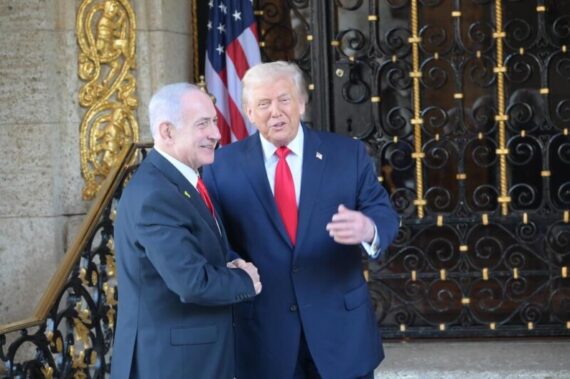
However, despite Trump’s statements that the war was over and that ‘Iran’s nuclear facilities had been completely destroyed,’ Israel has not committed itself to refraining from attacking Iran again and has stated that it will attack again if Iran resumes its nuclear activities. In fact, statements made by Iran that the U.S. attack did not completely destroy the nuclear facilities and that these facilities would be repaired again have played into Israel’s hands. This allowed Netanyahu to maintain pressure on Trump, making Iran the top agenda item during his visits to the White House until the end of the year, trying to persuade Trump to attack Iran. Trump, who did not seem very enthusiastic about this at first, changed his stance after the protests that broke out in Iran in the last days of the year, in addition to the statements coming from Iran, and began to threaten to strike Iran.
Therefore, the most important reason for the change in Trump’s rhetoric towards Iran is that he believes Iran is not as powerful as it was after the 12-Day War and, consequently, calculates that attacking Iran would not impose a significant cost on him. However, intense pressure from Israel and the Jewish lobby, and his desire not to lose the support of the Jewish lobby, which he will need in the upcoming midterm elections, are also among the reasons. With the persuasion of pro-Israel figures in his inner circle and the easy success achieved in the operation against Venezuela, Trump has escalated his threats against Iran and started talking about regime change.
As an inevitable outcome of this entire process, a large military force has been amassed in the region and Iran has been presented with two alternatives. Iran will either accept the agreement, which means unconditional surrender, or the agreement will be enforced by force and, if necessary, by regime change. In other words, Iran will accept the agreement imposed on it in any case. The nuance lies in whether this will be achieved through bloodshed or without bloodshed.
As previously stated, Israel, the actor that wants the U.S. to go to war with Iran, has been lobbying/pressuring for this for years and changed Trump’s stance towards Iran. Israel was one of the first targets announced by Iran to be hit if the U.S. attacked.
While the whole world expected the U.S. to strike first and Israel to then become involved in the process, Israel seized an intelligence opportunity on the morning of February 28 and launched an attack on the compound where Iran’s religious leader Khamenei resides, thereby initiating the war. With this move, Israel not only instigated the conflict but also became the party that actually started the war.
However, Israel, which failed to fully anticipate Iran’s response, faced perhaps the largest and most destructive attack in its history with the missiles launched by Iran. As the exact stockpile of ballistic and hypersonic missiles in Iran’s possession is unknown, and it is impossible to predict what additional capabilities and capacities Iran may have acquired since the 12-Day War, it is impossible to accurately gauge how long these attacks will continue and what impact they will have on Israel.
Apart from the missiles Iran has launched at Israel, it seems unlikely that it will pose a threat through its proxy actors in the region as it did in the past. This is because Israel’s pressure on Hezbollah continues, and although Hezbollah has stated that it will be supported by Iran, it is known that its ability to attack Israel is very limited. Furthermore, it is estimated that other Shiite proxy forces in the region, believed to be subordinate to Iran, are also unable to protect Iran or attack its enemies due to similar problems.
Recommended
In response to statements from Iran that, in the event of an attack by the U.S., U.S. ships and bases in the region as well as Israel would be targeted, Israel attempted to deter Iran by stating that ‘Iran would pay a very heavy price if it attacked them.’ Although Israel initially sought to remain outside the conflict it had been so eager to engage in and shift the entire cost to the U.S., Israel took the initiative and started the war so as not to leave things to chance, given Trump’s renewed negotiations with Iran.
Prior to the war, Israel replenished its air defense missile stocks depleted during the 12-Day War and reinforced its existing air defense systems, deploying them in various locations across the country, primarily at critical facilities and military bases. It was also observed that the critical infrastructure in the areas hit during the 12-Day War had been repaired, shelters had been refurbished, and mobile shelters had been placed in various locations.
Just a few days before the war began in Israel, emergency response units, the civil defence organization and the home front command were ordered to be ready for war in response to a possible Iranian retaliation. However, there have been no reports so far of reservists being called up to reinforce the army. However, after the war broke out, it was announced that 100,000 reserve soldiers would be called up. The limited nature of these preparations has been interpreted as Israel’s confidence in the readiness of its army and the U.S. defense umbrella.
As a result, Israel’s lobbying efforts and pressure on the U.S. since 2003 have borne fruit, bringing the U.S. and Iran into confrontation. As if Israel’s significant destruction of Iran’s defense infrastructure during the 12-Day War were not enough, the U.S.’s massive military build-up in the region has further eased its hand. It is evident that Iran is much more vulnerable in terms of defense and is attempting to compensate for this weakness with offensive missiles. However, it must be reiterated that even after the war began, despite Iran exercising its right of retaliation and striking U.S. and Israeli targets as well as Gulf countries with its missiles, the U.S. and Israel have not been deterred from their air strikes. This situation raises doubts about how long Iran can sustain the war.
Despite all the scenarios and possibilities put forward before the war broke out, a completely different situation has emerged since the war began. Iran, which lost its religious leader Khamenei and many high-ranking commanders in the first attack carried out by Israel and the U.S., nevertheless remained standing and surprised its enemy by quickly recovering and retaliating. However, Israel, which has set its sights on regime change in Iran, and the United States, which has followed suit, have not yet played all their cards. Therefore, it is believed that the war will be long and protracted, with the side that has more air power and missiles gaining the advantage.
(Originally published in Turkish by Kriter)

After serving 25 years in the Turkish Navy, he retired in 2014. Afterwards, he started his doctoral education on Middle East Studies at Sakarya University Middle East Institute and worked as a researcher at the Israel Studies desk of the institute. Between 2019-2021, he served as a Levant Specialist at Center for Middle Eastern Studies (ORSAM) and led the Palestine and Israel studies during this period. Currently, as an independent researcher, he conducts research on Palestine, Israel, the Middle East and Turkish Foreign Policy, writes analyses for various platforms and is a commentator on TV.
You can see how this popup was set up in our step-by-step guide: https://wppopupmaker.com/guides/auto-opening-announcement-popups/

Stay informed by subscribing to
our weekly newsletter.
You can see how this popup was set up in our step-by-step guide: https://wppopupmaker.com/guides/auto-opening-announcement-popups/
You can see how this popup was set up in our step-by-step guide: https://wppopupmaker.com/guides/auto-opening-announcement-popups/
You can see how this popup was set up in our step-by-step guide: https://wppopupmaker.com/guides/auto-opening-announcement-popups/
You can see how this popup was set up in our step-by-step guide: https://wppopupmaker.com/guides/auto-opening-announcement-popups/