NATO’s Southern Flank and the Ankara Summit: Why Is the African Dimension Important?
NATO’s approach to Africa is not the same as the Africa policies of individual NATO member states.
August 12, 2026
T
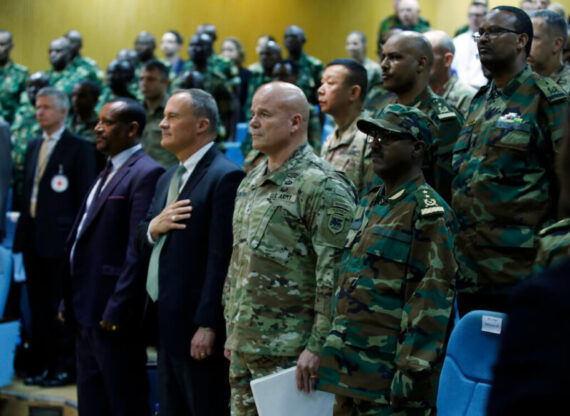
he Ankara Summit clearly demonstrated which issues lie at the heart of NATO’s security agenda. The strong emphasis in the summit communiqué on collective defense, the transatlantic bond and Article 5 of the Washington Treaty once again underscored that the Alliance’s fundamental priority is deterrence and defense. Russia’s long-term threat to Euro-Atlantic security, continued support for Ukraine, increased defense spending, the expansion of industrial production capacity and the development of new military capabilities formed the main framework of the Ankara Summit.
This picture is perfectly clear. Whilst the Russia-Ukraine War continues, it was to be expected that NATO would prioritize deterrence on its eastern flank. Indeed, the summit communiqué provides for the provision of 70 billion euros’ worth of military equipment, aid and training support to Ukraine by 2026, and for at least equivalent levels to be maintained in 2027. Similarly, the increase in defense investment by European allies and Canada, the announcement of new procurement worth over 50 billion dollars, and the emphasis on expanding defense industry production capacity demonstrate that NATO prioritizes the conversion of expenditure into tangible military capability, alongside its spending ratios.
Another statement in the Ankara Summit Declaration indicates that this discussion must be addressed within a broader context. NATO states that it is continuing its 360-degree approach to deterrence and defense. This approach acknowledges that the Alliance’s security is not limited solely to its eastern flank, the Russian threat, or conventional military capabilities. Strategic competition, widespread instability, hybrid threats, terrorism, energy security, sea lanes, cyberspace, space, unmanned systems, artificial intelligence and critical infrastructure are all different components of the same security landscape.
It is precisely for this reason that NATO’s southern flank is one of the areas that requires more careful consideration following the Ankara Summit. However, Africa is not at the centre of this debate. NATO’s main agenda is, of course, not centered on Africa. Nor should it be expected to be. Nevertheless, Africa is a dimension that cannot be overlooked when seeking to understand the security architecture of the southern flank. The vast geography stretching from the southern Mediterranean to the Sahel, and from the Red Sea to the Horn of Africa, is one of the areas that tests what NATO’s 360-degree security approach means in practice.
At this point, it is necessary to make a conceptual distinction. NATO’s approach to Africa is not the same as the Africa policies of individual NATO member states. NATO is an organization comprising allies with different historical experiences, geopolitical priorities and bilateral relations. France, Italy, Turkey, the US, the UK and Spain do not all view Africa in the same way. Some allies focus more on North Africa, some on the Sahel, some on the Horn of Africa, whilst others prioritize maritime security and trade routes. Furthermore, the fact that many countries are members of both NATO and the European Union can, at times, lead to a blurring of priorities and instruments.
This diversity need not be a weakness. If managed correctly, it could foster a richer debate within NATO regarding its southern flank. After all, each ally possesses field experience, diplomatic networks, defense capabilities and development tools in different geographical regions. The real challenge lies in transforming this diversity into a shared understanding of security. Following the Ankara Summit, what NATO needs is not to produce a centralized, one-size-fits-all policy towards Africa, but rather to develop more realistic channels of cooperation with security institutions, regional organizations and relevant countries in Africa.
The issue of migration is one of the most visible aspects of this. In European public discourse, Africa is often brought to the fore through debates on irregular migration. Locations such as Lampedusa, Ceuta and the Canary Islands highlight the link between stability in North Africa and Europe’s border management. However, viewing migration solely as a security threat is an incomplete approach. War, poverty, climate pressures, food insecurity and weaknesses in state capacity are among the root causes of human mobility. NATO’s recognition of climate change as a threat multiplier is also significant in this regard. Climate change may not, in and of itself, directly cause conflict. However, it can exacerbate resource scarcity, economic vulnerability, displacement and local tensions.
That said, the scale of migration originating from Africa should not be exaggerated. African migrants do not constitute the largest group of migrants accepted by NATO countries. A significant proportion of migration movements in Africa take place within the continent itself. Consequently, viewing Africa solely as the source of migration towards Europe is both analytically flawed and fails to establish a sound basis for partnership. A more appropriate approach is to develop sustainable mechanisms that strike a balance between shared responsibility, humanitarian protection, border management, development and the building of local capacity with countries along migration routes.
The second key issue that makes the African dimension of the Southern Flank significant is maritime security and trade routes. The call in the Ankara Summit Declaration for Iran to fully respect freedom of navigation in the Strait of Hormuz demonstrates that NATO views maritime security not merely as a traditional military issue, but as a strategic matter linked to global trade and energy security. The same logic applies to the Red Sea and the Bab el-Mandeb–Suez corridor. The Houthis’ attacks on commercial vessels have highlighted just how vulnerable this corridor is. The diversion of ships around the Cape of Good Hope has increased transit times, fuel costs, insurance expenses and the strain on global logistics.
For this reason, Red Sea security is not merely a matter for the countries in the region. Europe’s energy supply, production chains and commercial competitiveness also depend on this route remaining open and secure. The war in Sudan, the fight against terrorism in Somalia, inter-state tensions in the Horn of Africa and security vacuums in the Sahel are developments that indirectly but significantly affect NATO’s southern flank. The conclusion to be drawn from this is not that NATO should expand militarily into Africa. A more realistic need is to establish more regular cooperation with African countries and regional institutions in the areas of maritime security, early warning, intelligence sharing, border security, counter-terrorism capabilities and crisis prevention.
Great power competition is also a significant part of this picture. Russia’s efforts to deepen its security ties in areas such as Mali, Burkina Faso, Niger and Sudan, and to develop a more institutionalized presence through mechanisms such as the post-Wagner African Corps, are trends being closely monitored by NATO. China’s influence in Africa, meanwhile, is advancing through ports, transport corridors, digital infrastructure, mining and investments in critical minerals. Resources such as cobalt, manganese, platinum group metals, lithium and graphite have become critical for the defense industry, the energy transition and advanced technology production.
Nevertheless, it would be an oversimplification to view Africa merely as a stage for competition between Russia, China, the US or Europe. African states are the actors who determine their own security preferences and development priorities. For NATO and its allies, the path to achieving a lasting impact lies in establishing partnerships with Africa based on respect for sovereignty, local ownership, technology sharing and mutual benefit. Relations with Africa’s security architecture must also be built upon this understanding. The African Union, regional economic communities, IGAD, ECOWAS and other regional structures are the pillars of joint security production.
Turkey’s experience offers a notable example in this debate. As a NATO ally, Turkey is one of the countries that has transformed its defense industry capacity into tangible military capability. The developing capabilities in areas such as unmanned aerial vehicles, electronic warfare, munitions, and land and sea platforms are directly linked to the discussions on industrial base and production depth emphasized at NATO’s Ankara Summit. However, Turkey’s role in Africa should not be interpreted solely through the prism of defense industry exports.
The training activities carried out in Somalia through TURKSOM represent an approach focused on capacity-building for local security institutions. Turkey’s integration of humanitarian aid, education, health, infrastructure and diplomacy with security support demonstrates that a more holistic approach to security is possible for the southern flank. The Ankara Declaration, signed between Ethiopia and Somalia, has also highlighted the importance of preventive diplomacy. Whilst mediation is not an alternative to military deterrence, it is a complementary element of the security architecture in terms of managing crises before they escalate into armed conflict.
Recommended
Following the Ankara Summit, NATO faces two key challenges. The first is to translate its resolve regarding deterrence against Russia and support for Ukraine into sustainable military capabilities. The second is to genuinely implement a 360-degree security approach. This second challenge requires ensuring that the Southern Flank is no longer merely an area remembered only in times of crisis.
In this context, Africa is a crucial dimension to bear in mind when considering the future of the southern flank. Migration routes, Red Sea security, fragilities in the Sahel, tensions in the Horn of Africa, critical minerals, climate-related risks and great power competition are increasingly affecting NATO’s security environment in a direct manner.
Therefore, the aim of NATO–Africa cooperation must be to manage shared security areas more effectively. It is here that the lasting contribution of the Ankara Summit can be found. If NATO can strengthen deterrence on its eastern flank whilst also making stability on its southern flank part of the strategic equation, the 360-degree security approach will cease to be merely a principle confined to declarations. A vision for the southern flank, one that does not place Africa at the centre but does not overlook it either, will be one of the most important complementary themes in post-Ankara NATO discussions.
(Originally published in Turkish by Kriter)

Assistant Professor of International Relations at Mersin University and a researcher at the SETA Foundation. His research focus is the Horn of Africa.
You can see how this popup was set up in our step-by-step guide: https://wppopupmaker.com/guides/auto-opening-announcement-popups/

Stay informed by subscribing to
our weekly newsletter.
You can see how this popup was set up in our step-by-step guide: https://wppopupmaker.com/guides/auto-opening-announcement-popups/
You can see how this popup was set up in our step-by-step guide: https://wppopupmaker.com/guides/auto-opening-announcement-popups/
You can see how this popup was set up in our step-by-step guide: https://wppopupmaker.com/guides/auto-opening-announcement-popups/
You can see how this popup was set up in our step-by-step guide: https://wppopupmaker.com/guides/auto-opening-announcement-popups/