US-Iran Hostilities Resume as Trump Declares Interim Deal 'Over' at NATO Summit

July 8, 2026

Speaking alongside NATO Secretary General Mark Rutte on the sidelines of the alliance summit in Ankara, Trump signaled that Washington no longer viewed the interim memorandum of understanding with Tehran as viable.
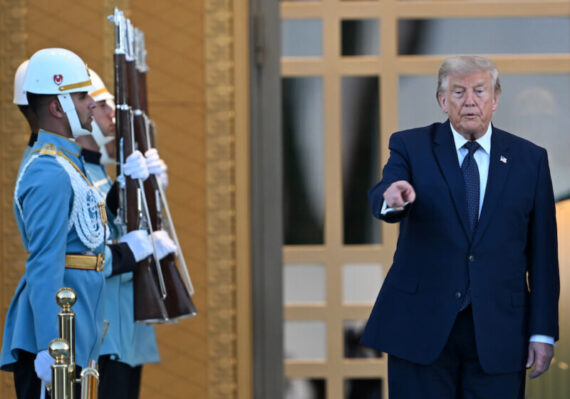
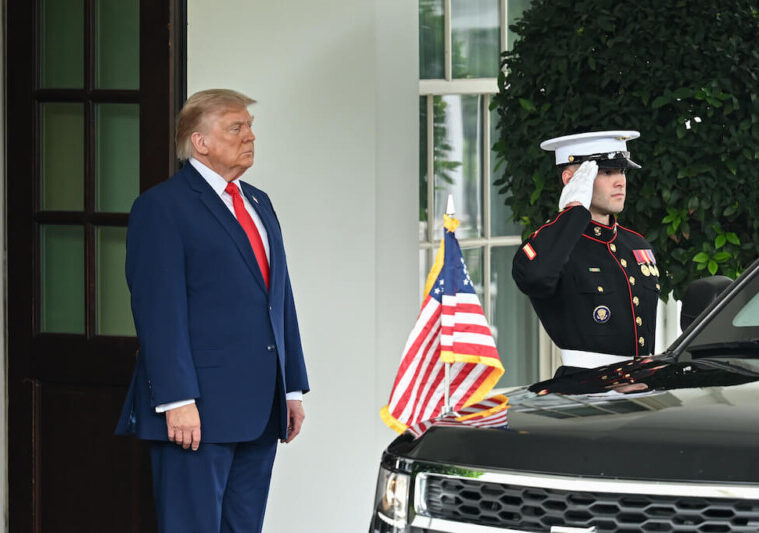
Turkish President Recep Tayyip Erdogan (not seen) and his wife Emine Erdogan (not seen) welcome US President Donald Trump during a reception hosted for heads of state and government attending the 36th NATO Summit and their spouses at the Presidential Complex in Ankara, Turkiye, on July 7, 2026. Photo by Anadolu Images.

T

he United States and Iran exchanged their heaviest military strikes since last month’s ceasefire on Wednesday, raising fears that the fragile truce between the two longtime adversaries has effectively collapsed as President Donald Trump declared the interim agreement with Tehran was “over.”

The renewed escalation unfolded as NATO leaders gathered in Ankara, where Trump confirmed that Washington had resumed military operations against Iran following what U.S. officials described as Iranian attacks on commercial shipping in the Strait of Hormuz.

According to the United States, the latest strikes were launched in response to Iranian attacks on three commercial vessels transiting the strategic waterway, one of the world’s most important oil shipping routes.

Iran responded by announcing missile and drone strikes against U.S. military facilities in Bahrain and Kuwait, marking one of the most significant direct confrontations between the two countries since fighting resumed.

The exchange represents the most serious breach of the preliminary ceasefire reached last month following weeks of conflict and negotiations mediated by regional partners.

“I think it’s over”

Speaking alongside NATO Secretary General Mark Rutte on the sidelines of the alliance summit, Trump signaled that Washington no longer viewed the interim memorandum of understanding with Tehran as viable.

“I think it’s over,” Trump told reporters when asked about the agreement that had temporarily halted fighting.

The U.S. president also dismissed prospects for renewed engagement with Iran, saying he no longer wished to negotiate with Iranian leaders, whom he described as “sick people.”

His remarks suggested the diplomatic process that had accompanied the ceasefire has effectively broken down, even as military exchanges continue to intensify.

Iran’s Foreign Ministry accused Washington of undermining the agreement through both military action and economic pressure.

In a statement released Wednesday, Tehran said recent U.S. airstrikes, together with Washington’s decision to revoke Iran’s oil sales license, had rendered key parts of the ceasefire arrangement “ineffective.”

Iran also accused the United States of interfering with maritime arrangements governing passage through the Strait of Hormuz, arguing that such actions had made implementation of the truce increasingly impossible.

The ministry warned neighboring countries hosting U.S. military forces not to allow their territories to be used for further American attacks against Iran, an apparent reference to Gulf states including Bahrain, Kuwait, Qatar and the United Arab Emirates.

The warning followed Iran’s announcement that it had launched missiles and drones against U.S. military targets in Bahrain and Kuwait earlier in the day.

Iran’s Revolutionary Guards also reported that one member of its naval forces had been killed while confronting U.S. drones near the southern port of Mashahr.

The latest military exchanges have raised concerns that the conflict could once again spread across the wider Gulf region, threatening global energy supplies and commercial shipping through the Strait of Hormuz, which carries roughly one-fifth of the world’s oil exports.


Regional tensions grow as aviation warning expanded

The renewed fighting has already prompted international aviation authorities to strengthen safety warnings across the Middle East.

The European Union Aviation Safety Agency (EASA) announced that commercial airlines should avoid operating within both Iranian and Iraqi airspace because of the heightened risk of military activity.

The updated advisory remains in effect until August 31 and replaces an earlier warning that had also covered Lebanese airspace.

EASA continues to advise airlines to exercise caution when operating near Bahrain, Kuwait, Israel, Jordan, Qatar, Oman, Saudi Arabia and the United Arab Emirates because of the potential for further military escalation.

The deteriorating security situation overshadowed discussions at the NATO summit in Ankara, where alliance leaders were expected to focus on defense spending, regional security and support for Ukraine.

Instead, much of the attention shifted to Trump’s remarks on Iran and his broader comments on NATO allies.

Criticism against Spain

The U.S. president also launched a sharp attack on Spain, accusing Madrid of failing to meet its defense commitments within NATO.

Trump said he had instructed Treasury Secretary Scott Bessent to halt all trade with Spain, calling the country “a terrible partner” in the alliance.

“I don’t want anything to do with Spain,” Trump told reporters.

He also criticized NATO over Greenland, renewing longstanding complaints about the Arctic territory and alliance burden-sharing.

The renewed conflict between Washington and Tehran comes after weeks of fragile diplomacy aimed at preventing another prolonged regional war.

Although the interim agreement had reduced direct military confrontation, tensions remained high over Iran’s nuclear program, sanctions, maritime security and regional influence.

With both sides exchanging military attacks and publicly questioning the viability of previous agreements, regional governments are increasingly concerned that the Gulf could once again become the center of a wider confrontation involving U.S. forces and Iranian-backed groups.

The latest developments also place additional pressure on NATO leaders meeting in Ankara, many of whom have emphasized the importance of preventing further instability in the Middle East while maintaining freedom of navigation through the Strait of Hormuz.

As military operations continue and diplomatic rhetoric hardens, the future of any negotiated settlement between Washington and Tehran appears increasingly uncertain.

(Source: Reuters)

Politics Today is dedicated to publishing insightful analyses in order to understand the changing nature of contemporary politics. It aims to contribute to the sound and constructive discussion of international affairs.