O
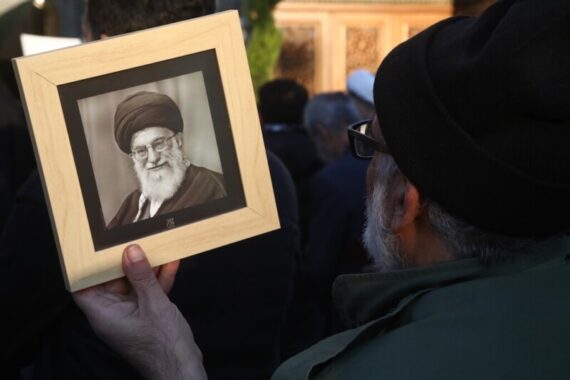
n the morning of February 28, the U.S. and Israel launched a comprehensive military offensive against Iran, seemingly in response to Omani Foreign Minister Badr bin Hamed al-Busaidi’s statement that ‘peace is immediately possible’ following his meeting with U.S. Vice President JD Vance. The attacks were conducted as part of a clear decapitation strategy, targeting Iran’s political and military command structure. Numerous high-ranking political and military figures were reportedly killed, including Iran’s Supreme Leader, Ali Khamenei.
Tehran quickly retaliated with ballistic missile and drone strikes. The initial stages of the conflict revealed that the Iranian military and political response was more resilient than the U.S. and Israel had anticipated, strongly signaling that the conflict could evolve from a swift and decisive operation into a longer, multifaceted war.
U.S./Israeli sources have stated that 2,000 targets were struck within the first five days of the war. U.S. President Donald Trump and Secretary of War Pete Hegseth appear confident about the military victory, presenting a picture of total success. The attacks are being carried out in close coordination between the two countries, with a clear division of labor: U.S. forces are focusing on military facilities, while Israel is targeting political and military leadership positions.
It seems that the U.S. is trying to cripple the country’s infrastructure, while Israel is trying to cripple its leadership and command structures. However, U.S./Israeli attacks have also hit civilian sites such as schools and hospitals, resulting in hundreds of civilian casualties.
Iran’s response
This time, the Tehran regime was caught in the conflict in a relatively better-prepared position. Iranian decision-makers had not tied all their strategic investments to the diplomatic process, and were aware that they could be targeted even during negotiations. Therefore, the element of surprise in the attack was limited. Despite heavy losses in the command structure, Iran quickly demonstrated an organized capacity for retaliation. Tehran targeted Israeli and U.S. military bases in the Gulf, diplomatic facilities, areas where U.S. troops were accommodated, and some regional airports with missile and drone salvos.
Simultaneously, Iran attempted to increase the effectiveness of its own missile operations by launching attacks aimed at destroying radar and early warning systems. Tehran’s decision to close the Strait of Hormuz was also a strategic move aimed at creating shockwaves in the international economic system by putting pressure on the global energy supply. These actions directly affect the region’s security architecture and demonstrate that, this time, Iran entered the conflict not merely as a reactor, but as a more prepared actor aiming to produce strategic results.
However, the intensity of Iran’s retaliatory attacks decreased significantly in the days that followed the initial onslaught. This may have been due to operational reasons, such as the rapid depletion of missile stockpiles or the destruction of launch sites. Alternatively, Tehran may have preferred to use its missile inventory more cautiously and strategically in order to prolong the war and engage in long-term conflict. There are significant uncertainties surrounding Iran’s actual missile capabilities, and the Tehran administration consciously exploits these uncertainties as a deterrent and an element of wartime deception.
Conversely, the targeting of U.S. military personnel in the Gulf has created a new security dynamic that pits the region’s monarchies directly against Iran. While this development is not expected to produce a direct military result in the short term, it could lead the Gulf countries, which have long had a fragmented approach to Iran policy, to adopt a more coordinated stance over time.

The risk of regionalization of war
The first regional reaction against the U.S. and Israel came from Tehran’s allies. While some elements of the Hashd al-Shaabi in Iraq and Hezbollah in Lebanon have become partially involved in the conflict, it seems likely that these actors, as well as the Ansarullah movement in Yemen, will increase their operational tempo in the coming days. If the war drags on, the role of these regional armed networks is expected to become increasingly decisive.
As the conflict evolves from a classic interstate battle into a war of attrition, the influence and visibility of these non-state armed groups will also grow. However, it is highly likely that the war will affect not only regional military dynamics, but also the internal political balances of Lebanon and Iraq. In particular, discussions regarding the disarmament of Hezbollah and the position of Shia actors in Iraqi politics may change in line with the war’s progress.
Conversely, attacks on the U.S. military presence in the Gulf could pave the way for more direct military responses against Iran in the Gulf if the conflict drags on, even if they don’t produce a direct response in the short term. Furthermore, security concerns arising from missile and drone attacks targeting neighboring countries are also noteworthy, despite Iran officially denying responsibility. Incidents such as these, particularly those targeting Türkiye and Azerbaijan, are considered to be developments that expand the geographical risk area of the war, indicating that the number of similar incidents may increase as the conflict continues.
Recommended
The fate of the Iran war
The justification for the war against Iran by President Donald Trump and his team is becoming an increasingly debated topic in American public opinion. The conflicting objectives and reasons for involvement of government officials are obscuring Washington’s strategic aim in this conflict. At the heart of the debate lies a fundamental question: Does the U.S. want to change the Iranian regime, transform Iran’s regional and military behavior, or is Washington primarily involved in the war to serve Israel’s security priorities? The lack of a clear and consistent strategic framework undermines the legitimacy and sustainability of the war in domestic politics.
In contrast, the justification for the war on the Iranian side is based on a much clearer and stronger narrative. The loss of high-ranking political and military figures, including the Supreme Leader, during the attacks has caused Iranian society to view the conflict not merely as a security crisis, but also as a struggle to defend the nation and religion. This is a significant factor that strengthens Iran’s motivation for war. Furthermore, Iran has developed significant resilience and experience of conflict through years of regional wars, proxy conflicts and sanctions. Wars of attrition, in particular, are not alien to Iranian strategic culture. Therefore, if the conflict continues, Washington is likely to face progressively higher military, economic and political costs.
While U.S. military losses appear to be limited at this stage, the possibility of large-scale casualties cannot be ignored if the conflict escalates. In particular, a ground operation could dramatically increase losses and potentially cause a significant rift in American domestic politics. Such a scenario could also lead to a return to the trauma of the Vietnam War, which was a long and costly military engagement that left deep scars on the national psyche. In other words, strategic miscalculations eventually come home to roost.
(Originally published in Turkish by Kriter)