Why the Türkiye-Saudi-Pakistan Pact Matters
Turkish military and technological power, Saudi economic weight and Pakistani conventional and nuclear strength are now connected through a formal mutual-defense commitment.
August 10, 2026
H
istory rarely announces itself. But occasionally, a single agreement tells us that something fundamental has changed.
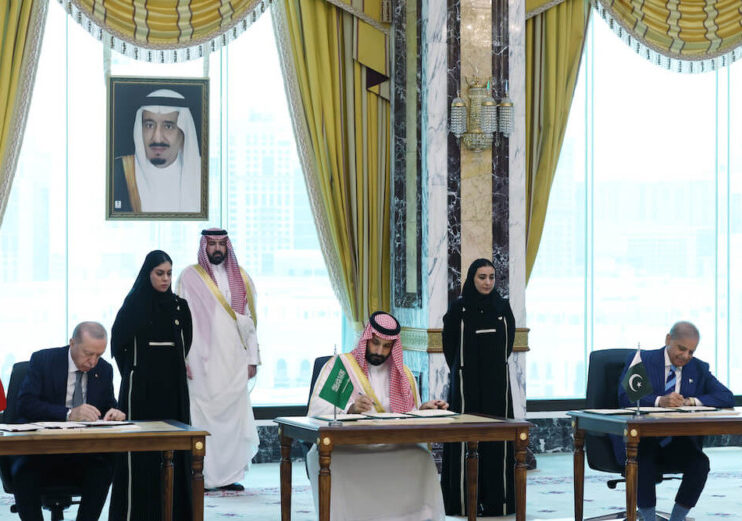
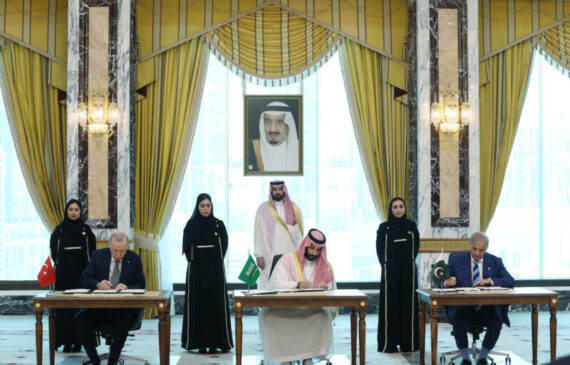
The defense pact signed in Mecca between Pakistan, Saudi Arabia and Türkiye may be one of those moments.
Its most consequential provision is remarkably simple: an armed attack against one of the three countries will be considered an attack against all three.
For Pakistan, this represents something bigger than another defense agreement.
For decades, Pakistan’s military power, including its nuclear deterrent, was viewed overwhelmingly through the prism of South Asia, particularly its rivalry with India. Pakistan was already a formidable military power, but the strategic reach of that power was largely geographically contained.
That is beginning to change.
Pakistan is now part of a collective-defense architecture stretching from South Asia through the Gulf to Türkiye.
And consider what these three countries bring together.
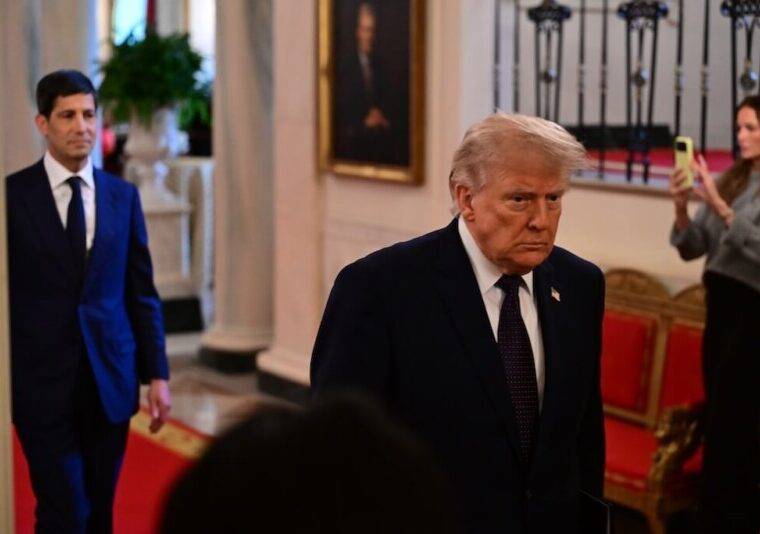
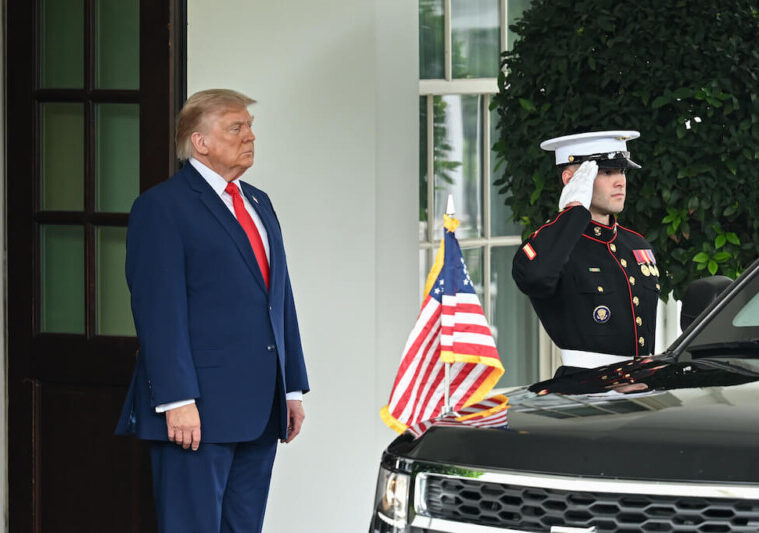
Türkiye possesses NATO’s second-largest army and has transformed itself into a major defense producer, from drones and missiles to warships and advanced aerospace technology. US President Donald Trump himself recently described the Turkish military as “tremendous” and “powerful.”
Saudi Arabia brings enormous economic and energy influence and the political weight of one of the Arab and Islamic world’s most consequential states.
Pakistan brings one of the world’s largest militaries, considerable operational experience and, crucially, is the world’s only Muslim-majority nuclear-armed state.
The nuclear question is therefore unavoidable.
Nothing publicly released about the agreement says Pakistan has extended a nuclear umbrella over Saudi Arabia or Türkiye. It would be wrong to claim otherwise.
But deterrence is also about perception. Any state contemplating a major confrontation with one member must now factor in the possibility of Pakistani involvement. The presence of a nuclear-armed state within that collective-defense framework inevitably becomes part of the strategic calculation.
Also, it’s worth mentioning that for Türkiye and Pakistan, this is the culmination of something much older.
The relationship between Ankara and Islamabad has long gone beyond diplomacy. It is rooted in unusually strong political and public ties and has evolved into substantial military cooperation, from training and joint exercises to defense-industrial collaboration and Turkish-built MILGEM warships for Pakistan.
The Mecca pact takes that relationship a significant step further: from close defense partners to countries formally bound by collective defense.
And its implications stretch beyond the three signatories.
India says it is closely following the agreement. Its “great friend” Israel will surely be watching closely too.
Just a day before the agreement was signed, Narendra Modi received a call from Benjamin Netanyahu. According to India’s Foreign Ministry, the two discussed developments in West Asia and reviewed progress in the India-Israel Special Strategic Partnership.
There is no evidence connecting that call to the Mecca pact, and India has explicitly rejected subsequent reports that it sought a defence agreement with Israel to counter it.
But the wider picture is difficult to ignore. From New Delhi to Tel Aviv, capitals will now be assessing what this new arrangement means for a strategic landscape already undergoing profound change.
Recommended
Pakistan occupies an especially interesting position within it.
China remains Pakistan’s “all-weather” strategic partner. Yet Islamabad continues to engage Washington, while simultaneously playing an active mediating role between the United States and Iran.
Perhaps US Vice President JD Vance summed up Pakistan’s standing in Washington most simply when asked about Islamabad’s role in the latest diplomatic efforts: “Very good, we love Pakistan.”
That ability to maintain relationships across geopolitical divides is increasingly rare.
Pakistan can speak to Beijing and Washington, Riyadh and Tehran, and the wider Gulf — without being completely confined to any single geopolitical camp. And now it has added a collective-defense commitment with Saudi Arabia and Türkiye to that equation.
That puts Pakistan in a remarkably unusual strategic position.
The pact also reflects a wider transformation in the Middle East. For decades, regional security depended heavily on external powers. Years of war, uncertainty and shifting American priorities have increasingly encouraged regional states to look towards one another.
Is this agreement like NATO? Well, we still do not know how integrated military planning will become or how its obligations would work during an actual war.
But deterrence begins long before a shot is fired. It begins with the calculations an adversary makes before deciding whether to fire one.
Turkish military and technological power, Saudi economic weight and Pakistani conventional and nuclear strength are now connected through a formal mutual-defense commitment.
(A version of this article was first published in Turkish by Kriter)

Jaffar Hasnain is an award-winning international journalist and news anchor at TRT World, where he hosts the channel’s flagship programme, The News Hour. A recipient of a State Jubilee Medal, he has covered some of the world’s most significant geopolitical events, armed conflicts, diplomatic developments and humanitarian crises.
You can see how this popup was set up in our step-by-step guide: https://wppopupmaker.com/guides/auto-opening-announcement-popups/

Stay informed by subscribing to
our weekly newsletter.
You can see how this popup was set up in our step-by-step guide: https://wppopupmaker.com/guides/auto-opening-announcement-popups/
You can see how this popup was set up in our step-by-step guide: https://wppopupmaker.com/guides/auto-opening-announcement-popups/
You can see how this popup was set up in our step-by-step guide: https://wppopupmaker.com/guides/auto-opening-announcement-popups/
You can see how this popup was set up in our step-by-step guide: https://wppopupmaker.com/guides/auto-opening-announcement-popups/