Türkiye, Saudi Arabia, and Pakistan to Sign Joint Defense Pact
The new arrangement that includes Türkiye appears to build upon the Strategic Mutual Defense Agreement signed between Saudi Arabia and Pakistan in September 2025.
August 7, 2026
S
audi Arabia, Türkiye and Pakistan are set to sign a trilateral defense agreement on Friday, marking a significant expansion of security cooperation among three of the Muslim world’s most influential military powers as conflict with Iran reshapes the strategic landscape of the Middle East.
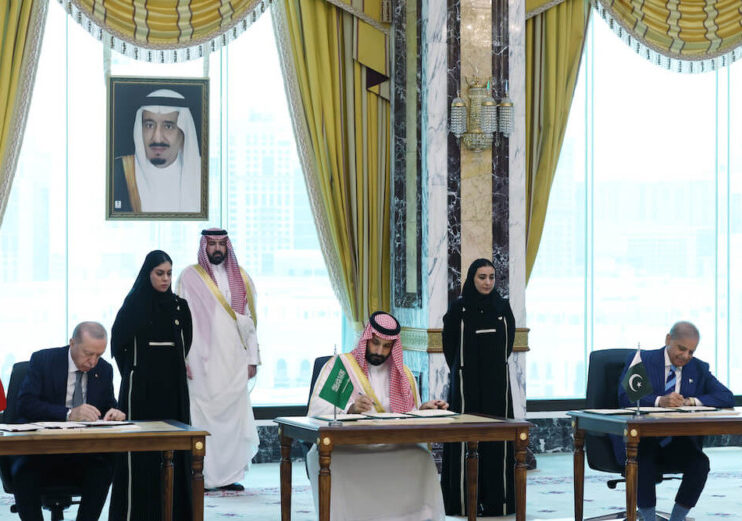
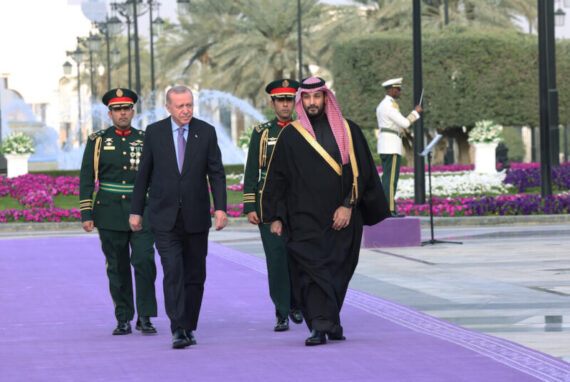
The agreement will be signed in the Saudi Red Sea city of Jeddah during a summit attended by Saudi Crown Prince Mohammed bin Salman, Turkish President Recep Tayyip Erdogan and Pakistani Prime Minister Shehbaz Sharif. Pakistan’s army chief, Field Marshal Asim Munir, is also expected to participate in the high-level meeting, underscoring the military significance of the pact.
Regional officials familiar with the negotiations said the agreement follows nearly a year of discussions aimed at strengthening defense coordination among the three countries amid mounting security challenges across the Gulf and surrounding waterways.
Although officials have confirmed that an agreement will be signed, none of the governments has publicly disclosed the precise scope of the pact or the commitments each country will undertake.
The trilateral accord comes at a time of heightened instability following the U.S.-Israeli military campaign against Iran earlier this year and Tehran’s subsequent retaliation against military installations, energy infrastructure and strategic targets across the Gulf. The conflict has exposed vulnerabilities in regional security arrangements while threatening one of the world’s most critical energy corridors.
The Strait of Hormuz, through which roughly one-fifth of global oil supplies normally pass, has experienced repeated disruptions since hostilities escalated. Commercial shipping has slowed considerably as insurers raised premiums and shipping companies rerouted vessels due to fears of further attacks.
Against this backdrop, Saudi Arabia, Türkiye and Pakistan have increasingly sought closer strategic coordination, reflecting concerns that existing regional security mechanisms may not adequately address evolving threats.
A Turkish official confirmed that the defense agreement would be signed but declined to provide further details.
The agreement would bring together three countries with considerable military and geopolitical influence.
Türkiye possesses NATO’s second-largest military and has significantly expanded its domestic defense industry over the past decade, becoming a leading exporter of drones, armored vehicles and missile systems.
Saudi Arabia remains one of the world’s largest defense spenders and has accelerated efforts to modernize its armed forces while investing heavily in domestic military manufacturing as part of its Vision 2030 economic transformation program.
Pakistan, meanwhile, is the only Muslim-majority nation possessing nuclear weapons and maintains one of Asia’s largest standing armies. Islamabad has long maintained close defense ties with Riyadh, including military training, intelligence cooperation and joint exercises.
Security analysts say combining the capabilities of the three countries could create one of the region’s most significant military partnerships, although its effectiveness will ultimately depend on the operational mechanisms established under the agreement.
The new arrangement appears to build upon the Strategic Mutual Defense Agreement signed between Saudi Arabia and Pakistan in September 2025.
According to Saudi officials who previously described the agreement, the bilateral pact treats an attack against either country as an attack against both and provides for cooperation using “all military means.”
Whether Türkiye will assume identical obligations under the expanded framework remains unclear.
Reuters reported earlier this year that negotiations were underway to broaden Saudi-Pakistani security cooperation to include Türkiye, reflecting Ankara’s growing role in regional diplomacy and defense affairs.
Turkish Foreign Minister Hakan Fidan said in January that Ankara supported establishing broader regional security platforms capable of promoting stability through multilateral cooperation rather than relying exclusively on outside powers.
Friday’s signing appears to represent the first major institutional step toward realizing that vision.
Regional media reports suggest maritime security will feature prominently in discussions during the Jeddah summit.
The three countries have already backed Saudi Arabia’s recently announced multinational maritime initiative aimed at protecting commercial shipping through the Red Sea, the Gulf of Aden and the Bab al-Mandeb Strait.
The initiative gained urgency after repeated attacks on commercial vessels and energy infrastructure during recent regional conflicts disrupted global trade routes.
The Houthis in Yemen have also intensified attacks against Saudi-linked shipping in the Red Sea, further complicating regional security calculations.
Meanwhile, tensions in the Strait of Hormuz have highlighted the vulnerability of energy exports from Gulf producers, particularly Saudi Arabia, whose economy remains heavily dependent on oil exports.
Analysts say closer military coordination could improve intelligence sharing, naval patrols and joint responses to emerging threats affecting maritime commerce.
Recommended
Erdogan’s one-day working visit marks his second trip to Saudi Arabia this year and his first since the regional conflict involving Iran intensified.
Turkish presidential communications director Burhanettin Duran said the visit would focus on bilateral relations and regional developments, without elaborating on the agenda.
The Turkish and Saudi leadership have steadily improved relations after years of diplomatic tensions, expanding cooperation in trade, investment, defense production and regional diplomacy.
Following Erdogan’s visit to Riyadh in February, both governments pledged to deepen defense cooperation and work together through multilateral platforms to promote regional stability.
The two countries also coordinated positions on conflicts in Gaza, Yemen and Somalia, reflecting broader diplomatic convergence across several regional issues.
Analysts view the agreement as reflecting a broader shift toward greater regional security cooperation among influential Sunni Muslim powers as they seek to navigate an increasingly volatile Middle East without relying exclusively on external military guarantees.
The signing also signals that Saudi Arabia, Türkiye and Pakistan see closer strategic coordination as an increasingly important component of their response to the evolving regional security environment shaped by conflict, maritime insecurity and growing geopolitical competition.
(Source: Aljazeera English and Reuters)

Politics Today is dedicated to publishing insightful analyses in order to understand the changing nature of contemporary politics. It aims to contribute to the sound and constructive discussion of international affairs.
You can see how this popup was set up in our step-by-step guide: https://wppopupmaker.com/guides/auto-opening-announcement-popups/

Stay informed by subscribing to
our weekly newsletter.
You can see how this popup was set up in our step-by-step guide: https://wppopupmaker.com/guides/auto-opening-announcement-popups/
You can see how this popup was set up in our step-by-step guide: https://wppopupmaker.com/guides/auto-opening-announcement-popups/
You can see how this popup was set up in our step-by-step guide: https://wppopupmaker.com/guides/auto-opening-announcement-popups/
You can see how this popup was set up in our step-by-step guide: https://wppopupmaker.com/guides/auto-opening-announcement-popups/