A
n observation that the world is undergoing a profound transformation across the political, economic, technological, and security spectrum has become a cliché. Yet the scale and nature of the transformation underway today extend well beyond a conventional geopolitical realignment where merely existing power balances are redistributed. What is changing simultaneously is far more fundamental: the rules governing the international system, the centers of gravity, the meaning of security, patterns of economic interdependence, and even the nature of war and conflict itself.
States continue to compete through conventional military capabilities. However, technology, energy, trade, finance, intelligence, information, and strategic communication have increasingly become integral instruments of national power. At the same time, the contours of the emerging order will not be determined by great powers alone. Regional actors will also play a determinant role to shape this order through their political will, economic capacity, asymmetric capabilities, military strength, diplomatic networks, and ability to build partnerships.
For countries with a potential to be a regional power, therefore, the fundamental question is no longer simply how to withstand the consequences of global transformation. It is how to acquire sufficient capacity and strategic agency to influence its direction and help shape its outcomes. This is not merely a matter of strategic preference. It is an imperative.
Creating strategic space
Türkiye’s strategic orientation in recent years should be understood precisely against this backdrop. Rather than positioning itself as a state that merely adapts to changes determined elsewhere, Türkiye has increasingly sought to develop the capacity to influence the environment in which those changes unfold.
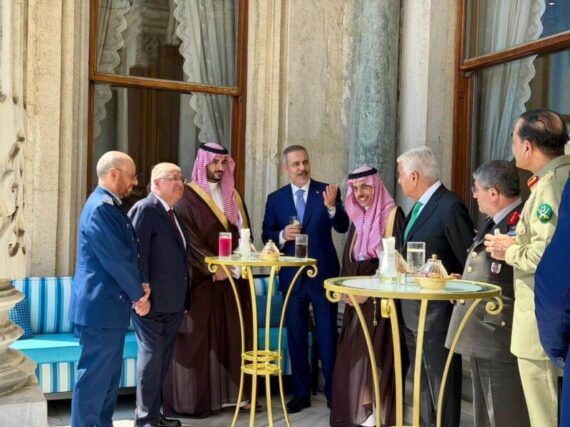
This orientation is visible across a broad spectrum of national policy—from foreign and security policy to defense-industrial development, energy security, diplomatic activism, and domestic political stability. Two developments are particularly illustrative of this strategic direction: the National Solidarity and Social Integration process pursued under the objective of a “Terror Free Türkiye,” and the Türkiye-Saudi Arabia-Pakistan Joint Defense Agreement, referred to as the Mecca Agreement.
At home, Türkiye is seeking to eliminate the structural security challenges that have constrained its political, economic, and social potential. Abroad, it is simultaneously developing bilateral and multilateral partnerships designed to strengthen its position in a rapidly changing regional environment and to contribute to the formation of a more capable and resilient regional security architecture.
Developments across Türkiye’s immediate neighborhood have demonstrated that terrorism, irregular migration, energy security, border security, economic stability, and regional order can no longer be treated as separate policy issues. They constitute an interconnected security environment. Türkiye has therefore sought to create greater strategic space by employing the full spectrum of its national capabilities—from diplomacy and intelligence to military power and defense-industrial capacity. Its regional approach has gradually evolved from a conception of security centered primarily on protecting its borders toward one focused increasingly on shaping the security environment beyond them.
The critical point here is that strategic power is not driven from military capability alone. What matters is the ability to translate capabilities into political outcomes through the combination of power, political will, and diplomatic capacity. In Türkiye’s recent strategic approach, the interaction among these three elements has become increasingly visible.
A Türkiye free of terrorism
The objective of a “Terror Free Türkiye” can be understood as a natural extension of this broader strategic approach. The National Solidarity and Social Integration process should therefore not be viewed solely as a security policy designed to dismantle the PKK terrorist organization or eliminate an armed threat. Its strategic ambition is considerably broader. It seeks to strengthen social cohesion, reinforce the bonds of citizenship, and unleash Türkiye’s political, economic, and social potential from the long-term constraints imposed by terrorism and security-related instability.
The significance of the “Terror Free Türkiye” vision lies precisely in its ability to bring security and social integration within a single strategic framework. The Law on National Solidarity and the Strengthening of Social Cohesion, adopted by the General Assembly of the Grand National Assembly of Türkiye, should likewise be understood within this broader political and strategic context. It is not simply a legal instrument; it forms part of a wider effort to strengthen the foundations of national resilience.
In the contemporary understanding of national security, state power can no longer be measured solely by weapons systems, economic output, military personnel, or territorial capacity. Social resilience, political stability, institutional strength, and the existence of a shared sense of national purpose are equally important components of national power.
This is particularly significant in an era characterized by hybrid threats, disinformation, social polarization, proxy conflicts, and attempts to exploit societal divisions. Under such conditions, social cohesion is not merely a domestic policy objective. It is itself a component of national security. This creates a direct strategic link between domestic security and foreign policy.
The traditional distinction between internal and external security is increasingly blurred. Domestic stability and foreign policy are no longer separate spheres governed by entirely different dynamics. They form an interconnected strategic matrix in which developments in one domain directly affect the capacity available in the other.
For Türkiye, eliminating the terrorist threat and strengthening social cohesion at home, while simultaneously contributing to the shaping of regional security architectures abroad, are therefore interconnected components of a single strategic vision.
The resources, political attention, and strategic energy consumed by terrorism can instead be redirected toward economic development, technological advancement, social resilience, and foreign policy. In this sense, a “Türkiye Free of Terrorism” is not simply a domestic security objective; it is a foundation for greater strategic autonomy.
A state can exercise greater maneuverability in foreign policy only when it possesses a sustainable foundation of security, stability, and social cohesion at home.
From security consumer to security producer
This brings us to the second dimension of Türkiye’s emerging strategic posture: the transition from unilaterally producing security to building shared security capabilities.
The defense and security cooperation Türkiye has developed with Saudi Arabia and Pakistan, alongside the domestic National Solidarity and Social Integration process, should be viewed within this broader framework. The three countries possess capabilities that are, in many respects, complementary. Türkiye contributes a sophisticated defense industry, extensive military experience, operational capabilities, technological know-how, and decades of NATO experience. Pakistan brings significant military capabilities, strategic geographic positioning, and established expertise in defense production and security affairs. Saudi Arabia contributes substantial economic and financial capacity, energy resources, and considerable strategic influence in the Gulf and wider Arab world. Taken together, these capabilities can form the foundations of a broader and more resilient regional security ecosystem.
The emerging model also has the potential to transcend the traditional concept of an alliance. The security challenges of the twenty-first century are increasingly multidimensional and interconnected. Terrorism, proxy warfare, missile and UAV threats, maritime security, energy security, cyberattacks, the protection of critical infrastructure, economic vulnerabilities, and emerging technological threats cannot be effectively addressed through military capabilities alone—or by any single state acting in isolation.
The regional security architecture of the future will therefore depend increasingly on multi-layered and complementary partnerships encompassing defense, intelligence, technology, energy, cybersecurity, critical infrastructure, and economic resilience. Türkiye’s strategic opportunity in this environment is to position itself not merely as a country that consumes security, but as a country capable of producing and exporting security capabilities.
Türkiye’s growing defense-industrial capacity is central to this transformation. The defense industry is no longer simply a sector designed to meet the military requirements of the state. It has become an increasingly important instrument of foreign policy, technological development, diplomatic influence, economic power, and strategic autonomy.
A country’s ability to meet a substantial proportion of its defense requirements domestically reduces its vulnerability to external constraints during periods of crisis. At the same time, defense-industrial capacity changes the nature of its relationships with other countries. A state that can provide advanced defense technologies, establish joint production arrangements, transfer know-how, and develop long-term industrial partnerships possesses instruments of influence that extend well beyond conventional diplomacy.
Türkiye’s defense-industrial rise should therefore not be interpreted merely as a technological or economic achievement. From the perspective of regional security, it represents a strategic lever through which Türkiye can share capabilities with partners, develop joint production ecosystems, deepen institutional ties, and transform short-term security cooperation into durable strategic partnerships. This perspective also highlights the broader geopolitical significance of the Türkiye-Saudi Arabia-Pakistan axis.
Türkiye occupies a pivotal position connecting Europe, the Balkans, the Black Sea, the Caucasus, the Middle East, and the Eastern Mediterranean. Pakistan is strategically positioned at the intersection of South Asia and the Indian Ocean. Saudi Arabia lies at the center of the Gulf and occupies a pivotal position within the Arab world.
The convergence of these three countries in the security domain therefore has implications extending well beyond their bilateral or trilateral relations. It has the potential to establish strategic connectivity between different geographic theaters.
The fact that the Mecca Joint Defense Agreement is open to the participation of other regional countries further strengthens this potential. Such an approach can enhance collective resilience while creating a framework through which regional actors themselves assume greater responsibility for their security environment. For this reason, the emerging cooperation should not be interpreted simply as a conventional defense arrangement among three states.
Viewed from a broader strategic perspective, it can potentially contribute to the emergence of a new belt of security and strategic cooperation linking Eurasia and the Middle East, as well as South Asia and the Gulf. When this external dimension is considered together with the objective of a “Terror Free Türkiye,” a striking strategic symmetry emerges between Türkiye’s domestic and foreign policy.

Strengthening social cohesion at home, building regional resilience abroad
Domestically, Türkiye is seeking to strengthen social cohesion by eliminating the security risks associated with terrorism. Externally, it is developing partnerships designed to reduce shared security vulnerabilities, strengthen the capacities of regional states, and contribute to regional stability. In other words, Türkiye is pursuing a strategic approach based on stronger national solidarity at home and stronger regional solidarity abroad. These two processes are not independent. They are mutually reinforcing.
Greater domestic stability expands Türkiye’s strategic room for maneuver abroad. Conversely, a more secure and stable regional environment contributes to Türkiye’s economic development, political stability, and long-term national resilience. This approach also points toward a broader conception of regional security: regional ownership.
Regional ownership means that the countries of a region should not merely respond individually to crises originating within their shared environment. They should also assume collective responsibility for addressing common security challenges and developing the capabilities required to manage them. This principle is particularly relevant to Türkiye’s expanding network of relations stretching from Syria and Iraq to the Gulf and South Asia.
The future regional security architecture should not be expected to emerge solely through conventional military alliances. Energy, defense industry, intelligence, counterterrorism, border management, cybersecurity, critical infrastructure protection, artificial intelligence, economic resilience, and strategic communication will increasingly constitute interconnected components of regional security.
Türkiye’s particular advantage lies in its ability to develop capabilities across a significant portion of these domains simultaneously.
Recommended
From a terror free Türkiye to a security-producing Türkiye
From Türkiye’s perspective, therefore, the strategic objective of the coming era is not simply to become a state that can protect itself from security threats. It is to become a central actor capable of generating security in its surrounding region.
The ultimate objective is not merely a country in which terrorism has been defeated. It is a Türkiye that is internally cohesive, economically resilient, technologically capable, militarily strong, diplomatically influential, and able to generate security beyond its borders.
A “Terror Free Türkiye” should consequently be understood not as the endpoint of a process, but as the foundation of a broader strategic transformation. When stronger national solidarity at home is combined with deeper strategic partnerships abroad, a new geopolitical role emerges for Türkiye. That role is not simply the role of a state capable of defending its own security. It is the role of a Türkiye that can contribute to the security of neighboring states, assume responsibility in the resolution of regional crises, develop shared capabilities, and participate as a founding actor in the construction of a more resilient regional security architecture.
(Originally published in Turkish by Kriter)