The German Government’s New-Term Policy: Between Loss of Power and the Search for Stability
Ongoing criticism of Chancellor Merz’s communication strategy has intensified, particularly following his departure for summer vacation at the end of July.
September 24, 2026
G
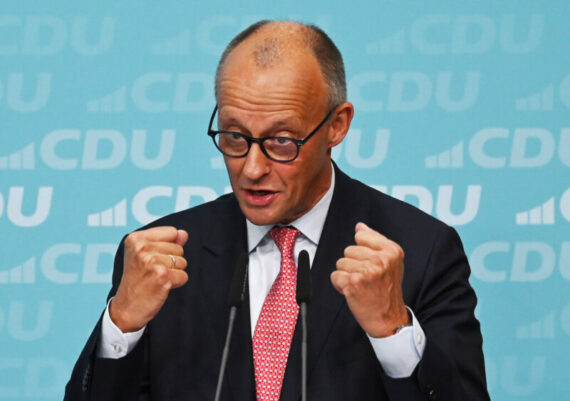
erman Chancellor Friedrich Merz (CDU) faces difficult days ahead this fall, both within the coalition government he leads and within his own party, the CDU. The federal government, which has occasionally made headlines due to debates and disagreements ahead of the Bundestag’s summer recess in July, is highly likely to face new challenges starting in September.
Chancellor Merz, who promised to implement significant reforms upon taking office in May 2025, has not fully delivered on these promises during his more than one year in office and has faced criticism as a result. Merz has also been criticized for making numerous concessions, despite his campaign promises, in order to form a coalition with the SPD at the federal level. Recent polls showing a significant decline in both his party’s and his own personal popularity are placing the Chancellor and the CDU/CSU-SPD coalition in a more precarious position in the coming months.
Over the past summer, Merz has remained in the spotlight due to new internal party issues, and he continues to be a target of criticism, particularly for his ongoing shortcomings in communication. For example, in July, the Chancellor raised the issue of replacing certain CDU ministers in the federal government; however, the failure to find a replacement for Federal Minister of Transportation Patrick Schnieder (CDU), whose dismissal had been widely reported, caused considerable astonishment among the public. During this process, criticism of Merz from the minister in question, and even from his inner circle in his electoral district, drew attention.
Furthermore, Merz’s selection of a candidate for Federal Minister of Health, coupled with his own statements that the nominee would not be successful in such a role because he lacked experience in the field just a year prior, further undermined the credibility of both Chancellor Merz and the CDU/CSU circles. A similar impression of inconsistency and a credibility issue also arose during the process leading to the resignation of Jens Spahn, the CDU/CSU’s Federal Parliamentary Group Leader, a development that essentially triggered the ministerial reshuffles, after he stepped down due to a specific incident that contradicted his party’s principles and his own position. Essentially, Spahn’s resignation could be viewed as partially advantageous for Chancellor Merz and the party’s internal balance, and looking ahead, because Spahn could have posed a potential rival within the party. However, Merz’s failure to fully manage this process has not translated into a consolidation of power for him at this stage.
Ongoing criticism of Chancellor Merz’s communication strategy has intensified, particularly following his departure for summer vacation at the end of July. Although the political agenda in Germany is generally calmer during July and August, it can be said that this summer has seen some quite critical developments. Nevertheless, Merz’s continued silence has drawn serious criticism from the public and the media. While media outlets published articles questioning the Chancellor’s whereabouts, including reports of extreme heat in Germany causing difficulties in daily life and low river levels posing economic risks to major transportation routes, none of these issues prompted the Chancellor to issue a statement while on vacation. Furthermore, despite ongoing debates over the government’s proposed reforms during the summer months, forest fires reaching serious proportions in Germany, and, most recently, the discovery of a drone containing an explosive device at Leipzig Airport, Chancellor Merz did not break his silence or cut short his vacation, which lasted approximately three weeks.
During this period, criticism of the Chancellor came not only from the media but also from opposition parties. Finally, after Merz ended his vacation on August 22, he responded with particularly harsh rhetoric to protests directed at him while visiting the region affected by the wildfires. This stance led to further criticism of his communication strategy. Here, too, the Chancellor was observed to have resorted to an impulsive, reactive tone. Consequently, the fact that the agenda, which had been strained by discussions of a cabinet reshuffle before the vacation, began with similar tension after the vacation has reinforced the impression that a harmonious and smooth political process is highly unlikely in the fall months.
In addition to the fragile situation within the CDU, where Merz continues to serve as chairman, it can be said that there have also been disagreements with the coalition partner, the Social Democratic Party of Germany (SPD). In particular, it has become clear to the public that various disagreements persist even after difficult compromises were reached on certain major reform initiatives, such as pension reform. Consequently, it has become apparent that rather than adopting a collective approach as a government, the coalition partners have once again prioritized their own parties and voter bases.
This situation has reinforced the perception that the coalition will not be able to fully carry out its remaining term of approximately two and a half years in line with shared future goals. A draft agreement on pension reform was prepared before the summer recess, but both criticism of this draft from some SPD politicians and opposition from CDU state premiers in the three eastern German states have drawn significant attention. Whether such goals can be enacted into law and implemented in the Bundestag this coming fall is viewed as a serious test. The ability to implement these legislative goals is also linked to several other factors.
This fall, several state parliamentary elections of great importance will take place in Germany, elections that have the potential to influence political developments at the federal level. First, on September 6, elections will be held in Saxony-Anhalt, followed by elections in Berlin and Mecklenburg-Western Pomerania on September 20. In particular, a potential election defeat is expected for the incumbent CDU state premier and the coalition government in Saxony-Anhalt. Meanwhile, the Alternative for Germany (AfD), classified by Saxony-Anhalt’s Office for the Protection of the Constitution as a “confirmed far-right organization”, is expected to finish first in the Saxony-Anhalt election by a significant margin.
Despite all these factors, it is reported that the AfD has reached a vote share of approximately 42 percent in recent polls in Saxony-Anhalt and has also emerged as the leading party at the federal level. Meanwhile, the Chancellor’s party, the CDU/CSU, is said to have slipped to 23 percent and second place at the federal level. In contrast, the AfD has risen to approximately 28 percent, moving into first place in federal-level polls as well. While this situation may come as a surprise in German politics, it can be said that this trend at both the state and federal levels has become entrenched.
Although the AfD is expected to finish first in the state parliament election on September 6, it is not anticipated to form a government due to the other political parties’ principle of refusing to form a coalition or cooperate with it. However, criticism that the “firewall” (“Brandmauer”) principle, which rejects any form of cooperation with the AfD, has actually strengthened the party has intensified in recent months. Calls from some local CDU politicians to soften the party’s rigid stance have even made their way into the public discourse. On the other hand, the possibility that parties such as the Greens and the SPD may fall below the 5 percent electoral threshold in the eastern states could pave the way for the AfD to secure an absolute majority in Saxony-Anhalt, enabling it to form a state government on its own. Although this possibility currently seems remote, it is prompting other political actors to explore new political avenues, including at the federal level.
While some politicians are adopting a more tolerant rhetoric toward cooperation with the AfD, others are more vocally and in a coordinated manner calling for action to ban the AfD. For example, even Saxony’s CDU State Premier Michael Kretschmer, breaking with the CDU leadership at the federal level, has adopted a stance suggesting that “we need to talk to anyone who wants to talk,” including the AfD, making these efforts more evident. On the other hand, political science circles point out that, rather than this type of cooperation, the option of a minority government, particularly in the eastern states of Germany, should be given more serious consideration.
However, it is also known that Chancellor Merz and the CDU leadership generally do not look favorably upon the option of a minority government, either at the federal level or in the states. Furthermore, the CDU’s continued adherence to its principle of not cooperating with the Left Party significantly complicates the prospects for a CDU-led government in situations where the AfD fails to secure an absolute majority.
In addition to these critical developments, it can be said that the German economy has failed to achieve the expected positive momentum and, with the exception of a partial, temporary recovery in the second quarter of the year, has not fully met expectations. This economic stagnation continues to put pressure on the federal government and is also considered a significant factor, particularly in the state legislative election processes. For example, the inflation rate in Germany rose notably to 2.8 percent in July and 2.9 percent in August, and this figure is expected to rise further. This situation is linked to rising energy costs and, in particular, the ongoing increase in gasoline prices.
Here, too, the fact that the U.S.-Iran conflict has not yet reached a resolution that would ease global markets, along with the limited predictability in Germany, can be cited as the underlying causes. In addition to the inflation figures, the fact that the number of unemployed exceeded three million again in August (6.5 percent) following July is fueling continued criticism of the federal government. Furthermore, it is claimed that the downturn in the automotive sector and the negative impact of this year’s extreme heat and drought on the German economy have reached 36 billion euros. Consequently, the additional challenges posed by these cost increases are expected to become even more pronounced in the coming months.
Finally, Germany’s budget deficit-to-GDP ratio rose to 3.1 percent in the first half of 2026, exceeding the European Union’s 3 percent Maastricht criterion. Although infrastructure investments and increased defense spending, in line with the federal government’s objectives, have had positive effects on economic growth, the 11.6 percent increase in interest payments to 27.3 billion euros, particularly in the first half of the year, is viewed as a cause for concern and has led to criticism that the budget balance is under pressure.
Recommended
In conclusion, the federal government led by Chancellor Merz faces serious challenges as the fall months approach. While efforts to project a harmonious image within the coalition and the party are evident in the messages conveyed, certain developments in recent months indicate that the Chancellor has at times been under strain. In particular, communication issues during the cabinet reshuffle, the Chancellor’s silence in the face of events that occurred during the summer break, ongoing criticism of the reforms planned for the fall, and the state legislative elections in September are all significant factors for the future of the federal government.
Chancellor Merz’s decision to abandon certain campaign promises in order to form a coalition government is one of the key factors behind the decline in his credibility and popularity. Indeed, the CDU/CSU has also slipped in federal polls, now ranking second behind the AfD. Criticism is also mounting over the failure to achieve desired economic targets. Although the impact of external factors is also taken into account by the public, the view that the federal government bears ultimate responsibility for this situation is more pronounced.
At this stage, the decline in the poll numbers of the governing parties and the fact that they may not even be able to secure a governing majority at this point are increasing uncertainties regarding the future. Growing dissatisfaction within the coalition partner, the SPD, is also noteworthy. The party’s decline to as low as 12 percent in recent polls is bringing criticism of the two incumbent co-chairs and calls for a leadership change to the forefront more frequently. Ultimately, the fall months following the summer break will be extremely critical for German politics, as the state parliament elections in Saxony-Anhalt on September 6 could also impact the coalition’s future.
(Originally published in Turkish by SETA Foundation on September 2, 2026)

M. Erkut Ayvaz graduated from the University of Erlangen-Nuremberg (Germany) with a double-major in Political Science and Public Law in 2011. He spent the academic year 2012-2013 at Duke University (NC, USA) with a DAAD-scholarship. In 2014 he received his MA after completing his master’s thesis which addressed the civil-military relations in Turkey. Currently, Ayvaz is working on his doctoral dissertation at the Otto-Friedrich-Universität Bamberg (Germany).
You can see how this popup was set up in our step-by-step guide: https://wppopupmaker.com/guides/auto-opening-announcement-popups/

Stay informed by subscribing to
our weekly newsletter.
You can see how this popup was set up in our step-by-step guide: https://wppopupmaker.com/guides/auto-opening-announcement-popups/
You can see how this popup was set up in our step-by-step guide: https://wppopupmaker.com/guides/auto-opening-announcement-popups/
You can see how this popup was set up in our step-by-step guide: https://wppopupmaker.com/guides/auto-opening-announcement-popups/
You can see how this popup was set up in our step-by-step guide: https://wppopupmaker.com/guides/auto-opening-announcement-popups/