Davos: As an Era Comes to a Close
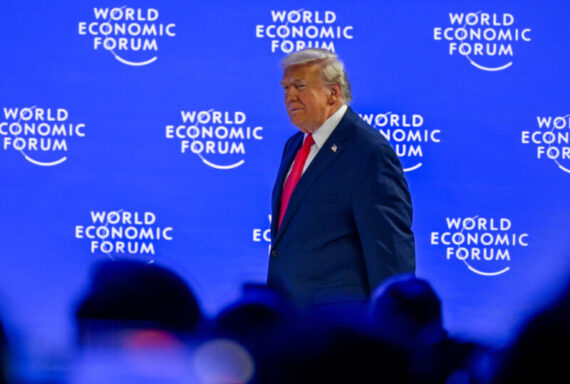
Trump's 'America First' doctrine conflicted directly with Davos's fundamental values, such as free trade, multilateralism, and institutional cooperation.
February 25, 2026
I
n its early years, the World Economic Forum was born from a well-intentioned vision, serious intellectual effort and a quest for technical governance. When Klaus Schwab launched the Forum nearly sixty years ago, his primary aim was to strengthen the institutional capacity of Western industry and establish a healthy dialogue between corporate executives and decision-makers.
However, from the second half of the 1990s onwards, the rapid financialization of capitalism, coupled with the growing influence of new types of sponsors and global capital actors on the Forum, began to fundamentally alter the spirit of Davos. The dominance of financial capitalism and the increasingly theatrical nature of the event have eroded its intellectual weight.
It is now debatable whether the World Economic Forum should continue to be held in Davos. Davos’s reputation has suffered serious erosion over time.
The early 1990s marked a historical turning point for both the international system and Davos’s institutional identity. The unipolar world order that emerged following the collapse of the Soviet Union reinforced the global perception that liberal democracy and the free market were ‘without alternative’. This period was symbolized by Francis Fukuyama’s ‘end of history’ thesis and marked the ideological triumph of neoliberal globalization.
Davos thus became the most visible showcase of the Western-centric global order in this new atmosphere. The principles of the Washington Consensus — privatization, deregulation, free trade and fiscal discipline — were discussed at Davos and virtually transformed into global norms. The invisible coordination mechanism formed between the IMF, the World Bank, and the World Economic Forum created intellectual and political legitimacy for reform packages that imposed the neoliberal market economy on developing countries.
Throughout the 1990s and 2000s, Davos was a platform on which state leaders, central bank governors, financial institution executives, and CEOs of multinational companies effectively shaped global economic policies. Representatives of ‘Third Way’ politics, such as Clinton and Blair, met with global finance and technology figures, such as Soros, Gates and Greenspan, on the same ground. They constantly promoted the idea that market capitalism and neoliberal democracy were compatible and sustainable.
From the early 2000s onwards, the first wave of digitalization played a significant role in the transformation of Davos. The rise of the internet economy saw Silicon Valley–based technology companies join the ranks of the global elite, with Google, Microsoft and Amazon becoming the new stars of the forum. The pioneers of digital capitalism began to represent not only technological innovations at Davos, but also new power relations.
However, this ‘golden age’ turned into a period in which the fragilities of the neoliberal system deepened, in stark contrast to the name given to the era. Excessive financial market liberalization, deteriorating income distribution, weakening real production and uncontrolled speculative capital growth made the global economy increasingly fragile. Sadly, Davos participants largely ignored these risks, and consequently the period from 1990 to 2008 represents both the most brilliant and the most problematic phase in Davos’ history.
The global financial crisis of 2008 has gone down in history as the most severe structural test of the neoliberal globalisation model. The collapse that began in the US mortgage market quickly spread to the global banking system, and the bankruptcy of Lehman Brothers revealed just how fragile the financial system had become. This crisis was not just an economic collapse; it also signified the intellectual bankruptcy of the market-centred order that had been staunchly defended at the World Economic Forum’s Davos Summit for years.
Following the crisis, Western governments were forced to implement extraordinary interventions that contradicted the free market rhetoric of previous years. Trillions of dollars of public funds were used to bail out banks that were ‘too big to fail’; losses were socialised while profits remained in the private sector. This situation undermined the justice and legitimacy of market capitalism profoundly.
For Davos, this period marked the beginning of a serious loss of credibility. Many of the forum’s leading figures had supported policies advocating financial liberalisation and downplaying risks, which led to the crisis. Despite this, there was no real process of self-criticism by these same actors at Davos in the post-crisis period; responsibility was attributed to ‘wrong practices’ rather than the system’s structural problems.
The Occupy Wall Street movement and similar protests that emerged in this environment were among the first major indicators of a mass reaction against the global elite order represented by Davos. The slogan ‘the 99% against the 1%’ symbolised the collapse of the neoliberal system’s social legitimacy. Davos was now perceived as both an economic forum and a symbol of global inequality.
By the mid-2010s, the Davos Summit had become a ‘post-crisis platform’, attempting to mitigate the effects of the crisis rather than determining the direction of the global economy. Consequently, the period between 2008 and 2016 can be viewed as a transitional phase leading to the ‘inevitable end’ of Davos. The confidence of the neoliberal golden age gave way to uncertainty, with ideological certainty making way for defensive rhetoric. The erosion of legitimacy deepened during these years.
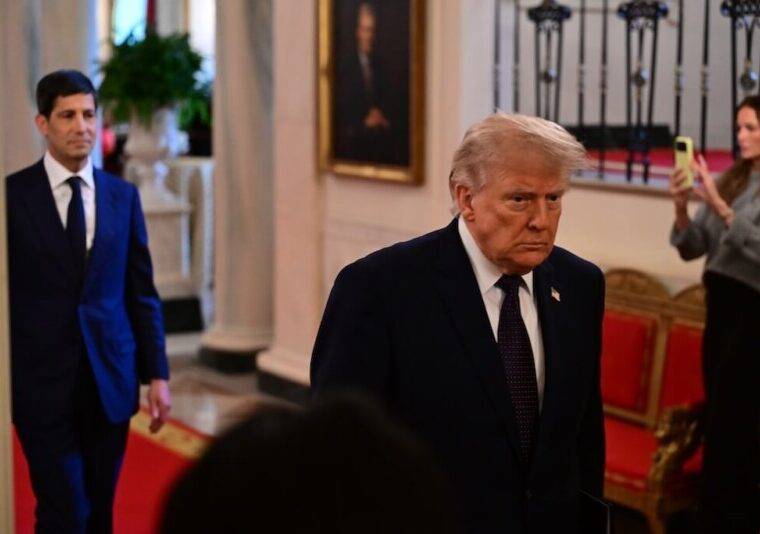
2016 was a turning point for the global liberal order represented by Davos. The United Kingdom’s decision to leave the European Union and Donald Trump’s election as US president revealed the collapse of the political and economic consensus that had been established in the Western world for decades. These developments were not just a matter of domestic policy preferences, but also reflected accumulated social reactions against globalization in politics.
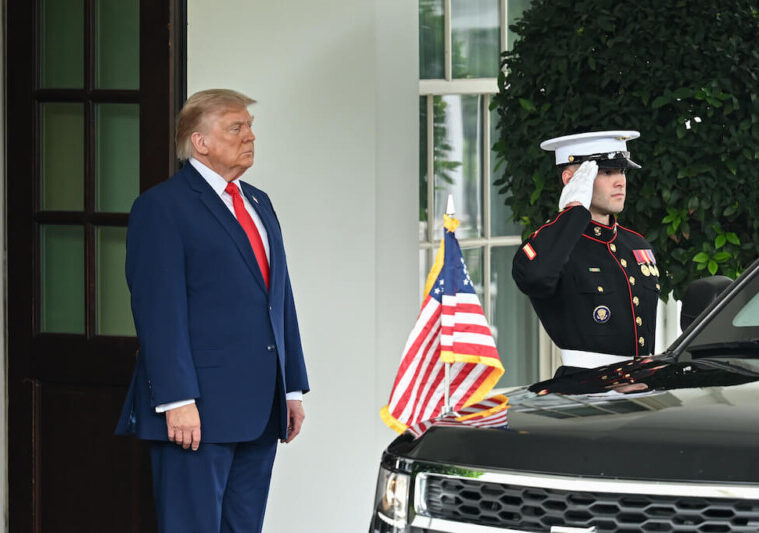
Trump’s ‘America First’ doctrine conflicted directly with Davos’s fundamental values, such as free trade, multilateralism, and institutional cooperation. The US pursued policies that rendered the World Trade Organization ineffective, initiated trade wars with its allies and demonstrated a tendency to withdraw unilaterally from international agreements. In this process, Washington became the biggest challenger to the liberal order it had defended for many years. In his second term, Trump has taken his policies and strategies even further.
Brexit showed that the idea of the irreversibility of European integration was a misconception. The British referendum clearly exposed structural problems in the economic and political architecture of the European Union, and the discourse of national sovereignty regained strength.
During this period, NATO’s role has also been subject to serious scrutiny. Meanwhile, China’s economic and technological growth has further complicated the global balance of power.
Against this backdrop of geopolitical fragmentation, the World Economic Forum in Davos has sought to defend globalization and preserve the existing order. However, Davos’s greatest weakness during this period was its tendency to view rising nationalism and sovereignty demands as a ‘temporary deviation’. The socio-economic causes of populist movements were not analyzed in depth; it was assumed that the process could be managed through cosmetic reforms to the system.
By 2020, Davos had regressed from determining the direction of the global system to defending an order that was seemingly disintegrating. Political fragmentation along the Atlantic axis has also greatly eroded the forum’s historical role. Therefore, the period from 2016 to 2022 can be defined as a phase of ‘inability to adapt’ for Davos.
The global pandemic that emerged in 2020 was a historical stress test that exposed the fragility of the global system. The Russia–Ukraine war, which began in 2022, has further exacerbated the geopolitical fragility of the global order. Disruptions to energy, food and raw material supplies have dragged the world economy into a new spiral of crisis. The economic pressures brought about by the virus pandemic and the war, two ‘black swans’, triggered a wave of high inflation on a global scale.
During this period, the identity of Davos’ organization also underwent a significant transformation. It evolved from a platform with significant technical and intellectual clout to a high-profile organization with strong symbolic representation. The change in the profile of participants accelerated this transformation. As heads of state and other globally influential figures became less involved, the Forum increasingly took on a structure dominated by sponsor representatives, consultants, and communications experts.
The loss of prestige and influence experienced by Davos in recent years is not the result of temporary circumstances, but a direct consequence of the ongoing structural changes in the global system. The dynamics that are currently weakening the forum stem not only from organizational problems, but also from the dissolution of the historical order that created it. In other words, Davos’s crisis is not a governance crisis, but an ‘end of an era’ crisis.
For many years, Davos functioned as a platform representing the economic, political and normative leadership of the Western-centric liberal order. However, with the dissolution of this order, the forum’s raison d’être has begun to erode. The weakening of US global leadership capacity, the loss of European internal cohesion, and the breakdown of strategic alignment across the transatlantic divide have shaken the main pillars on which Davos stood. It no longer appears to be a universal centre, but rather an arena for internal debate within an increasingly small Western sphere.
At the same time, the BRICS countries and actors from the Global South have become more influential in the global system. For these actors, Davos has become a stage on which they are heard but not listened to, rather than a centre where decisions are made.
Another fundamental factor in Davos’ loss of power is the resurgence of the nation-state paradigm. The idea of a ‘borderless world’, promoted at the height of globalization, has lost its validity in the face of the global pandemic, wars and supply chain crises.
Recommended
During the global pandemic, the idea of ‘global governance’ and ‘transnational crisis management’ was widely promoted in Davos by influential figures such as Al Gore and Bill Gates, as well as global foundations and technology companies. While this approach appeared rational in theory, it quickly collapsed in practice due to nationalistic reflexes, vaccine nationalism and deepening trust crises.
In response to the global pandemic and the war in Ukraine, states began to refocus on industrial policies, strategic sectors, and economic security, centered on ‘strategic autonomy’. Key elements of the new era include protective trade measures, domestic production incentives, and the pursuit of technological independence. Davos’s globalist paradigm has failed to adapt to this transformation.
The intention of digital platforms to transform politics, coupled with the rise of new right-wing movements, are also important factors in the weakening of the Forum’s influence. Social media has decentralized political communication, and a style of politics involving direct contact with the public has replaced the culture of closed negotiations among elites. This process has also accelerated the strengthening of ‘anti-elitist’ rhetoric. Trump, Bolsonaro, Meloni and Le Pen, for example, have multiplied their political successes by directly targeting the global elite order represented by Davos.
However, the deepest crisis that Davos has experienced is the collapse of trust in the global elite. Global leaders, who constantly express sensitivity towards issues such as climate change, income inequality, migration and poverty, have failed to align their rhetoric with their actions. The credibility of the Forum has been seriously undermined by executives arriving at the summit in private jets to talk about carbon emissions and discuss income justice in luxury hotels.
Davos is now more a symbolic meeting place reminiscent of its past influence than a centre determining the direction of the global system. The loss of power experienced by Davos is not just an organizational failure, but the natural consequence of the end of the historical order it has represented for the past 40 years. With the dissolution of the Western-centric neoliberal order, Davos has largely lost its raison d’être. This process should not be viewed as a decline, but rather as a ‘loss of historical function’ and ‘the closing of an era’.
(Originally published in Turkish by Kriter)

Kerem Alkin is an ambassador, economist and a writer who holds a BA in Management as well as an MA and a PhD in Economics from Istanbul University.
You can see how this popup was set up in our step-by-step guide: https://wppopupmaker.com/guides/auto-opening-announcement-popups/

Stay informed by subscribing to
our weekly newsletter.
You can see how this popup was set up in our step-by-step guide: https://wppopupmaker.com/guides/auto-opening-announcement-popups/
You can see how this popup was set up in our step-by-step guide: https://wppopupmaker.com/guides/auto-opening-announcement-popups/
You can see how this popup was set up in our step-by-step guide: https://wppopupmaker.com/guides/auto-opening-announcement-popups/
You can see how this popup was set up in our step-by-step guide: https://wppopupmaker.com/guides/auto-opening-announcement-popups/