UN: War With Iran Displaces 4.1 Million in Middle East
More than 4.1 million people have been internally displaced in Afghanistan, Iran, Lebanon and Pakistan since the beginning of the escalation with Iran.
March 13, 2026
M
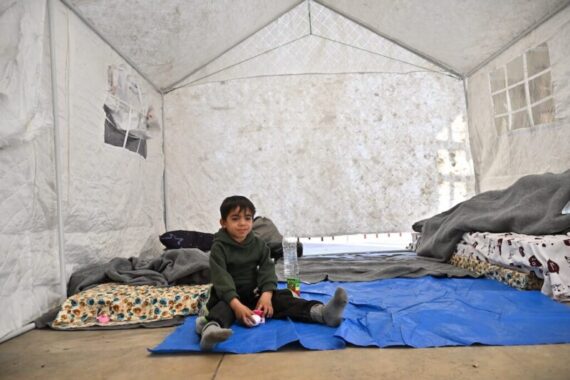
ore than 4.1 million people have been internally displaced across the Middle East since the start of the latest military escalation, the United Nations warned on Thursday, highlighting growing humanitarian needs across several countries.
Speaking at a news briefing, UN spokesperson Stephane Dujarric said the conflict is worsening an already severe humanitarian situation in the region.
“The region is home to some of the largest numbers of people in need of humanitarian assistance globally,” Dujarric said. “More than 4.1 million people have been internally displaced in Afghanistan, Iran, Lebanon and Pakistan since the beginning of the escalation.”
In addition, approximately 117,000 people have fled across international borders seeking refuge in neighboring countries.
“The recent escalation risks deepening civilian suffering and causing further damage to already fragile civilian infrastructure,” he added.
Humanitarian agencies, including the UN Office for the Coordination of Humanitarian Affairs (OCHA), are continuing relief efforts while preparing to expand their response as displacement and humanitarian needs rise.
The situation in Lebanon remains particularly volatile as fighting intensifies between Israel and the Lebanese resistance movement Hezbollah.
According to the Lebanese government, more than 816,000 people have registered as displaced since the escalation began on March 2. The figure includes approximately 285,000 children. Over 125,000 displaced people are currently sheltering in nearly 600 collective centers across the country.
UN officials warned that the real number of displaced people is likely higher.
Fighting escalated sharply overnight, with large-scale military operations reported in several areas including Beirut’s southern suburbs.
The Lebanese Ministry of Public Health says at least 634 people have been killed and more than 1,500 injured since hostilities began.
The UN also raised concerns about the safety of its personnel stationed in the country. Dujarric reported that an explosion occurred roughly 15 meters from a UN position in eastern Lebanon on Wednesday, though no injuries were reported.
He stressed that all parties must respect international humanitarian law and ensure the safety of peacekeepers and civilians.
In Iran, more than 1,300 people have been killed and over 17,000 injured since Feb. 28.
The escalation has also caused extensive damage to civilian infrastructure.
According to the Iranian Red Crescent Society, more than 17,000 residential buildings and over 4,000 commercial properties have been damaged. The Ministry of Education reports that at least 120 schools have been destroyed.
Iranian authorities have been providing emergency shelter in government buildings and metro stations in the capital, Tehran, while emergency teams work to support displaced residents.
The Red Crescent has activated its nationwide volunteer network, including search and rescue teams, medical services and logistics support.
In the Gaza Strip, humanitarian agencies say the situation remains critical amid continued strikes, shelling and gunfire.
According to OCHA, an overnight attack struck a displacement site in western Gaza City, killing at least one person and injuring several others. The strike also caused a fire that damaged dozens of tents sheltering displaced families.
Food security partners warn that supplies remain limited, driving up prices for fresh vegetables, firewood and cooking gas, particularly during the Muslim holy month of Ramadan.
Humanitarian organizations say some community kitchens have been forced to alter their meal programs, while others have paused fresh food distributions due to shortages and high costs.
So far this month, approximately 400,000 people have received food rations, though aid agencies say portions were reduced by half in February after many aid trucks were turned back at the Kerem Shalom Crossing, the only operational entry point for humanitarian supplies into Gaza.
UN officials stress that humanitarian assistance alone cannot meet the growing needs without a steady flow of commercial goods into the territory.
Explosive remnants of war also continue to threaten civilians as humanitarian teams conduct assessments to identify and remove hazardous ordnance across the enclave.
Recommended
The UN has repeatedly called for an immediate reduction in hostilities to prevent further civilian suffering.
Tom Fletcher, the UN’s Under-Secretary-General for Humanitarian Affairs, recently announced a $15 million emergency allocation from the UN’s global emergency fund to support relief efforts.
Despite ongoing aid deliveries—including hundreds of thousands of meals, water supplies and shelter materials—humanitarian officials warn that the scale of needs is growing faster than available resources.
The UN and its partners have urged the international community to increase financial support to sustain life-saving assistance and prevent the humanitarian crisis from worsening.
“Humanitarian access must be safe and sustained,” the UN said, “so assistance can reach people in need.”
(Source: Anadolu Agency)

Politics Today is dedicated to publishing insightful analyses in order to understand the changing nature of contemporary politics. It aims to contribute to the sound and constructive discussion of international affairs.
You can see how this popup was set up in our step-by-step guide: https://wppopupmaker.com/guides/auto-opening-announcement-popups/

Stay informed by subscribing to
our weekly newsletter.
You can see how this popup was set up in our step-by-step guide: https://wppopupmaker.com/guides/auto-opening-announcement-popups/
You can see how this popup was set up in our step-by-step guide: https://wppopupmaker.com/guides/auto-opening-announcement-popups/
You can see how this popup was set up in our step-by-step guide: https://wppopupmaker.com/guides/auto-opening-announcement-popups/
You can see how this popup was set up in our step-by-step guide: https://wppopupmaker.com/guides/auto-opening-announcement-popups/