US Senate Votes to Halt Iran War, Delivering Rare Bipartisan Rebuke to Trump
Only one-quarter of Americans believe the war against Iran has been worth its costs.
June 24, 2026

T
he U.S. Senate has voted to direct President Donald Trump to halt military action against Iran, marking the first time since the passage of the 1973 War Powers Act that both chambers of Congress have approved a resolution seeking to end a president’s involvement in an ongoing conflict.
The Senate approved the measure on Tuesday by a vote of 50-48, following its earlier passage in the House of Representatives. The resolution reflects growing unease in Congress over the war that began on February 28, when U.S. and Israeli forces launched attacks on Iran, and signals a widening split between Trump and some members of his own Republican Party.
Although the practical effect of the resolution remains uncertain, the vote represents one of the most significant congressional challenges to Trump’s foreign policy since he returned to office.
The measure was passed under the framework of the War Powers Resolution of 1973, legislation enacted after the Vietnam War to limit presidential authority to conduct military operations without congressional approval.
No previous war powers resolution had successfully passed both the House and Senate.
Under the legislation, Congress directed the president to remove U.S. armed forces from hostilities involving Iran. However, the White House maintains that the resolution has no legal force because it is not submitted to the president for signature or veto.
The administration also argues that active hostilities effectively ended following a ceasefire reached on April 7.
A White House official dismissed the vote as largely symbolic, saying it had “no significance” and noting that the resolution passed only because two Republican senators were absent.
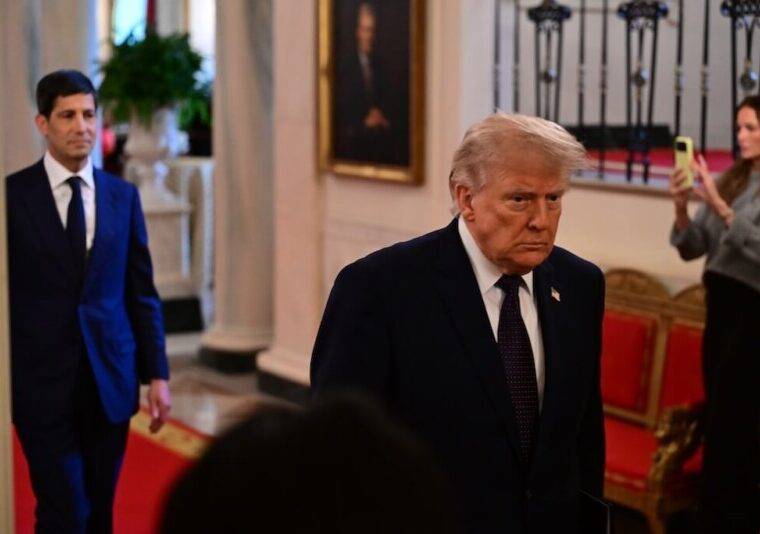
Trump responded sharply to the vote, calling it “poorly timed and meaningless” in a social media post. He accused lawmakers who supported the measure of making negotiations with Tehran more difficult and providing “comfort” to Iran.
The Senate vote largely followed party lines, but four Republicans broke ranks to support the resolution.
The Republican senators voting in favor were Susan Collins, Rand Paul, Bill Cassidy, and Lisa Murkowski.
Meanwhile, Democratic Senator John Fetterman voted against the measure, becoming the only Democrat to oppose it.
Two Republican senators, Mitch McConnell and David McCormick, did not participate in the vote.
The House had approved the same measure earlier this month by a margin of 215-208, with four Republicans joining Democrats in support.
The vote highlights growing frustration among lawmakers over a conflict that has become increasingly unpopular with the American public.
According to a Reuters/Ipsos poll released Tuesday, only one-quarter of Americans believe the war against Iran has been worth its costs. A majority of respondents also expressed concern that any ceasefire or peace agreement could collapse.
The conflict has generated political challenges for the Trump administration as it seeks congressional approval for tens of billions of dollars in additional funding linked to military operations.
At the same time, several Republican lawmakers have recently shown greater willingness to oppose the president on key issues, including immigration spending and a proposed fund intended to compensate political allies whom Trump says were unfairly targeted by federal authorities.
Despite the historic nature of the vote, legal experts say it remains unclear whether Congress can compel the president to end military operations through this mechanism.
A 1983 Supreme Court ruling held that congressional actions with legal effect generally require presidential approval or the opportunity for a veto. That decision casts doubt on whether the War Powers Resolution can function as Congress originally intended.
The White House has long argued that portions of the War Powers Act are unconstitutional because they infringe on the president’s authority as commander-in-chief.
Legal scholars suggest the issue could ultimately be settled in federal court.
Scott Anderson of the Brookings Institution said it is likely the administration would ignore the resolution on constitutional grounds and noted that it remains unclear who would have standing to sue in order to enforce it.
Nevertheless, supporters insist the vote sends a strong political message.
Representative Gregory Meeks, who sponsored the House version of the resolution, said he considers the measure binding and vowed to pursue legal avenues to ensure compliance.
Democratic Senator Tim Kaine argued during debate that Congress must reclaim its constitutional role in decisions about war and peace.
“Congress has to own this responsibility,” Kaine told colleagues before the vote.
Recommended
The vote comes as the Trump administration continues negotiations with Iran aimed at securing a broader peace agreement following months of fighting.
Lawmakers from both parties have indicated that Congress intends to closely scrutinize any final agreement, particularly provisions concerning Iran’s nuclear program.
Under legislation enacted in 2015 during negotiations over the Obama-era nuclear deal, Congress retains the authority to review and vote on agreements involving Iran’s nuclear activities.
Senate Majority Leader John Thune said lawmakers are expected to exercise that authority once a final agreement is reached.
While the immediate legal consequences of the Senate vote remain uncertain, the measure underscores growing congressional skepticism toward continued military involvement in Iran and represents a rare bipartisan effort to challenge presidential war-making powers.
(Source: Reuters)

Politics Today is dedicated to publishing insightful analyses in order to understand the changing nature of contemporary politics. It aims to contribute to the sound and constructive discussion of international affairs.
You can see how this popup was set up in our step-by-step guide: https://wppopupmaker.com/guides/auto-opening-announcement-popups/

Stay informed by subscribing to
our weekly newsletter.
You can see how this popup was set up in our step-by-step guide: https://wppopupmaker.com/guides/auto-opening-announcement-popups/
You can see how this popup was set up in our step-by-step guide: https://wppopupmaker.com/guides/auto-opening-announcement-popups/
You can see how this popup was set up in our step-by-step guide: https://wppopupmaker.com/guides/auto-opening-announcement-popups/
You can see how this popup was set up in our step-by-step guide: https://wppopupmaker.com/guides/auto-opening-announcement-popups/