Yemeni Government Forces Report Heavy Losses Inflicted on Houthis in Taiz

September 7, 2026

The Yemeni government-aligned National Resistance Forces said Sunday that its troops engaged in fierce combat with Houthi forces in the Al-Kadhah sector of western Taiz, a front line of particular strategic value because it links the cities of Taiz and Mokha.
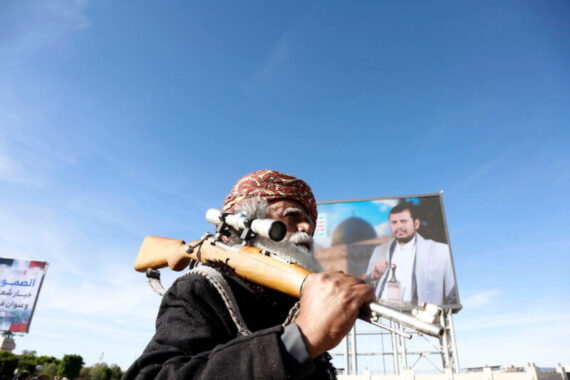
People gather to stage a protest against U.S. and Israeli attacks against Iran, at Sabeen Square in Sanaa, Yemen on March 27, 2026. Photo by Anadolu Images.

Y

emen’s internationally recognized government said its forces dealt significant damage to Houthi fighters during intense clashes in Taiz province over the weekend, as fighting across multiple fronts continues to escalate and raise fears of a slide back into full-scale war.

The government-aligned National Resistance Forces said Sunday that its troops engaged in fierce combat with Houthi forces in the Al-Kadhah sector of western Taiz, a front line of particular strategic value because it links the cities of Taiz and Mokha. The statement did not specify the scale or nature of the losses inflicted.

Government forces claim gains across several fronts

The clashes in Al-Kadhah followed a series of reported advances elsewhere. On Saturday, government forces said they had recaptured territory in the western provinces of Taiz and Hodeidah and taken dozens of Houthi fighters prisoner. Among the gains, the government-controlled SABA news agency reported that Yemeni forces had seized the Hais district in Hodeidah, a location of strategic importance sitting at the junction of Hodeidah, Taiz and Ibb provinces. Forces also said they had pushed back Houthi positions around the al-Barh junction in western Taiz.

The fighting has come at a steep cost. More than 60 people, including civilians, were reported killed in Taiz clashes on Saturday alone, and 26 government soldiers were killed in a single stretch of fighting the same day, underscoring how contested the battlefield remains despite the government’s claimed advances. The United Nations said roughly 1,800 families were displaced over just two days as the violence intensified in Taiz.

By early Monday, the Yemeni army said it had carried out 13 air strikes on Houthi positions, gatherings and military vehicles in central Yemen, hitting sites across several districts of Al-Bayda governorate and destroying a Houthi command post and surveillance equipment on Mount Nasa in neighboring Al-Dhale governorate. Additional strikes were reported in Marib and Al-Jawf, though none of the claims from either side could be independently verified.

A fragile truce under renewed strain

The current wave of fighting follows months of relative quiet that had largely held since a UN-brokered truce took effect in April 2022, which ended large-scale combat following the Houthis’ seizure of the capital, Sanaa, and other major cities back in 2014. Hostilities resumed in early August, when government forces launched offensives on Houthi positions along multiple fronts after regaining major southern and eastern territory in a Saudi-backed counteroffensive earlier in the year.

Despite the government’s recent gains, analysts caution the shifts do not yet represent a decisive turning point in Yemen’s long war. The Houthis still hold Sanaa and several other cities, and have mounted their own advances near Taiz, pressing toward the government-held port of al-Makha and areas near the Bab al-Mandeb strait — a vital corridor linking the Red Sea to the Arabian Sea. Presidential Leadership Council chairman Rashad al-Alimi said Yemen’s military was capable of restoring control nationwide and cautioned that Houthi missteps would lead to their downfall.

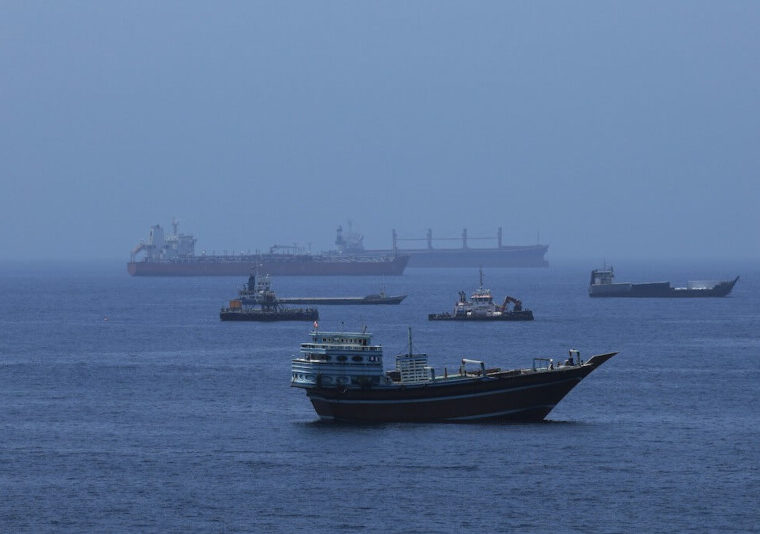
The conflict has increasingly become entangled with the broader regional confrontation tied to the US-Israel war on Iran. The Iran-aligned Houthis declared a maritime blockade against Saudi Arabia in July and have targeted Saudi vessels and territory, prompting Saudi air strikes on Houthi positions in Taiz. The Bab al-Mandeb strait has taken on added significance since Iran shut the Strait of Hormuz to commercial shipping, a move that has driven global energy prices higher and rattled the world economy. In July, Saudi Arabia announced plans to build an international coalition to protect Red Sea shipping from Houthi attacks.

(Source: Aljazeera English, Anadolu and TRT World)

Politics Today is dedicated to publishing insightful analyses in order to understand the changing nature of contemporary politics. It aims to contribute to the sound and constructive discussion of international affairs.