July 15 Ten Years On: The Historical Consolidation of Turkish National Will
The coup attempt that took place on the night of July 15, 2016, demonstrated a far greater capacity for violence than previous interventions in Turkey.
July 22, 2026
T
he stability of political regimes is assessed through the nature of the relationship between the normative power of the constitutional order and the depth of social legitimacy. The mere existence of a constitution, the meticulous construction of the institutional architecture, or the explicit definition of the principle of the separation of powers in legal texts does not, in itself, guarantee the security of the regime. The true resilience of regimes is revealed in the attitudes of social actors towards the source of legitimacy during times of crisis. In this context, coups are not merely power struggles targeting the institutional continuity of the state; they are attempts to forcibly answer the question of who will exercise sovereignty.
In political science literature, a coup is defined as an attempt by an organized group within the state apparatus to seize executive power through the use of force or the threat of force, by suspending constitutional and legal procedures. In this context, coups signify not merely a transfer of power, but the detachment of political legitimacy from its institutional foundation and its subsequent reconstruction through power relations. Studies on coups indicate that such interventions are more likely to occur in regimes characterized by a low level of institutionalization, where the capacity for consensus among civilian political actors is weak and power centers within the state are fragmented. In systems where political institutions are not sufficiently entrenched, power struggles may turn to the direct use of force rather than relying on electoral, parliamentary or legal mechanisms.
Discussions on military tutelage reveal that when the military goes beyond its role as an institution ensuring security against external threats to assume a supervisory and directive role over the political sphere, it weakens democratic processes. When the military positions itself as the ultimate guardian of the regime or the arbiter of its ideological boundaries, it limits the decision-making capacity of elected civilian authorities and erodes democratic accountability. In such a structure, the military begins to be perceived as a legitimate actor capable of intervening in politics. This situation becomes one of the fundamental structural obstacles to democratic consolidation.
Analyses of democratic fragility emphasize that the institutional veto capacity of anti-regime or extra-systemic actors is decisive during periods of crisis. Situations such as economic crises, social polarization, governance failures or loss of legitimacy can increase the fragility of the political system, creating a fertile ground for anti-democratic interventions. During periods when coordination among the state’s key institutions breaks down and social consensus weakens, coups emerge as the result of a broader regime crisis. For this reason, modern literature explains coups not so much in terms of the will of individual actors, but rather through institutional weaknesses, power balances and fragilities within the regime’s structure.
When Turkish political history is examined through these theoretical frameworks, it becomes apparent that the tension between democratic representation and authoritarian power centers is a persistent feature. From the time of Ottoman modernization onwards, the positioning of the military and bureaucratic elites as the state’s founding and protective actors has led to political legitimacy being constructed in a state-centered manner rather than from a social base. During the Republican era, this structure gained institutional continuity; following the transition to a multi-party system, however, a structural conflict emerged between political legitimacy derived from elections and the tradition of tutelary intervention.
Given this historical background, the coup attempt that took place on the night of July 15, 2016, cannot be regarded as an isolated security incident. This event marks a critical threshold in Turkey’s tradition of intervention, which spans nearly two centuries, and constitutes a historic turning point in the societal defense of democratic legitimacy. The uniqueness of the event is evident in the scale of the attempt, the level of violence involved, and the nature of the societal reaction it provoked.
To understand the sociological roots of coups in Turkey, one must examine the pre-Republican political structure. During the classical period of the Ottoman Empire, whilst central authority appeared strong, power relations were shaped by the balance between the palace bureaucracy, the military elite and regional power centres. With the process of modernisation, the centralisation of military reforms within state transformation significantly increased the political weight of the army.
The deposition of Sultan Abdülaziz in 1876 is one of the clearest indications of the Ottoman state elite’s capacity to intervene in the transfer of power. The power structure established by the Committee of Union and Progress after 1908, meanwhile, deepened the institutional intertwining of military-political relations. Consequently, the mindset that the military elite possessed the right to determine the direction of the state became deeply entrenched.
The central role of the military in the founding of the Republic not only failed to bring this historical legacy to an end but also provided it with a new basis of legitimacy. The military background of the founding generation fostered the notion that the military bore a special responsibility for the regime’s survival. In subsequent periods, this understanding formed the institutional basis for the tutelary mindset that argued democratic politics must be kept within certain limits.
The transfer of power in Turkey following the 1950 elections represented a historic advance in terms of democratic representation. However, this transition did not eliminate tutelary reflexes. The coup of 27 May 1960 is the clearest illustration of this reality.
May 27 signifies the overthrow by armed force of an elected, democratic and legitimate government – that is, the will of the people as expressed. The execution of Prime Minister Adnan Menderes and two of his ministers following the intervention constituted a punishment directed against the will of the people. This event represents a deep fracture in the collective memory of Turkish democracy. One of the coup’s most significant consequences was the normalization of military intervention as a legitimate political tool. An event as horrific and repugnant as the coup itself is the fact that this tragedy was declared a public holiday and celebrated for years…
The constitutional order established after 1961 granted military and bureaucratic institutions the power of veto over the system. Thus, a hybrid structure emerged—democratic in appearance, but fundamentally encircled by mechanisms of tutelage.
The March 12, 1971, memorandum demonstrated that the political arena could be forcibly restructured without directly seizing power. The fact that Parliament remained open does not imply that the intervention was of a civilian nature, as political decision-making processes were shaped under military pressure.
The coup of September 12, 1980, on the other hand, radically transformed Turkey’s social and institutional fabric. Parliament was closed, political parties were dissolved, and fundamental rights and freedoms were suspended. This period marked a phase in which state violence intensified on an institutional scale. Detentions, torture, bans and a climate of severe repression produced deep traumas in the collective memory.
The political order established in the wake of the coup institutionalized a security-oriented state paradigm and restricted the scope of action for civil society and democratic politics. This situation has been one of the fundamental reasons why democracy in Turkey has failed to achieve full consolidation for many years.
The ‘28 February postmodern coup’/process of 1997 marks a critical turning point signaling a methodological transformation in coups. Instead of the practice of directly seizing power seen in classical military interventions, a more indirect model of intervention emerged, in which the scope of political power was narrowed through the media, capital, the judiciary and the bureaucracy. This process demonstrated that modern coups could be carried out not only with tanks and armed forces but also through hybrid tools that shape public perception and generate institutional pressure. Whilst military force continued to serve as a visible instrument of pressure, the influence of media discourse, bureaucratic mechanisms and economic actors in the production of legitimacy increased significantly.
The continuation of these tutelary reflexes manifested itself in a different form in the digital age with the April 27, 2007, e-memorandum. The statement, published via the Turkish Armed Forces’ website, represents a digitized version of the tradition of military intervention. However, the fact that this initiative, unlike previous interventions, failed to elicit a political response—coupled with the Government’s rejection of the memorandum and its resolute and uncompromising stance—demonstrated that civil politics and democratic legitimacy had become more resilient compared to previous periods. Nevertheless, the culture of tutelage has not entirely disappeared; on the contrary, the forms of intervention have become more complex and multi-layered.
By the 2010s, it had become apparent that attempts at political intervention had extended beyond the military sphere to focus on the judiciary, the security bureaucracy and the media. In 2012, the summons of the Undersecretary of the National Intelligence Organization was regarded as a significant turning point in the exertion of pressure on the state’s critical security institutions through judicial means. This incident caused a wide public outcry as a development that could strain the chain of command and coordination between the executive branch and the state’s strategic security units.
The violent protests at Gezi Park in 2013, meanwhile, stood out as a major social rupture in Turkey’s recent political history. The protests, initially thought to have arisen from environmental concerns, quickly transformed into a nationwide political mobilization and an attempted coup against the elected, legitimate government. This process demonstrated that, in modern regime crises, street movements have also become one of the key instruments in the struggle for political power.
The events of December 17-25 that took place at the end of the same year revealed that an attempted coup against democratic politics and the government elected by the people could be carried out through the judiciary and the security bureaucracy. These orchestrated and externally supported operations have emerged as an organized attempt to weaken and remove the government through judicial and bureaucratic means… These developments have shown that contemporary coups do not take the form of purely military interventions, but can also manifest as multi-layered operations conducted within the spheres of institutional legitimacy.
The incident involving the MİT lorries, which came to public attention in 2014, created a new arena for coup attempts—both domestic and international—through the exposure of the state’s security and foreign policy operations. This incident brought to the fore the implications for national security and political stability of operational activities, which are classified as state secrets, being made public. In political literature, such developments are regarded as hybrid intervention tools that could weaken the state’s strategic capacity.
In addition, numerous meetings, planning activities and alleged intervention attempts—whether made public or not fully recorded in official records—demonstrate that guardianship reflexes have remained active across different periods. In various media debates, scenario exercises conducted within closed circles, crisis planning and the efforts of non-governmental power centers to influence the political equation have frequently been raised. Although not all of these initiatives produced concrete results, they have brought to light the fragilities in the relationships between the state, society and politics.
This chronological process is significant for understanding the groundwork leading up to the July 15, 2016, coup attempt. In Turkey, forms of intervention have constantly shifted, ranging from direct military coups to electronic ultimatums, from judicial operations to media manipulation, and from street mobilization to bureaucratic sabotage. This transformation reveals that modern coups are shaped not only by the use of armed force but also by the flow of information, perception management, institutional sabotage and the struggle for psychological superiority. July 15 emerged as the most severe and visible stage of this long-term transformation.
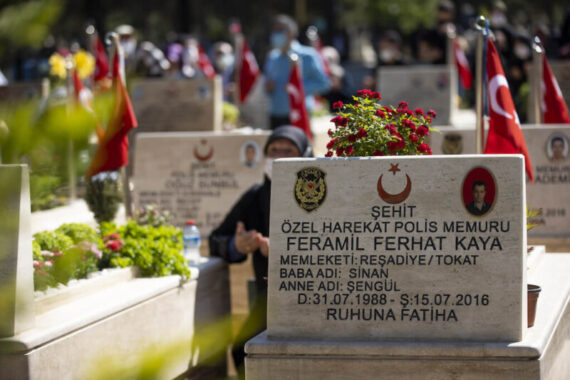
The coup attempt that took place on the night of July 15, 2016, demonstrated a far greater capacity for violence than previous interventions in Turkey. The state’s constitutional institutions were directly targeted; the Presidential Complex was attacked; the Grand National Assembly of Turkey was bombed; police facilities were assaulted; and civilians were fired upon with heavy weapons. This situation elevates the nature of the coup attempt beyond that of a conventional military intervention. The aim here was not merely to bring about a change in the legitimate, elected, civilian political authority; rather, the objective was to completely sever the state’s chain of command, decision-making and legitimacy.
What distinguishes this coup attempt from previous ones is the pivotal role played by the Fetullahist Terror Organization (FETÖ), a foreign-backed espionage network that had been organizing within state institutions for many years. This network, with its hierarchical organization, staffing strategy based on secrecy, and capacity to infiltrate the state’s critical institutions, played an effective role in both the planning and execution of the coup attempt. In this respect, July 15 was not merely an intervention undertaken by military elements, but a multi-layered uprising organized from within the state and with clear external links.
The likelihood of success in coup attempts often depends on the rapid establishment of psychological superiority. Coup plotters create uncertainty, cut off communication channels and foster an expectation of societal submission. On July 15, however, this mechanism failed to produce the expected result.
The ability of the elected civilian political leadership to keep communication channels open, President Recep Tayyip Erdoğan—the unwavering representative of the nation’s will—appearing on screen to address the nation and subsequently meeting the people in the squares, the open support of MHP Leader Devlet Bahçeli for the elected political will and his stance against the coup plotters, the fact that state institutions did not become entirely dysfunctional, and the rapid organization of social resistance all prevented the coup plotters from establishing psychological superiority. Consequently, the attempt failed to complete the stages of rapid legitimacy-building and control-establishment typically seen in classic coup scenarios.
Consequently, patterns of social behavior diverged from the line of passive acceptance seen in previous coups. The literature on civil resistance demonstrates that mass popular mobilization creates a critical breaking point in coup processes and that, as civil participation increases, the consolidation of power through the use of force becomes more difficult. The events observed in Turkey on the night of July 15 are consistent with this theoretical framework. Different sociological segments of society set aside their ideological divisions to take a stand in favor of constitutional legitimacy. This situation is of great significance from the perspective of collective action theories.
It is well known that during the interventions of 1960, 1971 and 1980, broad sections of the public remained passive. The picture that emerged in 2016, however, marks a historical break. For the first time, society demonstrated active resistance in the face of a coup. The principle that ‘sovereignty belongs unconditionally to the nation’ has moved beyond being an abstract constitutional norm to become a reality in social behavior.
Recommended
The behavior of the political elite is one of the decisive factors in the success of coup attempts. The fragmentation of political leadership leads to institutional disintegration and opens up a space of legitimacy for the coup plotters. On 15 July, the opposite occurred. The fact that elected officials did not step down, that a significant portion of state institutions remained committed to the constitutional order, and that various political actors adopted an anti-coup stance prevented a legitimacy vacuum from forming.
The institutionalization of democracy depends on actors accepting the rules of the democratic game as the sole legitimate framework. The political stance that emerged on the night of the coup can be interpreted as one of the strongest indicators of this normative internalization.
The concept of ‘victory’ is usually addressed in historiography through the lens of wars. However, critical turning points at which nations safeguard their political sovereignty are also classified as historical victories. Defining July 15 as a national victory in this context is firmly grounded in strong conceptual foundations. This is because what was safeguarded was not merely a change of government. The structure that was safeguarded comprises constitutional legitimacy, popular sovereignty and the system of democratic representation.
In this context, drawing a direct analogy with the Battle of Gallipoli and the Turkish War of Independence must be approached with historical caution; yet the common ground is clear: the defense of the nation’s very existence. On July 15, the threat did not manifest itself in the form of external occupation. The threat manifested itself as the usurpation of sovereignty from within—by those among us who, in the name of the ‘outside’, sought to seize it through the ballot box. This usurpation was not permitted through a nationwide national resistance.
On the tenth anniversary of July 15, the historical perspective is becoming clearer. The line stretching from the final years of the Ottoman Empire to the military interventions of the Republic demonstrates the continuity of a tutelary political culture in Turkey. May 27, March 12, September 12, February 28 and April 27 are different manifestations of this continuity.
July 15 represents a structural break in this line. This event has shaken the historical assumptions that a coup was an inevitable fate. National resistance, political resolve and institutional loyalty combined to thwart the coup attempt. For this reason, 15 July cannot be defined or explained merely as a foiled coup attempt. The historical significance of the event runs much deeper. 15 July represents the societal defence of democratic legitimacy, and the historical consolidation of the people’s will and sovereignty in the face of a tutelary power.
(Originally published in Turkish by Kriter)

Prof. Dr. Zakir Avşar is Secretary General of the Turkish Internet Media Association (TİMBİR) High Advisory Board. He serves as the Deputy Chairman of the AK Party in Turkey.
You can see how this popup was set up in our step-by-step guide: https://wppopupmaker.com/guides/auto-opening-announcement-popups/

Stay informed by subscribing to
our weekly newsletter.
You can see how this popup was set up in our step-by-step guide: https://wppopupmaker.com/guides/auto-opening-announcement-popups/
You can see how this popup was set up in our step-by-step guide: https://wppopupmaker.com/guides/auto-opening-announcement-popups/
You can see how this popup was set up in our step-by-step guide: https://wppopupmaker.com/guides/auto-opening-announcement-popups/
You can see how this popup was set up in our step-by-step guide: https://wppopupmaker.com/guides/auto-opening-announcement-popups/