Restoring the Lost Balance on Land and Sea: Turkey's Climate Law
The Climate Law creates many opportunities for Turkey. Investments in green technologies could provide the country with a competitive economic advantage in the medium and long term.
September 30, 2025
T
he world is facing a deeper climate crisis than ever before. Temperature records, severe droughts, and extreme weather conditions are now topics of discussion among economists, engineers, health professionals, and security experts. For some time, the United Nations has been seeking solutions to this global threat through climate diplomacy. In 2015, the Paris Climate Agreement was signed, representing the most concrete and comprehensive step in these efforts, with the goal of keeping global temperature increases within the 1.5–2°C range. The agreement envisions a collaborative effort based on the principle of common but differentiated responsibilities, considering countries’ historical emissions and levels of development.
In recent times, Turkey has become one of the countries more actively involved in this global struggle. By ratifying the Paris Agreement on October 6, 2021, and formally joining the process, Turkey has ushered in a new era of climate action. With the Climate Law adopted last July, Turkey’s vision for combating climate change is set out for the first time within a national legal framework. The large-scale forest fires that Turkey experienced this summer have highlighted the tangible effects of the climate crisis and underscored the vital importance of the Climate Law. Following the forest fires of this summer, the law provides a historic opportunity to swiftly implement technological firefighting investments, artificial intelligence–supported early warning systems, and ecosystem restoration.
This article will examine the law within the context of the Paris Agreement and international climate policies. Our goal is to explain the meaning and opportunities of this legal regulation without getting bogged down in technical details.
Throughout history, our ancient civilization has regarded the land as a trust, water as a blessing, and trees as a source of shade and sustenance. Islam’s commandment to not waste food or water has been brought to life through the Seljuk waqf waterways, Ottoman birdhouses, village fountains, and orchards. Living in harmony with nature has been accepted as a way of life and a moral responsibility. This understanding has taught us that it is our sacred duty to not upset the climate’s balance, to regard the earth and sky as a trust, and to leave a clean earth for future generations. Turkey’s criteria for joining the Paris Agreement also reflect this ancient approach, and today’s modern climate policies are rooted in this understanding.
Today, fires, droughts, and floods triggered by the climate crisis are testing business ethics and market order. The production approach that encourages unlimited consumption habits and recklessly exploits natural resources for short-term profit also jeopardizes economic stability. These misguided choices cause price increases and disrupt the balance of nature. Thus, the climate issue has become an indicator of the deep connection between ethics and economics, and is no longer merely an environmental problem.
On October 6, 2021, Turkey officially joined the global climate agreement by ratifying the Paris Agreement in the Grand National Assembly of Turkey with Law No. 7335. During the ratification process, Turkey declared its intention to join the agreement as a “developing country,” thereby formalizing its long-standing position. While Turkey’s official status with the United Nations remains unchanged, this declaration clearly demonstrates its intention to benefit from the climate finance and technology transfer opportunities intended for developing countries.
The Paris Agreement requires each country to submit Nationally Determined Contributions (NDCs), which establish emission reduction targets based on each country’s specific circumstances. In its letter of intent submitted to the UN in 2015, Turkey first committed to a “reduction from increase” of up to 21 percent by 2030. This means Turkey aims to keep its greenhouse gas emissions in 2030 21 percent below what they would be without any measures being taken.
After ratifying the Paris Agreement in 2021, Turkey began working to update its climate targets. During the COP27 summit in Egypt in November 2022, Turkey announced it had revised its 2030 target. The new target anticipates a 41 percent reduction from the projected increase by 2030. In other words, Turkey’s emissions will continue to rise compared to 2020 levels for a while, but they will remain 41 percent lower than in a “business as usual” scenario.
The goal of achieving net-zero emissions by 2053 is at the heart of Turkey’s long-term strategy. Net-zero 2053 now serves as a guiding principle for all of Turkey’s strategies and plans. In line with this goal, Turkey plans to make fundamental transformations in the energy, transport, industry, agriculture, and other sectors.
Turkey has long prioritized addressing climate change. Although calls for action have grown louder in the wake of disasters, the issue has often fallen off the public agenda. Passed by the Turkish Grand National Assembly on July 2, 2025, and published in the Official Gazette on July 9, 2025, the Climate Law is a regulation that breaks this vicious cycle.
The Climate Law presents a vision that transcends environmental policy. It aims to protect natural resources, ensure that economic development is compatible with the principle of sustainability, and reduce disaster risks. By doing so, Turkey has established its national commitment to the global climate struggle within a concrete, applicable, and measurable framework.
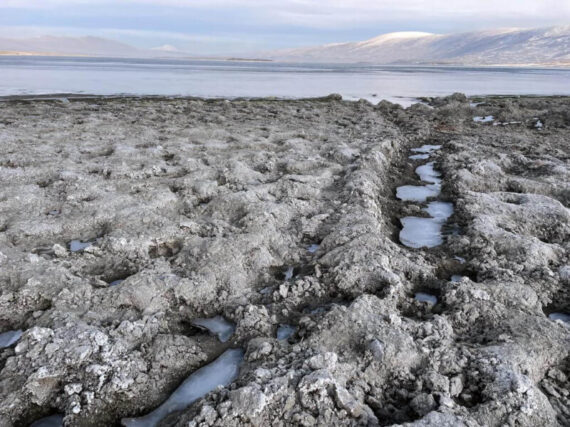
This summer, Turkey experienced the severe effects of the climate crisis. In Izmir, for example, the capacity of the dams fell below five percent, prompting municipalities to implement mandatory nighttime water cuts. A total of 3,067 fires damaged forests and villages. Drought in Central Anatolia reduced wheat cultivation by half.
The concrete steps to be taken in this regard can be summarized as follows:
Forest areas burned in villages will be reforested quickly after the fires, and affected families will receive support to rebuild their livelihoods.
Early warning systems will be installed in high-risk fire areas, and a drone- and artificial intelligence-supported surveillance network will be deployed to combat fires.
Drip irrigation systems will be installed for farmers affected by drought, and drought-resistant seeds will be provided.
Rainwater harvesting and gray water recycling systems will be implemented in areas experiencing water shortages.
A stronger Climate Change Presidency is at the forefront. However, the presidency will not act alone. All ministries and institutions must prepare annual plans and submit reports to fulfill their responsibilities in climate change mitigation and adaptation.
The concrete steps that will be implemented in this context can be summarized as follows:
• The Climate Change Presidency will coordinate the process.
The Ministry of Energy and Natural Resources will manage the transition away from coal and toward investments in renewable energy.
The Ministry of Agriculture and Forestry will carry out projects to combat drought and restore ecosystems after fires.
The Ministry of Transport and Infrastructure will implement low-carbon transportation projects.
The Ministry of Environment, Urbanization, and Climate Change will initiate projects to increase green spaces and building energy efficiency in cities.
• AFAD will implement early warning and rapid response systems for disasters such as floods and fires.
Each sector, including energy, industry, agriculture, and transportation, will play its part. These sectors will develop habits that promote the use of renewable energy, reduce waste, and encourage more efficient consumption.
The concrete steps to be taken in this regard can be summarized as follows:
In the construction sector, zero-energy building standards will be mandatory for new buildings, and thermal insulation and passive energy systems will be implemented.
In logistics, freight transport will shift to railways, and electric cranes and equipment will be introduced in ports.
In waste management, biogas plants that convert organic waste into energy will be established, and plastic recycling will increase with mandatory quotas.
In urban planning, construction will be restricted in areas at high risk of flooding, and rainwater harvesting and green roofs will be required.
Climate planning will no longer be done in Ankara offices. A Provincial Climate Change Coordination Committee will be established in each province. By 2027, each province will have its own climate plan. Solutions will be developed that are tailored to the Black Sea region’s rainfall and Central Anatolia’s drought. The floods in the Black Sea region and the drought in Central Anatolia will not be managed with the same approach.
The concrete steps to be taken in this context can be summarized as follows:
Climate volunteers will be established in every province and neighborhood to monitor water conservation and waste separation practices on site.
In coastal areas, flood and storm early warning systems will be integrated into neighborhood councils, and evacuation drills will be conducted.
Rainwater collection tanks will be standard for every house and apartment in arid regions.
Firefighting teams will be established at the neighborhood level in high-risk fire areas, and they will be provided with equipment to enable an initial response until the fire brigade arrives.
Energy-efficient lighting and cooling systems will be installed in markets and small businesses with municipal support.
One of the most radical steps is the Emissions Trading System (ETS). Large factories will be told, “You can emit this much carbon.” If they emit less, they can sell their surplus rights. If they emit more, they must purchase rights from others. Thus, polluters will pay the price while clean producers will profit. The system will be fully operational within three years.
The concrete steps that will be implemented in this context can be summarized as follows:
The carbon quota will not be limited to factories. Airport operators, large power plants, and cement plants will also be included in the system.
For example, a cement factory with an annual carbon emission allowance of one million tons can reduce its emissions to 800,000 tons by investing in new filters. Then, it can sell the remaining 200,000 tons to another facility.
A steel plant that emits more than its allowance must purchase the excess to avoid halting production.
The Turkish Green Taxonomy determines which investments qualify as green. Credit, incentives, and investments will flow into projects such as solar energy, electric vehicles, energy storage, and carbon capture.
The concrete steps that will be reflected in this context can be summarized as follows:
• Only environmentally friendly projects will be supported under the Green Taxonomy. For example, a solar panel production facility will be included in the investment list, but a natural gas power plant will not.
Banks and investment funds will offer low-interest loans and tax advantages to projects on this list.
Investments such as carbon capture facilities, electric bus fleets, and wind turbine production factories will be prioritized for incentives.
When companies voluntarily choose to become carbon neutral, they will gain prestige and export advantages in the international market in the form of a “green certificate.”
Starting in 2026, Europe will tax products with high carbon emissions. Regulations have been put in place to prevent our exporters from facing these taxes. Companies that fail to reduce their production-related carbon footprint will also be required to make additional payments when selling goods to countries in the European Union.
The concrete steps that will be implemented in this context can be summarized as follows:
From 2026 onward, the European Union will apply additional taxes on carbon-intensive products, including steel, cement, aluminum, and fertilizer.
The law clearly states that exporters who do not reduce their carbon footprint during production will be required to pay this tax.
For example, an energy-intensive iron and steel factory that does not switch to renewable energy for its production process will face an additional tax per ton when entering the EU market.
Conversely, facilities that reduce carbon emissions, recover waste heat, or use clean energy will be exempt from this cost.
Thus, “clean production” will become an environmental and commercial necessity for exporters.
It will no longer be possible to hide how much pollution each entity generates. All companies will be required to submit regular reports. The Ministry will collect and publish these reports.
The concrete steps that will be reflected in this context can be summarized as follows:
Every facility will be required to regularly report the amount of carbon it emits into the atmosphere throughout the year.
These reports will be collected by the Ministry of Environment, Urbanization, and Climate Change and disclosed to the public.
For example, a cement factory will be required to enter its monthly emission data into the system. Administrative sanctions will be applied if the data is reported incompletely or incorrectly.
Those who fail to report, produce without permission, or exceed their quotas may face fines of hundreds of thousands or even millions of lira.
The concrete steps that will be implemented in this context can be summarized as follows:
• Those who do not comply with the rules will face serious financial penalties.
For example, facilities that do not report their emission data or engage in unauthorized production will be fined hundreds of thousands of lira.
Companies that exceed their carbon quotas will face penalties amounting to millions of lira.
Those failing to comply with the Emissions Trading System (ETS) rules will face heavier penalties than standard fines.
The upper limit is 50 million TL per year, so even large companies will face a significant cost.
This regulation will align Turkey with the EU’s Green Deal and the Paris Agreement. It will pave the way for a low-carbon economy. Yes, it has its shortcomings and controversial aspects, but now we have a roadmap.
In this context, the concrete steps that will be implemented can be summarized as follows:
• Sectors that fail to meet specified emission reduction targets will be subject to a carbon border tax imposed by the EU.
Investments that do not meet the Green Taxonomy criteria will not be eligible for national incentives or financing.
Companies not integrated into the Emissions Trading System or that do not reduce their quotas will rapidly lose their competitive edge in exports.
When all articles of the Climate Law take effect, Turkey’s carbon-intensive economy will transition to a low-carbon production model, protecting both nature and livelihoods during the process.
Recommended
Turkey’s enactment of the Climate Law in July 2025 marked a turning point in the country’s fight against climate change. Through this legislation, Turkey has integrated its obligations under the Paris Agreement into its domestic law and established its climate goals as state policy.
As with any major reform, the Climate Law will undoubtedly be met with debate and criticism. There will naturally be differing views on the level of targets, feasibility, and priorities. What matters is that the law remains a living document, open to continuous improvement, and that any shortcomings identified during implementation are addressed.
In response to criticism that the law is more about trade than climate, it’s important to note that combating climate change requires changing the economic system. The green transition requires a massive economic transformation. The Climate Law paves the way for the Turkish economy to adapt to this new global order.
The Climate Law creates many opportunities for Turkey. Investments in green technologies could provide the country with a competitive economic advantage in the medium and long term. The transition to clean energy can strengthen energy security by reducing dependency on external sources. Thanks to carbon-neutral production, Turkish exporters will be better positioned to navigate future transformative legislation and will be able to sell goods without being hindered by Europe’s carbon tax. Most importantly, this law demonstrates Turkey’s commitment to leaving a more livable country and planet for future generations.
As the climate crisis is a global issue, the international community is closely monitoring Turkey’s steps in this direction. Developing policies that align with the targets of the Paris Agreement will also reinforce Turkey’s reputation as a responsible global actor.
Ultimately, the 2025 Climate Law is just the beginning, one of the first solid stepping stones on a long road. Along this path, criticism and differing opinions should be seen as opportunities to develop stronger policies. The common goal is clear: to build a future protected from the destructive effects of climate change—one that is clean, healthy, and prosperous.

Dr. Hayrettin Kurt completed his undergraduate education at Ankara University Faculty of Law, his graduate education at Kırıkkale University, and his doctoral education at Ankara University Faculty of Law. He worked as a Denizcilik Uzman (Maritime Expert) at the Denizcilik Müsteşarlığı (Ministry of Maritime Affairs), as a Daire Başkanı (Director) at the Ulaştırma ve Altyapı Bakanlığı (Ministry of Transport and Infrastructure) and as an I. Hukuk Müşaviri (Senior Legal Advisor) at the Enerji ve Tabii Kaynaklar Bakanlığı (Ministry of Energy and Natural Resources). During this period, he was appointed as a member of the Atomic Energy Commission at the Turkey Atomic Energy Agency. After serving as a member of the Energy Market Regulation Board (EPDK) in 2018, he was appointed as the General Director of the Treasury and Finance Ministry's Chief Legal Advisor and Litigation Department. He continues to work as the Chairman of the Audit Committee and the Chairman of the Legal Working Group at the World Energy Council Turkish National Committee (WEC-TMK). He was elected to the TCMB Denetleme Kurulu in 2019 and was reelected to the same position in the TCMB Olağan Genel Kurulu in 2021. Additionally, Kurt served as the President of the Mali Suçları Araştırma Kurulu (MASAK) of the T.C. Ministry of Finance from 2020 to 2022 and as the President of the Kamu Gözetimi Muhasebe ve Denetim Standartları Kurumu from 2022.
You can see how this popup was set up in our step-by-step guide: https://wppopupmaker.com/guides/auto-opening-announcement-popups/

Stay informed by subscribing to
our weekly newsletter.
You can see how this popup was set up in our step-by-step guide: https://wppopupmaker.com/guides/auto-opening-announcement-popups/
You can see how this popup was set up in our step-by-step guide: https://wppopupmaker.com/guides/auto-opening-announcement-popups/
You can see how this popup was set up in our step-by-step guide: https://wppopupmaker.com/guides/auto-opening-announcement-popups/
You can see how this popup was set up in our step-by-step guide: https://wppopupmaker.com/guides/auto-opening-announcement-popups/