Xi's Visit to North Korea Highlights China's Concern Over Growing Russia Ties
For North Korea, maintaining strong ties with both China and Russia offers opportunities to diversify its partnerships and reduce dependence on any single country
June 8, 2026
C
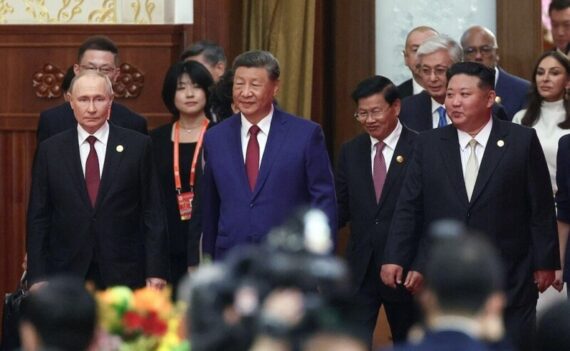
hinese President Xi Jinping arrived in North Korea on Monday for his first visit to the country since 2019, in a move widely seen as an effort by Beijing to reinforce its influence over Pyongyang amid growing concerns about North Korea’s increasingly close military and economic relationship with Russia.
Xi’s visit comes at a critical moment for regional security in Northeast Asia, with North Korea accelerating its weapons programs, deepening cooperation with Moscow, and further distancing itself from South Korea. Analysts say the Chinese leader’s decision to travel personally to Pyongyang underscores the strategic importance Beijing places on maintaining its longstanding alliance with North Korea.
The visit marks a departure from Xi’s recent diplomatic pattern. Since the COVID-19 pandemic, the Chinese president has significantly reduced his overseas travel, preferring to host foreign leaders in Beijing. Against that backdrop, his trip to Pyongyang is viewed as a strong signal of China’s commitment to preserving its role as North Korea’s most important partner.
Xi is expected to hold extensive talks with North Korean leader Kim Jong Un on regional security, economic cooperation, and the changing geopolitical environment in East Asia.
A key factor behind the visit is believed to be North Korea’s rapidly expanding relationship with Russia.
Since Russia launched its full-scale invasion of Ukraine in 2022, Pyongyang has emerged as one of Moscow’s most important partners. North Korea has reportedly supplied Russia with artillery shells, missiles, military equipment, and manpower to support its war effort. In return, Moscow is believed to have provided economic assistance and potentially advanced military technologies.
The partnership has generated concern in Beijing, which has historically been North Korea’s principal economic supporter and diplomatic protector. For decades, China accounted for the overwhelming majority of North Korea’s foreign trade and served as the country’s primary source of fuel, food, and investment.
While China and Russia maintain close strategic ties, Beijing is wary of losing influence over its isolated neighbor. Analysts say Xi’s visit is intended in part to ensure that Pyongyang does not drift too far into Moscow’s orbit.
“China wants to remind North Korea that it remains an indispensable partner,” regional analysts have noted. “The relationship with Russia may be useful for Pyongyang, but Beijing still offers economic and political support that no other country can fully replace.”
The growing Russia-North Korea partnership has also raised concerns about military cooperation. Experts believe Russia may be sharing technologies that could accelerate North Korea’s missile and nuclear programs, developments that could alter the security balance on the Korean Peninsula.
China’s leadership is believed to be closely monitoring North Korea’s recent military activities.
North Korea has conducted multiple missile tests this year and continues to modernize its arsenal. In May, state media reported the successful development of an artificial intelligence-guided tactical cruise missile, while recent images released by Pyongyang showed Kim Jong Un inspecting facilities linked to the production of nuclear materials.
The North Korean leader has repeatedly emphasized the need to expand the country’s nuclear deterrent and strengthen its military capabilities in response to what he describes as growing threats from the United States and its allies.
Although China supports North Korea as a strategic buffer separating Chinese territory from US forces stationed in South Korea, Beijing has traditionally favored stability on the peninsula over military escalation. Chinese officials fear that an emboldened North Korea could provoke regional tensions and trigger stronger military cooperation among the United States, South Korea, and Japan.
Analysts believe Xi will seek greater clarity on Pyongyang’s military ambitions and may encourage restraint to avoid destabilizing the region.
The visit also takes place amid growing concerns over shifting security dynamics in East Asia.
Relations between North and South Korea have deteriorated sharply in recent years. In 2024, Kim Jong Un formally abandoned the long-standing goal of peaceful reunification with South Korea, declaring the South a hostile state. Since then, communication channels between the two sides have largely remained frozen.
At the same time, security cooperation between South Korea and Japan has expanded. The two US allies have increased intelligence sharing and military coordination in response to North Korea’s weapons development and broader regional security concerns.
Recent discussions regarding a possible military logistics support agreement between Seoul and Tokyo have further alarmed Beijing, which views closer cooperation among US allies as part of a broader effort to contain China’s influence in the region.
Against this backdrop, Xi’s trip serves not only to strengthen bilateral ties with North Korea but also to demonstrate China’s continued role as a central actor in regional security affairs.
Recommended
Economic cooperation is expected to be another major focus of the summit.
Although North Korea has benefited from growing ties with Russia, China remains its largest trading partner and a crucial source of economic support. Years of international sanctions, border restrictions, and economic isolation have left North Korea heavily dependent on external assistance.
Observers believe Beijing could use the visit to announce new economic initiatives, increase trade cooperation, or expand investment projects aimed at strengthening North Korea’s economy and reinforcing bilateral ties.
Such measures would provide Pyongyang with tangible benefits while helping China maintain its leverage over its neighbor.
For North Korea, maintaining strong ties with both China and Russia offers opportunities to diversify its partnerships and reduce dependence on any single country. For Beijing, however, ensuring that North Korea remains firmly within its sphere of influence remains a strategic priority.
Beyond any specific agreements that may emerge, Xi’s visit carries considerable symbolic weight.
The trip reflects China’s determination to preserve its influence over North Korea at a time when regional alliances are shifting and geopolitical competition is intensifying. It also highlights Beijing’s concerns about the long-term implications of the growing partnership between Pyongyang and Moscow.
As tensions continue to rise across Northeast Asia, Xi’s rare journey to Pyongyang serves as a reminder that China remains deeply invested in the future of the Korean Peninsula and intends to play a leading role in shaping its security and political landscape.
Whether the visit produces concrete policy outcomes or primarily serves as a diplomatic signal, it marks one of the most significant developments in China-North Korea relations in recent years and underscores the strategic importance both countries attach to their historic partnership.
(Source: Aljazeera English)

Politics Today is dedicated to publishing insightful analyses in order to understand the changing nature of contemporary politics. It aims to contribute to the sound and constructive discussion of international affairs.
You can see how this popup was set up in our step-by-step guide: https://wppopupmaker.com/guides/auto-opening-announcement-popups/

Stay informed by subscribing to
our weekly newsletter.
You can see how this popup was set up in our step-by-step guide: https://wppopupmaker.com/guides/auto-opening-announcement-popups/
You can see how this popup was set up in our step-by-step guide: https://wppopupmaker.com/guides/auto-opening-announcement-popups/
You can see how this popup was set up in our step-by-step guide: https://wppopupmaker.com/guides/auto-opening-announcement-popups/
You can see how this popup was set up in our step-by-step guide: https://wppopupmaker.com/guides/auto-opening-announcement-popups/